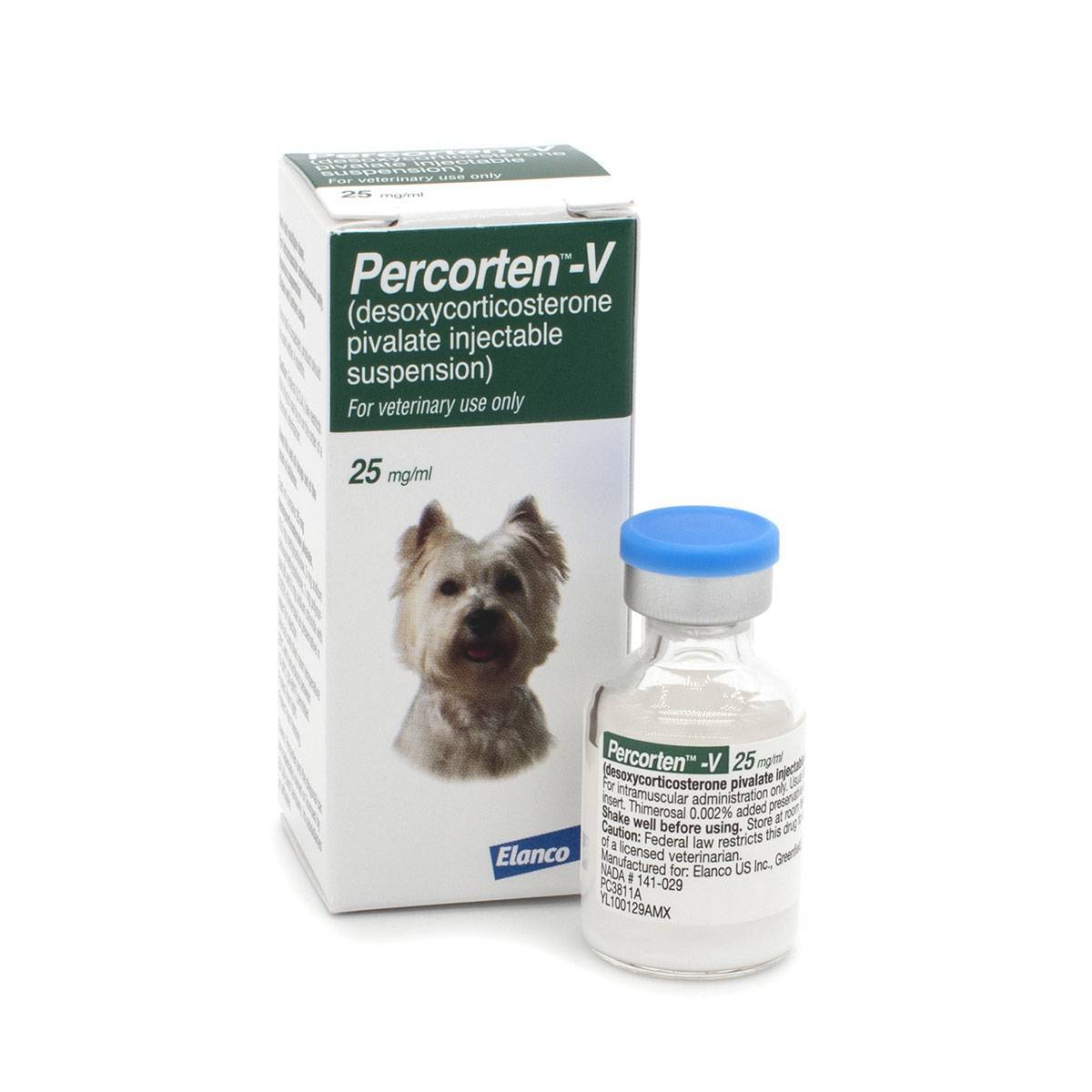
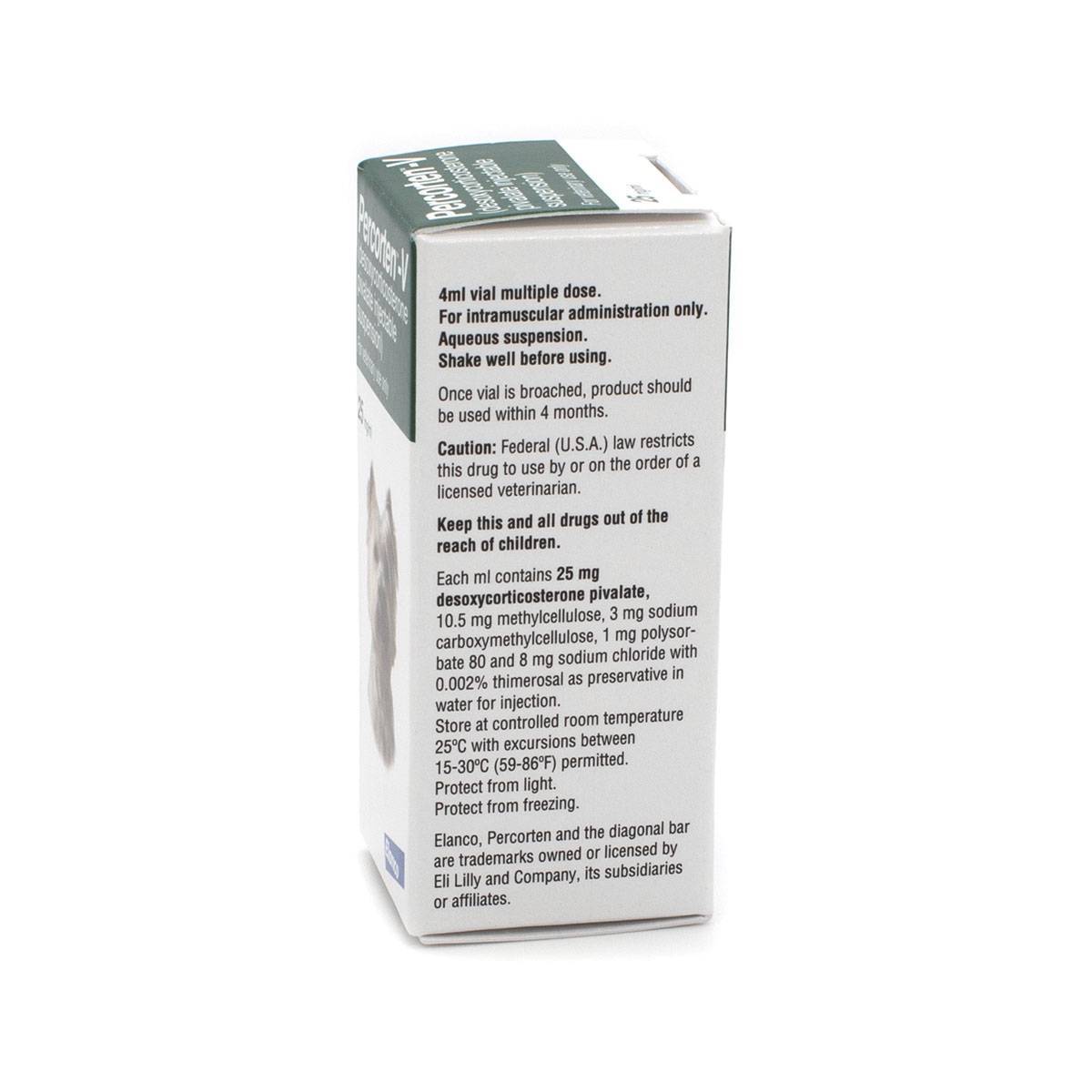
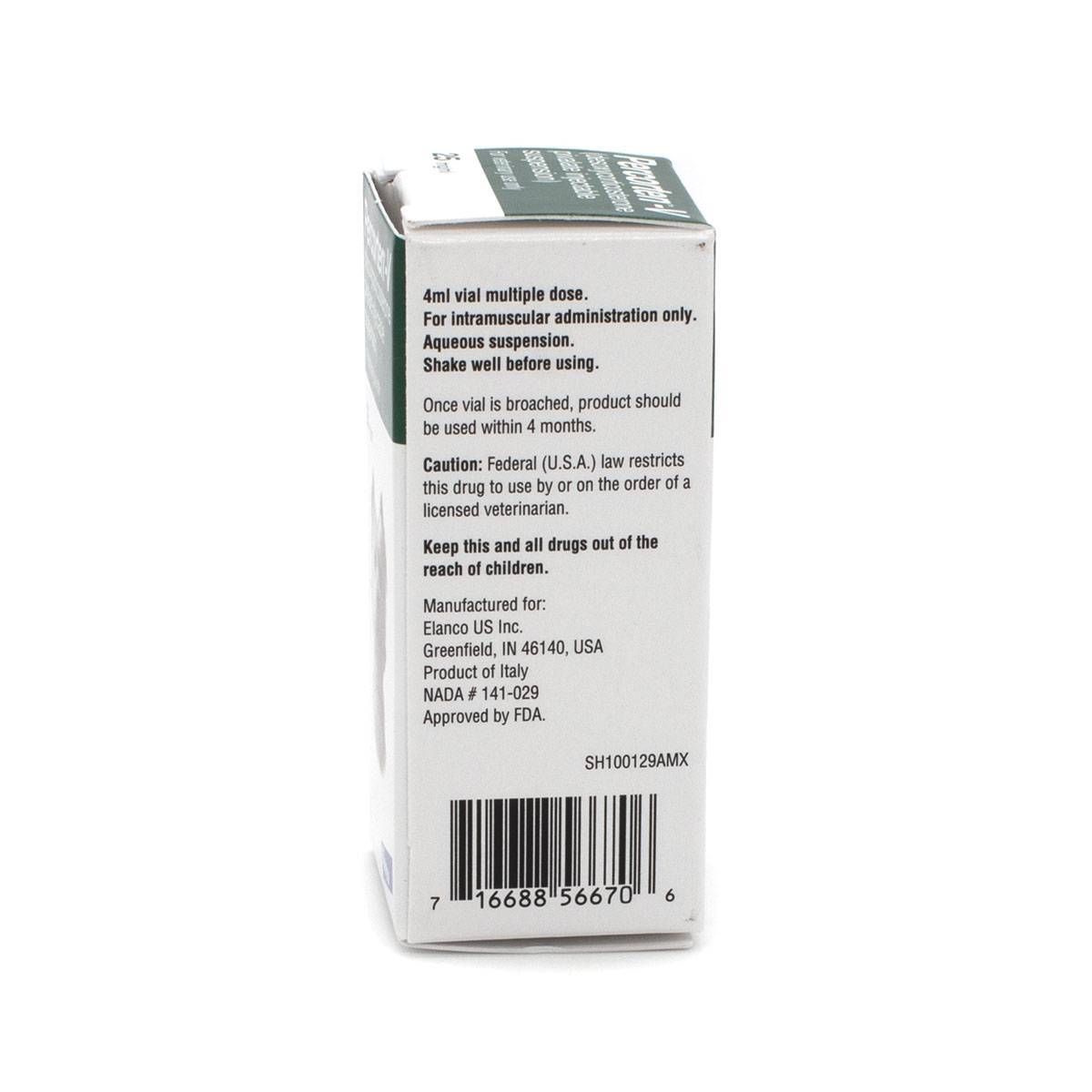
Percorten-V (desoxycorticosterone pivalate) Injectable Suspension is the only medication approved by the FDA for the treatment of Canine Addison's Disease (hypoadrenocorticism).
General Description:
Percorten-V is a hormone and is used primarily in dogs and cats to treat an adrenal problem. Desoxycorticosterone is only available as an injectable.
What is Percorten-V?Read and follow the prescription label carefully.
Give the exact amount prescribed and only as often as directed.
Give Percorten-V for as long as your veterinarian directs. Do not skip doses or stop giving the medication without consulting your veterinarian.
Baseline blood work is recommended to assess your pet's general health before starting this drug.
Periodic blood work to monitor its effect on the body is also advised as long-term therapy is often necessary.
Dose adjustments may be made based upon these results and an assessment of how your dog or cat is responding clinically.
Call ahead for refills.
Ideally, give Percorten-V at the same time(s) daily.
When using an injectable:
Follow the directions given by your veterinarian
Shake the vial to effectively suspend the medication in the liquid
Always use a clean needle and syringe
Percorten-V is only to be given in the muscle; never give this medication into the vein
Follow local regulations when disposing of used needles and syringes
What if a dose is missed?If a dose is missed, give it as soon as you can. If it is time already for the next dose, skip the missed dose and go back to the normal schedule. Do not give two doses at the same time.
What to tell/ask a veterinarian before giving Percorten-V? Talk to your veterinarian about:Desoxycorticosterone pivalate should be stored in a childproof container in a cool, dry place at room temperature away from heat and direct sunlight. Do not mix with any other injectable medication.
Seek veterinary care immediately if this medication is given in the vein as it will cause acute collapse and shock.
Keep this and all medication out of reach of children and pets.
Call your physician immediately if you accidentally take this product.
Potential side effects:Contact your veterinarian immediately if your pet receives more than the prescribed amount.
What else should I know?
Notify your veterinarian if your animal's condition does not improve or worsens despite this treatment.
As with all prescribed medicines, desoxycorticosterone pivalate should only be given to the pet for which it was prescribed.
It should be given only for the condition for which it was prescribed.
This is just a summary of information about desoxycorticosterone pivalate. If you have any questions or concerns about desoxycorticosterone pivalate or the condition it was prescribed for, please contact your veterinarian.
NAC Number: 63002860
©North American Compendiums Inc. 2010. All rights reserved.
Addison's disease is the common name for hypoadrenocorticism. Hypoadrenocorticism is a condition where there is diminished or lowered hormone production from the outer part or cortex of the adrenal gland.
The adrenal glands are small, paired glands located next to the kidneys. Each gland consists of an outer cortex and an inner medulla. The glands produce several substances that regulate a variety of body functions and are necessary to sustain life. The most widely known of these substances is cortisol, a corticosteroid commonly called cortisone or steroid, which is produced by the outer part of the adrenal cortex. Also produced by the adrenal cortex and equally important is aldosterone, which is a mineralocorticoid hormone. Aldosterone regulates the electrolyte and water balance of the body and is involved in the excretion of potassium and retention of sodium.
Deficiency of these two hormones, cortisol and aldosterone, is referred to as hypoadrenocorticism or Addison's disease.
In the dog, the main causes are direct injury to the adrenal gland tissue, infection or certain autoimmune conditions. There are two main categories of Addison's disease, namely primary and secondary Addison's disease.
Primary hypoadrenocorticism results from a disease process in the adrenal glands; this may be caused by immune-mediated disease. It can also occur when treating Cushing's disease (hyperadrenocorticism), a disease in which too much cortisol and aldosterone are produced. Addison's disease may also result when a drug used to treat Cushing's disease, Lysodrenâ (mitotane) or trilostane, destroys too much of the adrenal tissues, resulting in a deficiency of cortisol and aldosterone.
Secondary Addison's disease results from a disease such as a tumor in the pituitary gland, which is an important hormonal regulator located in the brain. Secondary Addison's disease can also develop if a dog has been treated with long-term steroids for any reason and the medication is abruptly stopped. This is also known as iatrogenic hypoadrenocorticism.
"Clinical signs of Addison's disease are usually vague and non-specific..."
Clinical signs of Addison's disease are usually vague and non-specific and are similar to the symptoms seen in animals with more common medical disorders such as chronic gastroenteritis or renal disease. Common signs include lethargy, diarrhea, vomiting, increased thirst and increased urination. Intermittent shaking episodes are also characteristic. The symptoms may wax and wane. Weight loss is often seen.
These animals will often improve with non-specific medical treatment. For example, the administration of fluids or corticosteroids appears to help temporarily, but the signs soon return. In a pet that experiences recurrent bouts of sudden lethargy, diarrhea and vomiting, increased thirst and urination or other non-specific illness, Addison's disease should be considered as an underlying cause.
Sometimes the condition takes on a much more serious form. There is sudden weakness, with severe vomiting and diarrhea, and sometimes the patient collapses. This is an Addisonian crisis and is considered a medical emergency. Under these circumstances, urgent hospitalization and supportive treatment will be necessary.
Diagnosis is based on your pet's medical history and clinical signs, coupled with the results of blood and urine tests. The most common diagnostic tests are the ACTH-stimulation test and the low-dose dexamethasone suppression (LDDS) tests. Your dog will probably have to be admitted to the veterinary hospital for the day to perform the necessary tests. Additional tests such as radiographs or abdominal ultrasound are performed in suspicious cases or to rule-out another cause for your pet's clinical signs.
Once a diagnosis of hypoadrenocorticism has been made, most dogs can be successfully treated with oral medication. Your dog's diet and activity levels can often remain unchanged. The majority of dogs resume normal lives, even after an Addisonian crisis.
It will be necessary to monitor progress carefully, particularly at the start of treatment. This may involve occasional hospitalization for monitoring and follow-up testing.
It must be emphasized that lifelong replacement of both glucocorticoids (cortisol) and mineralocorticoids (aldosterone) may be necessary. Some of these medications, especially corticosteroids, may have to be increased during periods of stress, such as when traveling, if your dog is going to be boarded, or if your dog has to undergo surgery. In addition, your veterinarian will have to see your pet at regular intervals to ensure that stabilization is satisfactory. This usually involves simple follow-up blood and urine tests and routine ACTH-stimulation tests or LDDS tests.
The vast majority of patients with Addison's disease have a good to excellent prognosis once the diagnosis has been established and they have been stabilized with the appropriate drugs. If you wish to discuss the long-term prognosis for your pet, please do not hesitate to contact your veterinarian.
| Every effort has been made to ensure the accuracy of the information published. However, it remains the responsibility of the readers to familiarize themselves with the product information contained on the US product label or package insert. |
PERCORTEN®-V
Novartis
(desoxycorticosterone pivalate)
Injectable Suspension
Federal (U.S.A.) law restricts this drug to use by or on the order of a licensed veterinarian.
The active ingredient in PERCORTEN-V is desoxycorticosterone pivalate (DOCP). It is a mineralocorticoid hormone and an analog of desoxycorticosterone. It is white, odorless, and stable in air. It is practically insoluble in water, sparingly soluble in acetone, slightly soluble in methanol, ether and vegetable oils. The molecular weight is 414.58. It is designated chemically as 21 (2,2-dimethyl-1-oxopropoxy)-pregn-4-ene-3,20-dione. The empirical formula is C26H38O4 and the structural formula is:
PERCORTEN-V is a white aqueous suspension. Each ml contains 25 mg desoxycorticosterone pivalate. Inactive ingredients are water for injection, methylcellulose, sodium carboxymethylcellulose, polysorbate 80, sodium chloride, and thimerosal.
Desoxycorticosterone pivalate (DOCP), like other adrenocorticoid hormones, is thought to act by controlling the rate of synthesis of proteins. It reacts with receptor proteins in the cytoplasm to form a steroid-receptor complex. This complex moves into the nucleus, where it binds to chromatin that results in genetic transcription of cellular DNA to messenger RNA. The steroid hormones appear to induce transcription and synthesis of specific proteins which produce the physiologic effects seen after administration.
DOCP is a long-acting ester of desoxycorticosterone acetate (DOCA) which is recognized as having the same qualitative effects as the natural mineralocorticoid hormone aldosterone.
The most important effect of DOCP is to increase the rate of renal tubular absorption of sodium. This effect is seen most intensely in the thick portion of the ascending limb of the loop of Henle. It also increases sodium absorption in the proximal convoluted tubule but this effect is less important in sodium retention. Chloride follows the sodium out of the renal tubule.
Another important effect of DOCP is enhanced renal excretion of potassium. This effect is driven by the resorption of sodium which pulls potassium from the extracellular fluid into the renal tubules, thus promoting potassium excretion.
DOCP also acts to increase extracellular fluid volume. The enhanced retention of sodium, chloride and bicarbonate, creates an osmotic gradient that promotes water absorption from the renal tubules. The extracellular fluid volume is supported. This expands the blood volume and improves the venous return to the heart and cardiac output. The expanded blood volume and increased cardiac output may result in elevated blood pressure. PERCORTEN-V prevents the life threatening hypotensive shock and pre-renal azotemia observed in animals suffering from hypoadrenocorticism.
The effects of PERCORTEN-V on electrolytes and extracellular fluid volume are dependent on a functioning kidney. Animals suffering from hypovolemia, pre-renal azotemia, and inadequate tissue perfusion must be rehydrated with intravenous fluid (saline) therapy, before starting PERCORTEN-V therapy. Primary renal disease should be ruled out before starting PERCORTEN-V therapy.
DOCP is an insoluble ester of desoxycorticosterone. The crystals are injected intramuscularly as a micro-crystalline depot where they slowly dissolve over time.
For use as replacement therapy for the mineralocorticoid deficit in dogs with primary adrenocortical insufficiency.
Do not use this drug in pregnant dogs. Do not use in dogs suffering from congestive heart disease, severe renal disease or edema.
Keep this and all drugs out of the reach of children. In case of human consumption, contact a physician or Poison Control Center immediately.
Some patients are more sensitive to the actions of PERCORTEN-V and may exhibit side effects in an exaggerated degree. Some patients may show signs of hypernatremia or hypokalemia. The dosage of PERCORTEN-V should be reduced in these patients.
Like other adrenocortical hormones, PERCORTEN-V may cause severe side effects if dosage is too high or prolonged. It may cause polyuria, polydipsia, increased blood volume, edema and cardiac enlargement. Excessive weight gain may indicate fluid retention secondary to sodium retention. PERCORTEN-V should be used with caution in patients with congestive heart disease, edema or renal disease.
The following adverse reactions have been reported following the use of PERCORTEN-V: depression, polyuria, polydipsia, anorexia, skin and coat changes, diarrhea, vomiting, weakness, weight loss, incontinence, pain on injection and injection site abscess. Some of these effects may resolve with adjustments in dose or interval of PERCORTEN-V or concomitant glucocorticoid medication.
PERCORTEN-V given intramuscularly at the appropriate dose and interval, is effective in replacing the mineralocorticoid deficit in dogs suffering from primary hypoadrenocorticism.
Results of two 75-day clinical studies in dogs with primary hypoadrenocorticism have demonstrated the clinical efficacy of PERCORTEN-V. Each dog received three doses of PERCORTEN-V (on days 0, 25 and 50).
The results are summarized below.
|
|
Clinical Study Number |
|
|
01 |
02 |
|
|
Number of Dogs |
49 |
18 |
|
Average Diagnostic Values: |
||
|
Serum Sodium (mEq/L) |
128.4 |
130.72 |
|
Serum Potassium (mEq/L) |
7.28 |
7.47 |
|
Sodium/Potassium Ratio |
18.09 |
17.86 |
|
ACTH Stimulation Test: |
||
|
Cortisol Resting (µg/dl) |
0.28 |
0.68 |
|
Cortisol Post Stimulation (µg/dl) |
0.27 |
1.34 |
|
Average PERCORTEN-V Dose (mg/lb): |
||
|
Day 0 |
0.97 |
0.99 |
|
Day 25 |
0.96 |
0.99 |
|
Day 50 |
0.94 |
0.97 |
|
Concomitant Glucocorticoid (Pred) |
47% |
39% |
|
Sodium/Potassium Ratios |
||
|
Day 0 |
25.18 |
26.42 |
|
Day 14 |
36.36 |
- |
|
Day 25 |
29.64 |
- |
|
Day 39 |
34.94 |
- |
|
Day 50 |
30.33 |
- |
|
Day 64 |
35.30 |
- |
|
Day 75 |
30.32 |
30.59 |
|
% Efficacy Therapy |
96% |
100% |
Case Management:1,2
An accurate diagnosis of primary canine adrenocortical insufficiency is of paramount importance for treatment success and should be established before initiation of PERCORTEN-V therapy. While hyponatremia and hyperkalemia are highly suggestive of adrenocortical insufficiency, they are not pathognomonic. A definitive diagnosis can only be made with a ACTH stimulation test. At diagnosis, classic cases of canine adrenocortical insufficiency may include clinical signs. Those signs are anorexia, lethargy, depression, weakness, vomiting and/or regurgitation, weight loss, diarrhea and collapse, serum sodium values less than 135 mEq/L, serum potassium greater than 6 mEq/L, sodium/potassium ratios below 25:1, plasma or serum cortisol concentration less than 4 µg/dl pre-and-post ACTH administration. Once the diagnosis is made, immediate therapy must be given to normalize electrolyte imbalance, correct hypovolemic shock and re-establish normal homeostasis. Such therapy should include, large volumes of intravenous physiologic saline, glucocorticoids (i.e., prednisolone, dexamethasone) at shock doses and PERCORTEN-V. Once the acute crisis has passed, renal and cardiovascular function should return to normal. Then begin chronic lifelong therapy with PERCORTEN-V and glucocorticoids.
SAFETY:3
In a laboratory study the safety of PERCORTEN-V was established in five month old Beagle dogs. PERCORTEN-V was administered IM to 24 Beagles at 0, 2.2, 6.6 or 11 mg/kg of body weight daily over a consecutive 3-day period every 28 days (equivalent to a cumulative monthly dosage of 0, 6.6, 19.8 or 33 mg/kg) for 6 months. This resulted in no mortality or any significant effects on body weight, food consumption, and ophthalmic observations at any dose level. However, polyuria and polydipsia were noted and creatinine concentration decreased (14-89 mg/dl) in the 1X, 3X and 5X groups. Histopathological changes were only observed in the kidneys when PERCORTEN-V was administered at ≥ 6.6 mg/kg. The primary renal lesion consisted of glomerulonephropathy seen in all males at ≥ 6.6 mg/kg, in one female at 6.6 mg/kg, and in all females at 11 mg/kg. Other possible treatment related lesions in the kidney, observed sporadically in the 6.6 and 11.0 mg/kg groups, were tubular hyperplasia, inflammation and tubular dilatation. Glomerulonephropathy may possibly be attributed to the pharmacological effects of the drug although there were no clinical measurements assessed in this study. In conclusion, PERCORTEN-V was well tolerated, when administered at 2.2 mg/kg on three consecutive days in every 28-day period for six months.
DOSAGE:1,2
In treating canine hypoadrenocorticism, PERCORTEN-V replaces the mineralocorticoid hormones only. Glucocorticoid replacement must be supplied by small daily doses of glucocorticoid hormones (e.g., prednisone or prednisolone) (0.2 - 0.4 mg/kg/day).
Dosage requirements are variable and must be individualized on the basis of the response of the patient to therapy. Begin treatment with PERCORTEN-V at a dose of 1.0 mg per pound of body weight every 25 days. In some patients the dose may be reduced. Serum sodium and potassium levels should be monitored to assure the animal is properly compensated. Most patients are well controlled with a dose range of 0.75 to 1.0 mg per pound of body weight, given every 21 to 30 days.
The well-controlled patient will have normal electrolytes at 14 days after administration or may exhibit slight hyponatremia and hyperkalemia. This needs no additional therapy as long as the patient is active and eating normally. Watch closely for depression, lethargy, vomiting or diarrhea which indicate a probable glucocorticoid deficiency.
At the end of the 25-day dosing interval, the patient should be clinically normal and have normal serum electrolytes. Alternatively, they may have slight hyponatremia and slight hyperkalemia. This constellation of signs indicate that the dosage and dosage interval should not be altered.
If the dog is not clinically normal or serum electrolytes are abnormal, then the dosage interval should be decreased 2-3 days.
Occasionally, dogs on PERCORTEN-V therapy may develop polyuria and polydipsia (PU/PD). This usually indicates excess glucocorticoid, but may also indicate a PERCORTEN-V excess. It is prudent to begin by decreasing the glucocorticoid dose first. If the PU/PD persists, then decrease the dose of PERCORTEN-V without changing the interval between doses.
Please note: Failure to administer glucocorticoids is the most common reason for treatment failure. Signs of glucocorticoid deficiency include depression, lethargy, vomiting and diarrhea. Such signs should be treated with high doses of injectable glucocorticoids (prednisolone or dexamethasone), followed by continued oral therapy (0.2 - 0.4 mg/kg/day). Oral supplementation with salt (NaCl) is not necessary with animals receiving PERCORTEN-V.
Guide to Maintenance Therapy
Starting Dose:
DOCP 1 mg/lb every 25 days
Prednisone 0.2 - 0.4 mg/kg/day
Guides for Adjustment:
Clinical Problem/Solution
Polyuria/Polydipsia
→decrease prednisone dose first,
→then decrease DOCP dose,
→do not change DOCP interval
Depression, lethargy, vomiting or diarrhea
→increase prednisone dose
Hyperkalemia, Hyponatremia
→decrease DOCP interval 2-3 days
Before injection, shake the vial thoroughly to mix the microcrystals with the suspension vehicle. PERCORTEN-V suspension is to be injected intramuscularly. Care should be used to prevent inadvertent intravenous injection, which may cause acute collapse and shock. Such animals should receive immediate therapy for shock with intravenous fluids and glucocorticoids.
Multiple-Dose Vials, 4 ml, each ml containing 25 mg desoxycorticosterone pivalate (DOCP), 10.5 mg methylcellulose, 3 mg sodium carboxymethylcellulose, 1 mg polysorbate 80, and 8 mg sodium chloride with 0.002% thimerosal added as preservative in water for injection. Packed one vial per carton.
Store at room temperature, preferably between 15 and 30°C (59 and 86°F). Protect from light. Protect from freezing.
References:
1. Canine and Feline Endocrinology and Reproduction. Second Edition, E. C. Feldman and R. W. Nelson, W. B. Saunders Co., New York, 1996.
2. Textbook of Veterinary Internal Medicine. Fourth Edition, S. J. Ettinger and E. C. Feldman editors, W. B. Saunders, Co., New York, 1995.
3. Toxicity of desoxycorticosterone pivalate given at high doses to clinically normal Beagles for six months, E. Chow, W. R. Campbell, J. C. Turnier, R. C. Lynn and K. L. Pavkov, Am. J. Vet. Res. 54(11):1954-1961, 1993.
Manufactured for: Novartis Animal Health US, Inc. Greensboro, NC 27408, USA
NADA # 141-029, Approved by FDA.
©2001 Novartis
NAH/PER/VI/4
PC3810
07/07
PERCORTEN-V is a registered trademark of Novartis AG.
NAC No.: 11310044