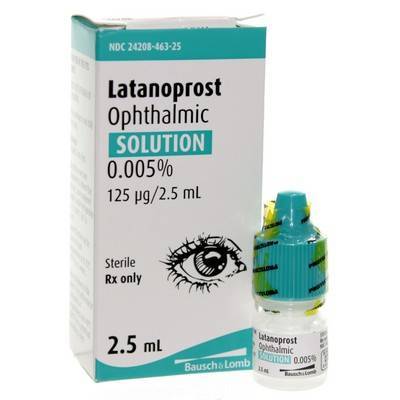

Latanoprost Ophthalmic Solution Rx
-
Usually ships the same weekday before 2pm CT with veterinary approval.
-
Requires veterinary authorization.
-
Your pet's veterinarian will provide directions for use.
-
Keep refrigerated until opened, except for a one time shipment not to exceed 8 days.
What is Latanoprost Ophthalmic Solution for Dogs?
- Latanoprost Ophthalmic Solution is a prescription eye drop that reduces the pressure in your dog's eye caused by glaucoma.
- Many dogs with glaucoma face partial or complete loss of vision due to the disease.
- Glaucoma causes the aqueous humor, the eye’s normal fluid, to stop draining properly from the eye.
- The additional fluid puts pressure on the eye that can damage the optic nerve and cause loss of vision.
- Latanoprost increases the amount of fluid flowing out of the eye, reducing pressure in the eye.
Why do cats and dogs use Latanoprost?
- Your veterinarian may prescribe Latanoprost Ophthalmic Eye Drops to reduce the pressure in your dog's eye caused by primary glaucoma.
What else should I know about Latanoprost?
- For treating primary glaucoma in dogs.
- Generic form of Xalatan.
- Reduces pressure in the eye.
- Dropper top bottle for easy application.
- Refigerate Latanoprost until opened.
- After opening, Latanoprost is good at room temperature for 6 weeks.
- During shipment, Latanoprost may be exposed to temperatures up to 104 F for up to 8 days.
- There are approximately 20 drops per milliliter.
What problems could my dog or cat have with Latanoprost?
- Latanoprost is not effective in cats.
- Do not use if the Latanoprost changes color, becomes cloudy, or you see particles in the solution.
How do you use Latanoprost?
- Use proper administration techniques to avoid contamination. Keep the cap on when not in use.
- Wait 5 minutes after applying Latanoprost to the eye before administering any other eye medication.
What is in Latanoprost?
- Latanoprost which are in a class of drugs called prostaglandin F2-alpha agonists, increase the amount of fluid flowing out of the eye, therefore reducing pressure in the eye.
Will I get what I see in the picture?
- Latanoprost is sold as an FDA approved generic drug. Brand may vary from order to order and variation to variation. We are unable to guarantee which brand will be available at the time of order shipment.
Is it important for my dog or cat to finish all of the Latanoprost?
- Dogs and cats may use Latanoprost for different lengths of time. Please consult your veterinarian if you have any questions.
Review Summary
Ratings Distribution
Most Liked Positive Review
Great Pricing!
Most Liked Negative Review
Requires Refrigeration
Reviews
-
Medication helps his glaucoma
From UndisclosedComments about Latanoprost Ophthalmic Solution 0.005%, 2.5mL BottlePorterhouse needs this medication to help with his glaucoma. It helps keep him comfortable and lessen the pain associated with the disease-
![Medication helps his glaucoma]()
The little kickstand -
![Medication helps his glaucoma]()
Porterhouse side eye -
![Medication helps his glaucoma]()
Little grinch
-
-
Not received yet
From Red Oak, IAComments about Latanoprost Ophthalmic SolutionIt was prescribed for long term, but I haven't gotten it yet. -
I am waiting for this order to be delivered.
From Red Oak, Iowa, vet is in Omaha, NebraskaComments about Latanoprost Ophthalmic SolutionThis product was prescribed by Dr. Matthew Vipond, Rockbrook Animal Clinic, (402) 397-2424, 2814 S 107 Ave, Omaha, NE 68124 -
This medication has helped my pet
From UndisclosedComments about Latanoprost Ophthalmic Solution 0.005%, 2.5mL BottleI love seeing the life come back to my dog. Bella has been my best friend since I was 10 years old. I left for the military and when I got back I discovered she got glaucoma. Ever since using this medication, Bella's view on life has changed. She is so happy! I am very grateful-
![This medication has helped my pet]()
Overwhelmingly grateful -
![This medication has helped my pet]()
All smiles
-
-
Helped my dog not get headaches
From UndisclosedComments about Latanoprost Ophthalmic Solution 0.005%, 2.5mL BottleMy dog is blind and has used these drops for years. They are so efficient sending them and I've never had any issues. -
-
Requires Refrigeration
From Tamworth NHComments about Latanoprost Ophthalmic SolutionThis product works very well for my dogs glaucoma. Unfortunately, I can no longer order it from VetDirectRx. The first order came with a small ice pack to keep it cool. Since then, it has been shipped without the ice pack. The manufacturer allows up to 8 days without refrigeration as long as it doesn't exceed 104 degrees. In summer months, that is not possible in most areas (i.e., unless you're sure the delivery truck provides AC for packages during shipment which is unlikely). Also, you need to be home to receive it because it can't sit outside on a sunny porch or in a mailbox on a warm day without reaching 104 degrees. I've ordered this and other medications from VetDirectRx and have been extremely satisfied with the service. Unfortunately, this is a deal breaker for me having received a shipment yesterday (Order #14504809) that can't be used due to heat exposure. VetDirectRx does not provide replacements, refunds or an ice pack for shipping in warm months. -
Keeps My Girl Out of Pain
From Walnut Creek, CAComments about Latanoprost Ophthalmic Solution 0.005%, 2.5mL BottleMinke has an eye problem that requires 3 meds. Latanaprost is the most important o the 3. She gets 2 drops of it each day and it has kept her eye condition in check and her out of pain. That is the most we can ask for. Grateful she is pain-free.-
![Keeps My Girl Out of Pain]()
My Beloved Girls
-
-
Brown Eyed Boy
From UndisclosedComments about Latanoprost Ophthalmic Solution 0.005%, 2.5mL BottleCrosby counts on his VetRX prescription of Latanoprost twice a day, every day since his lens luxation and glaucoma diagnosis in March of 2022. The packaging and shipping time is always excellent, as is the customer service. We have also switched Crosby's Diclofenac prescription to VetRX as well.-
![Brown Eyed Boy]()
Brown Eyed Boy, Crosby
-
-
Eyes drops are Fantastic!
From UndisclosedComments about Latanoprost Ophthalmic Solution 0.005%, 2.5mL BottleMy little Lacey is 14 yrs. old and luckily her eyes are the only problem. She had one removed but we are working on keeping that last one working! These eye drops, prescribed by her Vet, have been amazing. Twice a day she receives them and it has kept her going strong! The Auto Refill service from Vet RX Direct has been wonderful to have and I love the service. Thanks for keeping my little girl seeing her wonderful world! -
-
This helps my dog with his cataract
From Bloomington IndianaComments about Latanoprost Ophthalmic SolutionThis was recommended by the vet to use 2 times a day for his lifetime


Q & A
-
Any food for glaucoma for high for eye pressure.?
-
Latanoprost Ophthalmic Solution is a prescription eye drop that reduces the pressure in your dog's eye caused by glaucoma. This is not a food or dietary product.
Verified Answer
-
-
I have a prescription for my dog for Latanoprost with 6 refills. How do I order it from you??
-
Our most typical process is that a customer creates an account, adds pet and vet information to their account, and then they place an order and select the appropriate vet and pet for each prescription med. Then after an order is placed, we fax a request for a prescription to the vet. The vet clinic can call or fax in the approval to fill the order. Some clinics can't work with outside pharmacies, and will give paper prescriptions to clients. Our customers can mail us original signed prescriptions if clinics cannot fax or call in prescriptions. For more detailed instructions, email [email protected]
Verified Answer
-
-
I need Lantanoprost Opth .005 solution for my dog. Locally it always comes refrigerated. Will it be shipped refrigerated? What will the additional cost be??
-
Latanoprost Ophthalmic Solution does not require refrigerated next day shipping. The manufacturer states, during shipment to the patient, the bottle may be maintained at temperatures up to 104°F (40°C) for a period not exceeding 8 days. Upon receiving Latanoprost in the mail, it should be refrigerated until use. Once a bottle is opened for use, it may be stored at room temperature up to 77°F (25°C) for 6 weeks.
Verified Answer
-
-
HOW MUCH LATANOPROST TO USE IN A DOG'S EYE WITH A PRESSURE OF 87?
-
Your veterinarian will be the best resource to determine the optimal dosage for latanoprost based the lab values.
Verified Answer
-
-
Do I need an rx for this med??
-
Yes, Latanoprost is a prescription drug requiring authorization by your pet's veterinarian.
Verified Answer
-
-
My vet has prescribed dorzolamide hcv timol maleate 22.3 mg/6.8mg which cost 100.00@ the pharmacy. would this work for my dog as well??
-
There are several factors that dictate the most appropriate agent for your pet including the severity of the intraocular pressure (IOP), the cause of the glaucoma (primary or secondary), and the degree of retinal damage. We also must consider patient specific parameters such as past medical history, allergies, and concurrent medications. While latanoprost and dorzolamide hcv/timolol maleate ophthalmic solutions are both indicated for the treatment of canine glaucoma, they are not equivalent and differ in their mechanisms of action. Latanoprost is not generally recommended in secondary glaucoma or glaucoma associated with uveitis because it can lead to further complications. The two agents also differ in their place in therapy as latanoprost has a faster onset of action that is helpful during emergencies as well as in maintenance therapy, whereas dorzolamide hcv/timolol is only used as a maintenance therapy. In addition, both agents are considered to be moderately-to-very effective in their actions. With consideration to all of these factors, we recommend consulting with your veterinarian to determine which product best suits your pet's needs. Thank you, VetRxDirect
Verified Answer
-
-
What happens if a human accidentally used this??
-
That is fine. It is actually a human medication that is used with pets as well. If you have any concerns, please contact your doctor. Thank you, VetRxDirect
Verified Answer
-
-
Is this a generic form of Latisse eye drops??
-
As of now, there is no generic form of Latisse. Latanoprost is the generic form of Xalatan and is a product used for glaucoma. Thank you, VetRxDirect
Community Answer
-
-
Does this drug aid in the treatment of dogs with glaucoma after loss of vision??
-
Glaucoma is a disease in which the intraocular pressure (pressure within the eye) is elevated. This elevated pressure in the eye can sometimes cause pain and left untreated, can lead to irreversible blindness. Latanoprost is a prostaglandin analog medication that works by reducing the intraocular pressure by increasing the outflow of aqueous humor (fluid within the eye). In dogs that still have sight, lowering the pressure within the eye can reduce the risk of blindness and allow the dog to keep its vision longer. While no medication can bring sight back to a dog that is blind, latanoprost can lower the pressure within the eye and can help reduce the eye pain of a dog with glaucoma. Talk with your veterinarian to determine the best treatment option for your dog. Thank you, VetRxDirect
Verified Answer
-
-
This this the same as bimaprost eye drops???
-
Bimaprost and latanoprost are both prostaglandin analog medications used to lower intraocular eye pressure associated with glaucoma. Contact your veterinarian to determine if either medication would be an appropriate substitute for your pet’s glaucoma therapy. Thank you, VetRxDirect
Community Answer
-
Sign Up and Save 10%!
Plus enjoy insider offers and be the first to learn about our new products and promotions.
*10% off valid on your next order. Must apply code at checkout.
Your 10% off gift is coming your way.
But first, tell us more about your pet and only get content that is special to them.


and welcome to our family and !