

Lactulose (Generic) Rx
Starting At
$12.37
Lactulose (Generic) Rx
$12.37
Or save an extra 5% on your first order (up to $20) with Autoship*
$11.76
-
Usually ships the same weekday before 2pm CT with veterinary approval.
-
Requires veterinary authorization.
-
Your pet's veterinarian will provide directions for use.
-
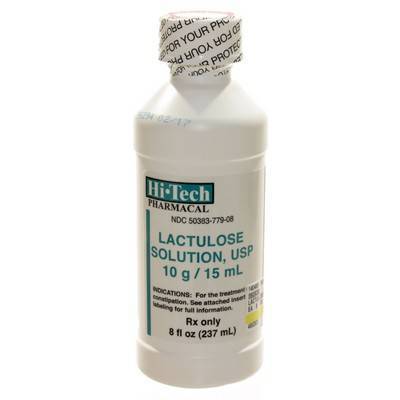
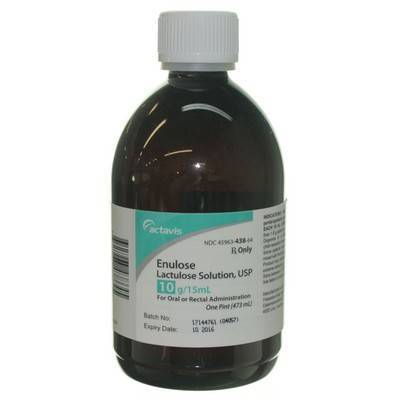
Manufacturers vary. Picture is provided only as a representation of product.
What is Lactulose (Generic) for Cats and Dogs?
- Lactulose is a prescription medication used to relieve constipation or reduce ammonia levels in cats and dogs.
Why is Lactulose used for Dogs and Cats?
- Lactulose is prescribed to treat constipation, the sugar in Lactulose has a laxative effect.
- Lactulose is also used to reduce ammonia in the treatment of hepatic encephalopathy.
What else should I know about Lactulose?
- The Lactulose Solution and Powder are unflavored.
- The Solution contains 10 grams of Lactulose per 15 mL.
- The 8 ounce bottles contain approximately 236 mL total.
- The 16 ounce bottles contain approximately 473 mL total.
What problems could my dog or cat have with Lactulose?
- Common side effects include excess gas, abdominal pain, and abdominal bloating or cramping. These effects usually get better with time.
- Contact your veterinarian if your animal has diarrhea or has fewer than 2 soft stools per day.
- Lactulose should not be used in animals with intestinal obstruction.
- Lactulose should be used with caution in animals with diabetes, with fluid or electrolyte abnormalities, or that are not well hydrated or that are prone to dehydration.
How is Lactulose Used for Dogs and Cats?
- Give Lactulose by mouth or as directed by your veterinarian.
- Lactulose may be mixed in food or other liquids to make it easier to give, but make sure your animal takes the entire dose.
- Make sure your animal has access to plenty of fresh drinking water to prevent dehydration.
- Wash your hands after handling any medication.
- Measure liquids using an oral syringe, medicine cup, or dosing spoon.
What is in Lactulose?
- Lactulose is the active ingredient in this medication, and it's an ammonia reducer and a laxative.
Will I get what I see in the picture?
- Lactulose is sold as an FDA-approved, human generic drug. Brands may vary from order to order and from variation to variation. We are unable to guarantee which brand will be available at the time of order shipment.
Review Summary
76 total reviews
Rated 4.88 out of 5 stars
100% of respondents would recommend this to a friend
Ratings Distribution
69 5 star reviews
5 4 star reviews
2 3 star reviews
0 2 star reviews
0 1 star reviews
Most Liked Positive Review
Great Bargain
Because our cat Belle has a chronic condition for several years now, she has to take this with every meal. Buying directly from her vet was just too expensive, as were other online sites. Also, the employees who package and ship it are always great about putting in the treats for a cat and not a dog, as another site was always doing.
Most Liked Negative Review
Works, but a sticky mess
This product is a stool softener that treats constipation. My cat with mega colon is on it. It seems to work well, but is sticky and messy. I use it with an oral syringe and I have to decant it into a smaller vessel in order to draw up a dose. If you get it on the pet's fur you have to wipe it up with a moist towel immediately or it causes mats. Also, my cat is a diabetic and was in remission (off insulin and diet controlled) when I started her on it, but her blood sugar started to spike soon after and she has been back on insulin. Product information claims it uses a sugar molecule too large to be absorbed from the intestines, but I don't believe that.
Reviews
-
Relieved to have found lifesaving meds
From UndisclosedComments about Lactulose (Generic) Solution, 10g/15mL, 16oz BottleVetRx Direct is a life saver...literally! My dog relies on Lactulose 3x per day to keep toxins out of his liver. There has been a shortage and we were desperate. We stumbled on VetRx and it has been a wonderful find! Cheaper than our vet and I can get shipping! Thank you!-
![Relieved to have found lifesaving meds]()
Chewbacca Tom loves sunshine! -
![Relieved to have found lifesaving meds]()
Chewbacca Tom always looks concerned.
-
-
No problems here 👍
From UndisclosedComments about Lactulose (Generic) Solution, 10g/15mL, 8oz BottleThis is a much better deal than buying it from the local vet. My 16 yo CKD cat was having bad constipation problems and this was prescribed for her. She is doing well with it and doesn't mind it mixed in with her food. -
-
He takes it twice a day
From Lynn, MAComments about Lactulose (Generic) Solution, 10g/15mL, 16oz BottleVet recommended-
![He takes it twice a day]()
Lookin Good!
-
-
Loving Lactulose
From UndisclosedComments about Lactulose (Generic) Solution, 10g/15mL, 16oz BottleLactose prevents my cat from being constipated. No more enemas for her!-
![Loving Lactulose]()
Ready to Go
-
-
She likes it
From UndisclosedComments about Lactulose (Generic) Solution, 10g/15mL, 16oz BottleIt does what it's supposed to -
-
Works great
From UndisclosedComments about Lactulose (Generic) Solution, 10g/15mL, 16oz BottleWorks great for my kitty! Didn't come with any syringes -
Works great
From UndisclosedComments about Lactulose (Generic) Solution, 10g/15mL, 16oz BottleMy cat has been taking this for years! It really works well, and is much less expensive than at my vet's!-
![Works great]()
Love from Quincy
-
-
Helped him to keep his digestive problems healthy
From UndisclosedComments about Lactulose (Generic)Luke needs this to keep him heathly.. -
-
so he can go to the bathroom more comfortably
From UndisclosedComments about Lactulose (Generic) Solution, 10g/15mL, 16oz BottleMy Luke is diagnosed with perian fistula, he needs this to be able to be comfortable...-
![so he can go to the bathroom more comfortably]()
cruzing the lake..
-
-
Great for constipated cats!
From UndisclosedComments about Lactulose (Generic) Solution, 10g/15mL, 16oz BottleLactulose really helps my constipated cat and it cost a lot less here than at my vet!


Displaying Reviews 1 - 10
Q & A
-
My cat vomits sometimes after we give him Lactulose. Is it better before feeding or after? And how long before or after feeding do you suggest? Thanks?
-
According to Plumb’s Veterinary Drug Handbook, cats may dislike the taste of lactulose syrup, so giving it to them can be difficult. Lactulose can be mixed with food or other liquids and may make it easier to give the medication, but make sure the entire dose is consumed. If you have difficulty getting your animal to take the medicine, contact your veterinarian for tips to help with dosing and to reduce the stress of medication time.
Verified Answer
-
-
How much lactalose can I give my cat daily, and how often.?
-
Lactulolse is a prescription laxative medication prescribed to treat constipation, gastric distress, and other diseases in cats. The dosage of this medication will vary based on the type and severity of the condition it is prescribed for. Please consult with your veterinarian, who will be able to determine the correct dosage for your cat.
Verified Answer
-
-
My cat has been on Lactulose for 2 years. At first, she was happy with Lactulose made by Akorn brand. Then the vet vender changed the product line to Enulose, which is essentially the same synthetic sugar, but my cat hated the taste of it. I am looking for a white bottle that has a label of Lactulose, and company name Akorn. Do you carry that brand??
-
We are unable to guarantee one generic manufacturer for this product. Orders are filled with the manufacturer’s product, in stock at that time orders are placed. We apologize for any inconvenience. Specific manufacturers of generically equivalent products will change based on availability. For specific questions on inventory currently in stock, you can contact our pharmacy staff via email at [email protected]. Other contact information is available on our site at: https://www.vetrxdirect.com/contact
Verified Answer
-
-
My cat just started on the liquid form of lactulose but will not let me give it to her. She gets more on her coat than in her mouth. She isn't eating well now so mixing it in food I don't think would work. Any suggestions as to how I can get it down her with syringe? I noticed u have two different versions. I am currently using the liquid..very sticky vwrsion. That the vet provided but I also noticed your price is much better. I am at my wit's end as I can't get it down her?
-
According to the manufacturer, lactulose is very stable and may be mixed with many different wet foods and liquids to improve palatability. It comes as an oral solution and as a powder that requires mixing with liquids before administration. If using liquids to mix with lactulose powder, please discuss with your veterinarian which liquid is best for your pet.
Verified Answer -
I use a syringe while giving it to my cat I hold one side of his head with one hand while squinting the medicine in the side of his mouth not the front and this works well for me.
Community Answer
-
-
Can the dosage be put into the cat's food? We are struggling with the syringe application and needless to say the cat is not cooperating.?
-
Lactulose may be mixed with food for easier administration to your cat. It is important to ensure that the entire dose is consumed shortly after mixing.
Verified Answer
-
-
My vet gave me a bottle of lactulose with 90ccs and told me to give my cat 2-3 ml twice a day. Can I use your 10G/15L product instead, and if so, how much would I give my cat??
-
Lactulose solution 10g/15mL is a prescription human product that can be used for your cat in an extra label manner with proper guidance and approval from your veterinarian. A prescription from your veterinarian is required to order this product. It would be essential to confirm that there is no difference in concentration between the two products before dosing. Please contact your veterinarian for further questions regarding lactulose solution.
Verified Answer
-
-
I saw this unflavored??
-
Lactulose Solution, 10g/15mL does not have any additional flavor but some dogs or cats may not enjoy the natural flavor taste of the medication. Please consult your veterinarian regarding their experience dosing lactulose in dogs or cats.
Verified Answer
-
-
What is the bottle opening? Is it 24mm or 28mm? I can't tell. I need to know so I can buy a bottle stopper to cut down spills when I'm dosing my dog. Thanks.?
-
The opening for the 16oz bottle is 28mm.
Verified Answer
-
-
Does the bottle come with a dosing syringe? Is there a stopper in the bottle that fits the syringe? If the bottle doesn't come with a syringe, how do I get one? If there is no stopper in the bottle that fits a dosing syringe, how do I measure this out? What color is the lactulose??
-
The bottle does not come with a dosing syringe, and there is not a stopper in the bottle to accommodate a syringe. Please ask your veterinarian to include the syringe on the lactulose prescription in the future, as the syringe also requires a prescription. The lactulose is clear to light yellow in color and can be dosed using a dosing cup.
Verified Answer
-
-
Does it come with a syringe for delivering the product in my cat's mouth??
-
This medication does not typically come with an oral syringe. In the future, if you require an oral syringe, please have your veterinarian denote so on the prescription, so we may dispense some for you.
Verified Answer
-
Displaying Questions 1 - 10
x
Sign Up and Save 10%!
Plus enjoy insider offers and be the first to learn about our new products and promotions.
*10% off valid on your next order. Must apply code at checkout.
Your 10% off gift is coming your way.
But first, tell us more about your pet and only get content that is special to them.

and welcome to our family and !