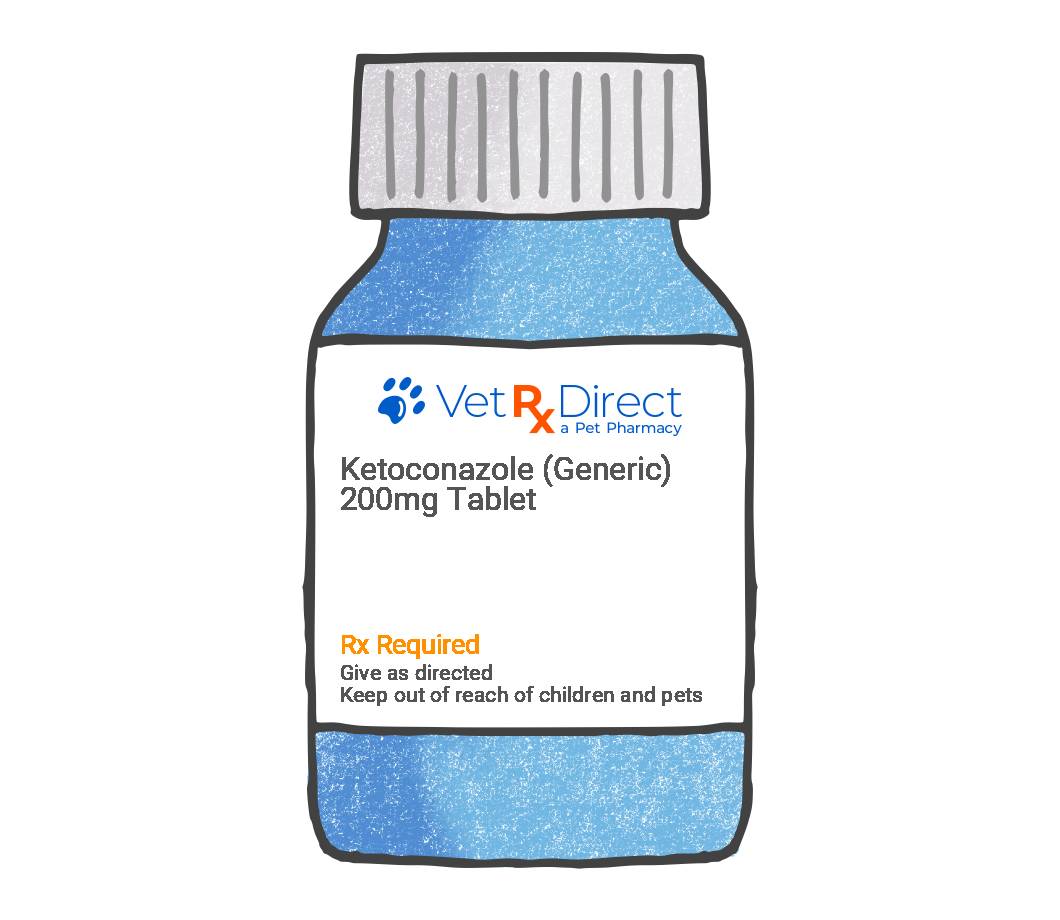
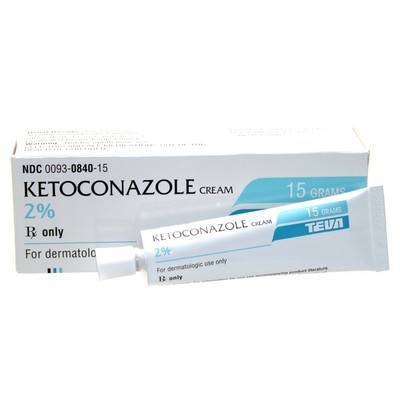
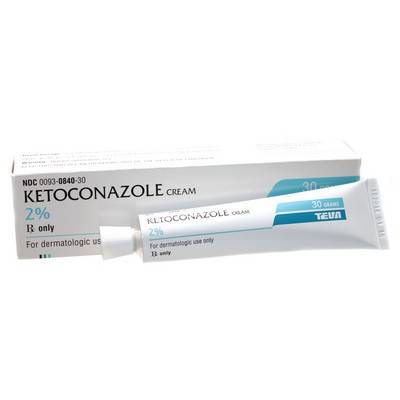

Ketoconazole (Generic) Rx
Starting At
$0.99
per tablet
Ketoconazole (Generic) Rx
$0.99
per tablet
Or save an extra 5% on your first order (up to $20) with Autoship*
$0.95
-
Usually ships the same weekday before 2pm CT with veterinary approval.
-
Requires veterinary authorization.
-
Your pet's veterinarian will provide directions for use.
What is Ketoconazole for Dogs and Cats?
- Ketoconazole is a prescription antifunal agent used to treat fungal infections.
- Ketoconazole tablets can also be used to reduce the dosage of cyclosporine.
Why do cats and dogs use Ketoconazole?
- Ketoconazole tablets may be used to treat skin, bone, lung, or central nervous system infections. It may also be prescribed for Cushing's disease or other reasons.
- Ketoconazole cream may be used topically to treat skin infections such as ringworm.
What else should I know about Ketoconazole?
- When given at lower concentrations for shorter periods of time, ketoconazole may only inhibit the growth of the fungus and not kill the fungus. Follow your veterinarian's directions for giving the Ketoconazole carefully.
- Ketoconazole interacts with many drugs and supplements. Discuss any medications and supplements with your veterinarian before starting to give Ketoconazole.
What problems could my dog or cat have with Ketoconazole?
- Ketoconazole tablets should be given to breeding animals only when absolutely necessary. Ketoconazole can cause birth defects and lower male fertility.
- Vomiting, lack of appetite, and diarrhea are the most common side effects or Ketoconazole tablets, especially in cats.
- Liver toxicity is one possible serious side effect of Ketoconazole tablets. Contact your veterinarian immediately if you see persistent vomiting, extremely poor appetite, or jaundice.
How do you use Ketoconazole?
- Ketoconazole tablets should be given with high-fat foods such as cheese, cream, or butter to increase absorption.
- Pregnant women should wear gloves and use caution when handling Ketoconazole.
- Wear gloves or wash your hands after applying Ketoconazole cream.
What is in Ketoconazole?
- The drug Ketoconazole is an antifungal.
Will I get what I see in the picture?
- Ketoconazole is sold as an FDA approved generic drug. Brand may vary from order to order and variation to variation. We are unable to guarantee which brand will be available at the time of order shipment.
Is it important for my dog or cat to finish all of the Ketoconazole?
- Ketoconazole is an antifungal. Resistance is a concern when using antifungals. To help avoid resistance, it is important for you to use this for as long as your veterinarian has prescribed, even if you dog or cat is looking and feeling better.
Review Summary
8 total reviews
Rated 5.00 out of 5 stars
0% of respondents would recommend this to a friend
Ratings Distribution
8 5 star reviews
0 4 star reviews
0 3 star reviews
0 2 star reviews
0 1 star reviews
Reviews
-
Medication helped my boy
From UndisclosedComments about Ketoconazole (Generic) 200mg TabletMy vet prescribed this product for yeast over growth.-
![Medication helped my boy]()
My boy
-
-
it works
From UndisclosedComments about Ketoconazole (Generic) 200mg Tabletwe use this with the atopica -
ringworm but not puppy rash
From UndisclosedComments about Ketoconazole (Generic) 2% Topical Cream, 30g TubeI had puppies with pimples and hair loss, thought it might be fungal but this product did not help that at all. it is excellent however for ring worm and needs to be applied for at least 3 weeks on a daily or bid basis -
I would buy this product again.
From UndisclosedComments about Ketoconazole (Generic)Good price. -
We have been purchasing on a regular basis for 4 years
From undisclosedComments about Ketoconazole (Generic)This product is used in conjunction with another drug to control allergies. -
Good buy
From undisclosedComments about Ketoconazole (Generic)Works great and price is good -
Easy and Convenient
From Westlake Village, CA, USAComments about Ketoconazole (Generic)I bought medication for my dog. Ordering was easy and I received the medication in two days. You can't beat that! -
Cheaper than at my Vet's office
From 95959Comments about Ketoconazole (Generic)Ketaconazole has been going up in price lately. The last time I checked Vet Rx Direct had a lower price per tablet than my Vet. I recommend buying this product on line from VetRxDirect.com

Displaying Reviews 1 - 8
Q & A
-
Why my dermatologist referred this cream to me ( 75 years old lady in remission of AngioImmuno Blastic Lymphoma TCell Stage 4th Cancer ?, if it's mostly used for dogs KETOCONAZOLE CREAM 2% ???
-
Ketoconazole is a human-labeled generic medication that may be prescribed for extra-label use by a veterinarian to treat fungal skin conditions in dogs and cats. As a pet pharmacy, VetRxDirect only dispenses this medication with a veterinarian’s prescription for use in animals. Please contact your physician’s office if you need assistance obtaining this medication from a human pharmacy.
Verified Answer
-
-
Will it cause liver damage?
-
Liver toxicity has been reported with use of ketoconazole. Specifically, cholangiohepatitis and possible increased liver enzyme levels may occur. Cats may be more prone to developing liver toxicity than dogs according to references at our pharmacy. Please consult your veterinarian to determine if your pet is at risk of liver damage from ketoconazole.
Verified Answer
-
-
Is this for humans to ??
-
This is a drug that is used in humans as well as cats and dogs. A prescription will be required from your veterinarian. Dosing and duration will vary based on diagnosis, severity of condition treated, and health of the cat or dog. Please talk to your veterinarian about any further questions or concerns.
Verified Answer
-
-
Are you able to convert this medication to an oral suspension equivalent that allows for 14mg/daily dosing? If so, what is the pricing??
-
https://www.vetrxdirect.com/product/view/ketoconazole-suspension-compounded-for-pets/variation-12738 This link will bring up our 50 mg/ml compounded suspension. Using 0.28 ml from a 50 mg/ml suspension is equivalent to 14 mg. This produces roughly 3 doses per ml. Depending on how many doses you will need, you may pick from various sizes to fit your needs. Prices and sizes are included in the "product selection" drop down menu of this page.
Verified Answer
-
-
Will giving my dog, Yorkie, 13 lbs., only 1/4 of a Ketoconazole pill twice a day help her with yeast infection??
-
Ketoconazole is an azole antifungal medication commonly used to treat a variety of systemic fungal infections. The type and severity of fungal infection will determine the dose, frequency of administration and duration of therapy in your dog. In general, a 50mg dose of ketoconazole twice daily for a 13 lb dog would fall into an acceptable range of dosing depending on the diagnosis from your veterinarian. It is important to report any adverse events and keep all laboratory appointments if ordered by your veterinarian.
Community Answer
-
-
Gave my dog by accident 2 pills instead of 1 every 12 hrs & now she doesn't want to eat or drink .. Had a few bites & sips pushed down ... Laying around but still perky too to animals & barking & urinating & normal BM ...vet closed !! ?
-
Ketoconazole generally causes adverse effects such as loss of appetite, vomiting, and diarrhea, so the lack of appetite and thirst may be caused from the extra dose. Monitor your pet’s symptoms and inform your dog's veterinarian as soon as you are able to do so. Thank you, VetRxDirect
Community Answer
-
-
Do I need a prescription to buy this product??
-
Yes, Ketoconazole is a prescription drug requiring authorization from your pet's veterinarian. You can identify prescription drugs on our site by looking for the orange Rx symbol next to the product's name on product pages. Please see our FAQ pages including 'Why is a Veterinarian-Client-Patient-Relationship (VCPR) important?' and 'Do prescription items require authorization from my veterinarian?' for more information on the prescription approval process. Thank you, VetRxDirect
Community Answer
-
-
I have a dog with a nose bleed for 2 months now, co cindamicyn, not working. Second opinion today suggested the infection may be fungal, will ketoconazole work??
-
Catherine, Ketoconazole is an antifungal drug, however determining if it would be effective in your dog’s case would require having a veterinarian diagnose the infection and choosing the best course of therapy. Thank you, VetRxDirect
Community Answer
-
Displaying Questions 1 - 8
x
Sign Up and Save 10%!
Plus enjoy insider offers and be the first to learn about our new products and promotions.
*10% off valid on your next order. Must apply code at checkout.
Your 10% off gift is coming your way.
But first, tell us more about your pet and only get content that is special to them.


and welcome to our family and !