
Itraconazole (Generic) Rx
100mg Capsule
Starting At
$1.43
per capsule
Itraconazole (Generic) Rx
$1.43
per capsule
In Stock
Free shipping when you buy 46 or with a $65 order
Or save an extra 5% on your first order (up to $20) with Autoship*
$1.36
-
Usually ships the same weekday before 2pm CT with veterinary approval.
-
Requires veterinary authorization.
-
Your pet's veterinarian will provide directions for use.
What are Itraconazole Capsules for Dogs and Cats?
- Itraconazole is a prescription antifungal medication used to treat certain types of fungal diseases in dogs and cats.
Why do cats and dogs use Itraconazole?
- Itraconazole may be prescribed to treat fungal infections of the respiratory system, total systemic infections, or skin infections such as ringworm.
What else should I know about Itraconazole?
- Itraconazole interacts with a large number of drugs. Discuss any drugs or supplements you may be giving your cat or dog with your veterinarian before starting to give Itraconazole.
What problems could my dog or cat have with Itraconazole?
- Side effects such as lack of appetite, vomiting, and diarrhea are the most common, especially in cats.
- Liver toxicity is a possible serious side effect of Itraconazole. Contact your veterinarian immediately if you see persistent vomiting, poor appetite, or jaundice.
- Do not give Itraconazole to breeding animales. Itraconazole may cause birth defects in litters and reduce male fertility.
How do you use Itraconazole?
- Itraconazole capsules should be given with high-fat foods such as cheese, cream, or butter to increase their absorption. Itraconazole liquids, though, should be given on an empty stomach. Always follow your veterinarian's instructions.
What is in Itraconazole?
- Itraconazole is a drug that treats fungal infections.
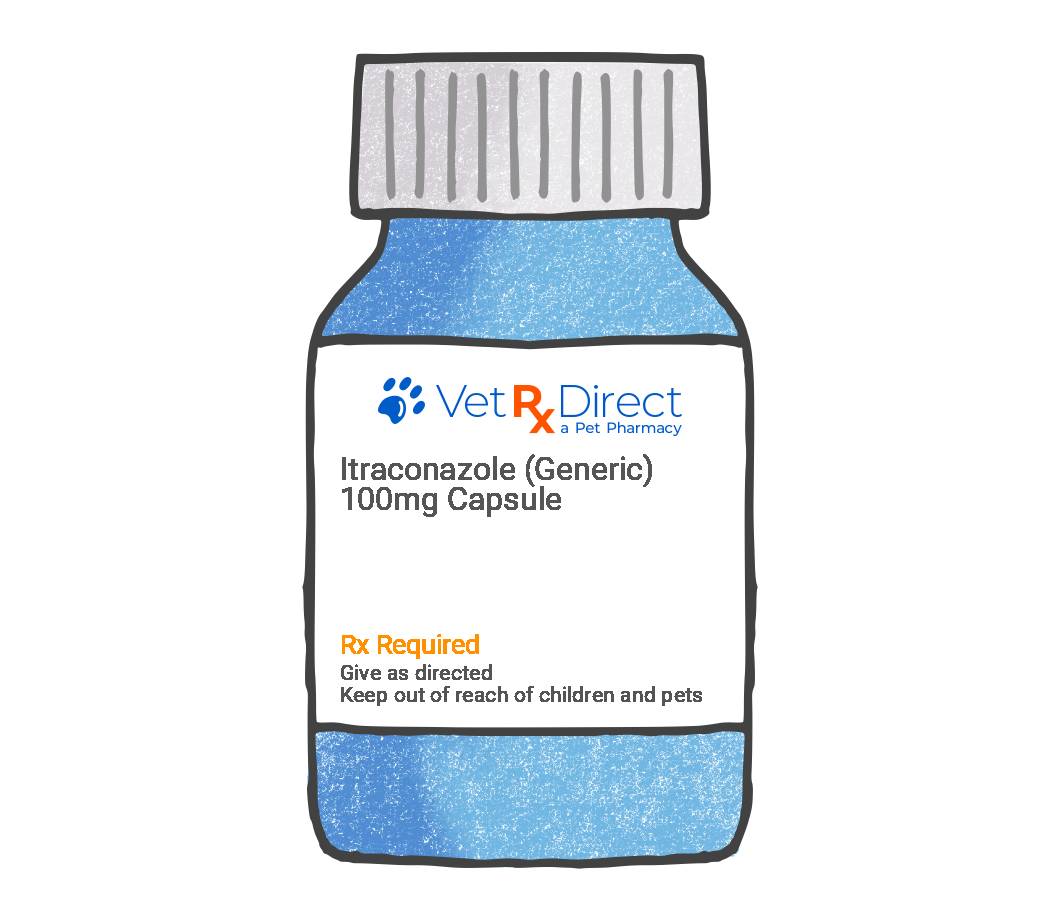
Will I get what I see in the picture?
- Itraconazole is sold as an FDA approved generic drug. Brand may vary from order to order and variation to variation. We are unable to guarantee which brand will be available at the time of order shipment.
Is it important for my dog or cat to finish all of the Itraconazole?
- Itraconazole is an antifungal. Resistance is a concern when using antifungals. To help avoid resistance, it is important for you to use this for as long as your veterinarian has prescribed, even if you dog or cat is looking and feeling better.
Review Summary
4 total reviews
Rated 5.00 out of 5 stars
0% of respondents would recommend this to a friend
Ratings Distribution
4 5 star reviews
0 4 star reviews
0 3 star reviews
0 2 star reviews
0 1 star reviews
Reviews
-
Excellent
From UndisclosedComments about Itraconazole (Generic)Great service and fast shipping! Best place that I could find Itraconazole online. -
I would buy this product and recommend it to others
From UndisclosedComments about Itraconazole (Generic)I am using this to fight a fungus infection in my dog. This medicine is working great! I feel I have my dog back. I saw no bad side effects. She seemed to sleep a lot the first couple day. But she back to being her happy silly self. -
-
Seems to be working well
From UndisclosedComments about Itraconazole (Generic)This product is helping clear up a fungal infection in my dog. -
Fast a delivery and Great Price!!
From undisclosedComments about Itraconazole (Generic)Needed these meds fast. Delivered in 24 hours and for only an additional $20. Was worth the $20 to get my pup started on them. And the price was 1/2 of a brick and mortar pharmacy.

Displaying Reviews 1 - 4
Q & A
-
Can i break the shell and give only tiny balls to dog??
-
According to Plumb’s Veterinary Drug Handbook it is recommended to give itraconazole capsules or the capsule contents with a fatty food such as butter, cream, ice cream or cheese.
Verified Answer
-
-
I don't have the veterinary prescription, is it possible buy??
-
Itraconazole is only available with a veterinary prescription.
Verified Answer
-
-
Is this the same medication as prescribed for human use? My vet told me to get Itraconazole for human use for my dog with Ringworm.?
-
Yes. Itraconazole is a human-labeled medication that can be prescribed by a veterinarian for treatment in dogs and cats.
Verified Answer
-
-
I am wondering if the Itraconazole (item# 2511) that you all have is the spherical formula (little tiny balls) and not the powder? Thanks in advance!?
-
Manufacturers do vary, the picture is provided only as a representation of the product. If you would like more specific information about the Manufacturer of the product currently in stock, please contact our pharmacy staff via email at [email protected]. Other contact information is available on our site at: https://www.vetrxdirect.com/contact
Verified Answer
-
-
is this as effective as name brand sporanox 100 mg for fungal meningitis??
-
Itraconazole is the active ingredient in Sporanox. The generic itraconazole will have equal effectiveness as brand name Sporanox for its approved conditions. Please talk to your veterinarian to determine recommended dosing of this medication for fungal meningitis.
Verified Answer
-
-
I need itraconazole in pill form so I can cut them in half (100mg). Do u have It this is way??
-
We do not carry Itraconazole in any dosage form besides the 100mg capsules listed on the website, and are not aware of the availability of any other dosage form. You may need to find a local compounding pharmacy who could compound a non-commercially available dose like 50mg. Your pet's veterinarian may know of a local pharmacy that could help with this. Thank you, VetRxDirect
Community Answer
-
Displaying Questions 1 - 6
x
Sign Up and Save 10%!
Plus enjoy insider offers and be the first to learn about our new products and promotions.
*10% off valid on your next order. Must apply code at checkout.
Your 10% off gift is coming your way.
But first, tell us more about your pet and only get content that is special to them.


and welcome to our family and !