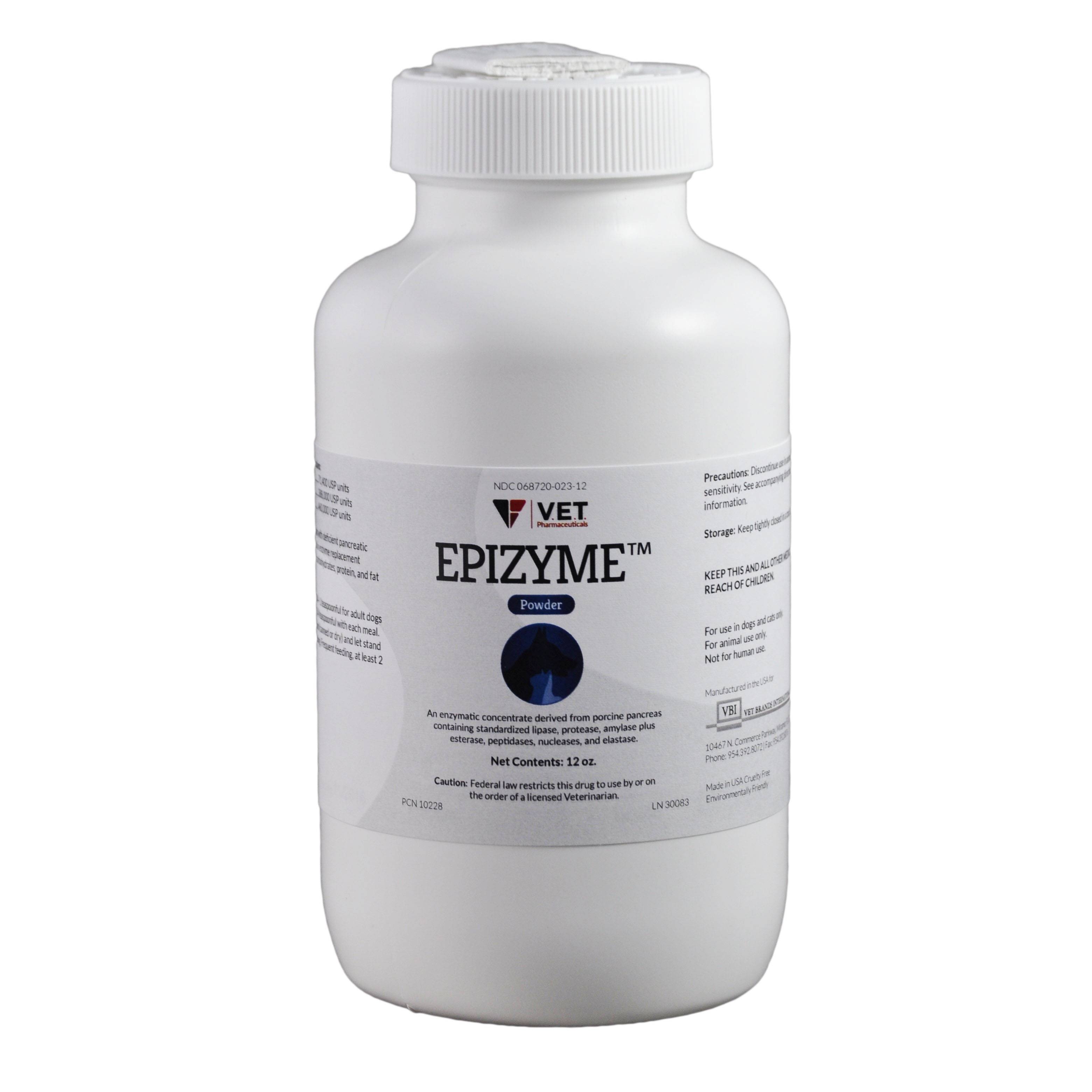

Epizyme Rx
-
Guaranteed lowest authorized price. Learn more.
-
Guaranteed lowest authorized price. Learn more.
-
Usually ships the same weekday before 2pm CT with veterinary approval.
-
Requires veterinary authorization.
-
Your pet's veterinarian will provide directions for use.
What is Epizyme for Dogs and Cats?
- Epizyme relieves the symptoms of Pancreatic Insufficiency Disorder (PID) in dogs and cats. PID is also known as EPI, or Exocrine Pancreatic Insufficiency.
- This prescription medication replaces the pancreatic enzymes that your dog or cat doesn’t produce but needs to digest the protein, sugar, and fat in food.
Why do cats and dogs use Epizyme?
- Dogs and cats with maldigestion, or Pancreatic Insufficiency Disorder (PID)/ Exocrine Pancreatic Insufficiency (EPI), suffer from weight loss, discomfort, and hair loss because they can’t properly digest the nutrients in food.
- The condition shuts down the pancreas, which produces digestive enzymes.
- Epizyme replaces those enzymes so that your pet can digest needed proteins, sugars, and fats from food.
What else should I know about Epizyme?
- Improves digestion and nutrition absorption in pets with PID/ EPI.
- Fast acting.
- Powder form mixes easily with food.
- Pancreatic enzymes made from a pork product.
What problems could my dog or cat have with Epizyme?
- Cats often do not like the taste of the pancreatic enzymes powder and may be more likely to take tablets or capsules made from crushed tablets. Some cats also may eat one brand of enzymes and not another. Talk to your veterinarian if you are having trouble with medicating your cat.
How do you use Epizyme?
- Epizyme works best when mixed with food and food is allowed to sit before feeding. Always follow your veterinarian's directions for use.
- Avoid inhaling powder as it may cause lung irritation or worsen asthma.
- Avoid contacting your skin with the powder. Wash any powder from your skin as soon as possible.
What is in Epizyme?
- Epizyme contains pancreatic enzymes that break down the nutrients in food.
- These enzymes typically come from pork sources.
Will I get what I see in the picture?
- Epizyme is a brand name. You will receive the exact brand that you request.
Is it important for my dog or cat to finish all of the Epizyme?
- Dogs and cats may use Epizyme for different lengths of time. Please consult your veterinarian if you have any questions.
Review Summary
Ratings Distribution
Most Liked Positive Review
I will continue buying this product.
Most Liked Negative Review
Cat is repulsed by it and will not eat.
Reviews
-
Excellent product
From UndisclosedComments about Epizyme 12oz PowderBella was diagnosed 11 years ago w EPI and put her on epizyme immediately after finding out She is thriving at 12 1/2 years old. Pic incl brother Ed!-
![Excellent product]()
Sweet Bella! -
![Excellent product]()
Big brother Ed !
-
-
Medication for Ashley
From UndisclosedComments about Epizyme 8oz PowderHelps her digestive issues-
![Medication for Ashley]()
Ashley
-
-
Without epizyme, no Bosley.
From UndisclosedComments about Epizyme 12oz PowderMy cat, Bosley has EPI so this is life saving medication for him! He gets it twice a day right after he eats. -
-
This medication is saving my dog's life.
From UndisclosedComments about Epizyme 12oz PowderThis product is amazing, I have been using this for years, without it my dog would not be alive! -
-
Worked for EPI
From UndisclosedComments about Epizyme 12oz PowderWorked for my dog's EPI at about 1/3 the cost of Viokase. -
This medication helped my pet.
From UndisclosedComments about Epizyme 8oz PowderOur dog has an enzyme deficiency and Tylosin is part of his dietary program. He constantly had diarrhea and was losing weight. Since the diagnosis and medications, he has not had a problem in over 7 years! We've used VetRXDirect one of the medication was hard to find and their prices are good. We've been most pleased with the service they provide and Bubba loves the cookie they add to the order.-
![This medication helped my pet.]()
Looking for Santa
-
-
Absolutely would recommend
From UndisclosedComments about EpizymeBella has been thriving for years with the help of Epizyme. -
A lifesaver!
From UndisclosedComments about EpizymeThis drug is a lifesaver. It saved "Thyme," our male lurcher, who suffers from exocrine pancreatic insufficiency (EPI) and was unable to digest food, literally starving to death while dropping weight precipitously! Now he chases rabbits and squirrels (and "Thyme," his bonded sibling)--we adapted both as rescues.-
![A lifesaver!]()
Watching a squirrel escape his clutches...
-
-
I am not certain if it helped or not.
From UndisclosedComments about EpizymeThe enzyme powder tastes very bitter to cats, so my cat would not eat his food when mixed in. I had to liquify the food then dissolve enzyme in it. The mixture was manually fed in a syringe. This has been so traumatic to my cat that the vet discontinued it. -
Buy to effectively treat pancreatic insufficiency
From UndisclosedComments about EpizymeThis product is excellent for managing pancreatic insufficiency. Once I found the vet who diagnosed and treated correctly, my dog is gaining weight and becoming more active. Without this enzyme, my dog would have died.


Q & A
-
My dog has been taking panzequin for EPI for about a year now, and we would like to switch her over to this product. Would you say they are compatible if we were to switch her to this enzyme from panzequin??
-
Panzquin and Epizyme are both used for EPI. Both products contain 71,400 USP units of lipase, 388,000 USP units of protease, and 460,000 USP units of amylase per 2.8 g (1 teaspoon). Panzquin also includes cyanocobalamin (vitamin B12), however Epizyme does not. With EPI, some dogs have low vitamin B levels, Panzquin helps keep vitamin B levels within normal range. It‘s recommended that you contact your veterinarian about the product switch and for any questions or concerns with either product.
Verified Answer
-
-
My vet thinks I need to use 3 teaspoons per meal for my German Shepherd, I don't see this listed on the bottle or anywhere else. I'd this accurate for this brand??
-
Epizyme is a prescription pancreatic enzyme product intended for relieving symptoms associated with Pancreatic Insufficiency Disorder (PID) in dogs and cats. Appropriate dosing will depend on your dog’s individual condition and weight. Please consult your veterinarian regarding the dosing of this medication for your dog.
Verified Answer
-
-
Dog likes to leave part of her meals to eat later on. Does the enzymes efficiency decrease the longer the food goes uneaten??
-
Enzyme efficiency does not decrease unless it is exposed to heat or an acidic environment. They are activated once they reach the digestive tract to aid in properly digesting food. However, if the wet food becomes dry over time, it’s good to wet the food so the powder binds to the food.
Verified Answer
-
-
My dog likes to drink water immediately after she has her meal with the enzymes. Will this affect the enzyme's effectiveness in any way??
-
Generally water consumption does not reduce the efficacy of most medications. Please consult with your veterinarian if you have any further questions regarding this medication and your dog.
Verified Answer
-
-
Hello. How many doses would the 8 oz bottle hold for a 7-8 pound cat? Wondering how long it might last.?
-
Epizyme is used for pets who have a lack of exocrine pancreatic enzymes resulting in an inability to digest food properly. Dosing is generally tailored to each pet by your veterinarian depending on the individual pet's medical conditions and severity of the disease. Based on the manufacturer's general recommended dosing range for cats, the 8oz bottle may last between 50 to 150 days if the cat is eating 2 meals daily. Based on your cat's individual condition, the Veterinarian may recommend a dose which may result in the 8oz bottle lasting outside of that range. Please consult your veterinarian regarding any further questions or concerns regarding this medication.
Verified Answer
-
-
Is there any downside to using this product if my cat doesn't require it? My cat's blood test showed elevated pancrease levels, but we don't know the cause. He is 13 years old, seems healthy but does vomit every week or so. We are changing to a GI friendly diet and removing dental treats, not sure if this will do the trick or not. Would like to add a digestive enzyme, but want to ensure it's ok.?
-
Epizyme is a prescription pancreatic enzyme formula indicated to treat exocrine pancreatic insufficiency or other pancreatic disorders. The enzymes found in pancrelipase help to digest and absorb fats, proteins, and carbohydrates. It is recommended that you consult with your veterinarian before making changes to your cat’s diet or adding dietary products. Because Epizyme requires a prescription, your veterinarian can provide the best information regarding the use of this product for your cat.
Verified Answer
-
-
My cat absolutely won't eat the food with the pancreplus powder. Can you give me any alternatives on how to give it to him.?
-
According to the manufacturer, PancrePlus Powder can be mixed with wet or moistened dry food to improve palatability. PancrePlus is also available in tablet form, and the tablets can be given whole before a meal. Please consult your veterinarian about this issue to discuss next therapy steps and whether the tablets may be appropriate for your cat.
Verified Answer
-
-
My dog has started urinating constantly since starting epizyme. Is this common??
-
Excessive urination is not a listed adverse effect of Epizyme. Please contact your veterinarian about your pet's condition.
Verified Answer
-
-
My dog refuses to eat her food with Epizyme. Is there a way to disguise the flavor of the powder. She eats fine without the Epizyme in the food.?
-
Epizyme can be added to any kind of wet or moistened food, as long as it is thoroughly mixed, so you may try adding it to a canned food instead of a dry food. If your pet refuses to eat, we recommend contacting your veterinarian about treatment options.
Verified Answer -
Hi. I have had great luck with doing the following. I put a big tablespoon of wet food in a cup (right now it's science diet prescription can food) and I then add her enzymes to it, and then I had about 3 tablespoons of warm water. I mix that up real good and pour it over her dry food and mix it up real well making sure that all her dry food is covered with the wet mixture. Wait 20 minutes and then feed! My baby licks her bowl. Good luck!
Community Answer
-
-
What are the three enzymes and how much of each one are in each teaspoon?
-
Each 2.8 grams (1 teaspoonful) of Powder contains: Lipase 71,400 USP units Protease 388,000 USP units Amylase 460,000 USP units
Verified Answer
-
Sign Up and Save 10%!
Plus enjoy insider offers and be the first to learn about our new products and promotions.
*10% off valid on your next order. Must apply code at checkout.
Your 10% off gift is coming your way.
But first, tell us more about your pet and only get content that is special to them.

and welcome to our family and !