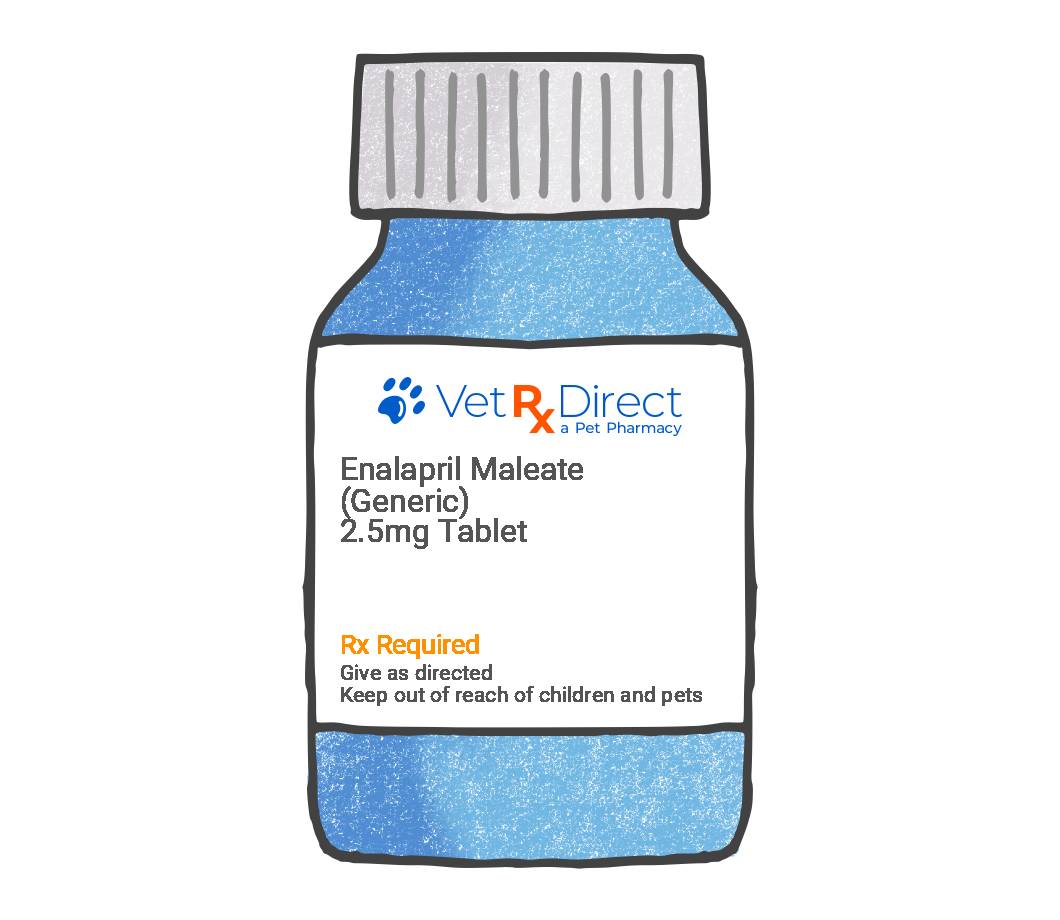
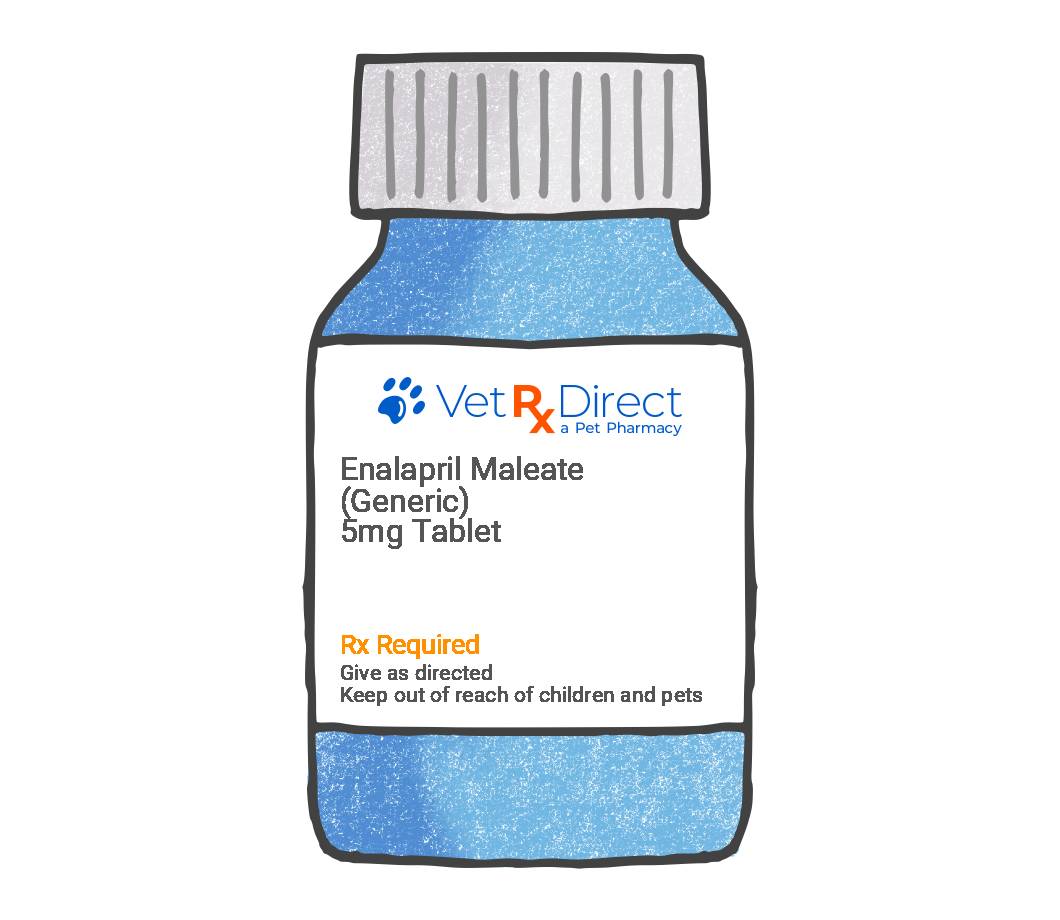
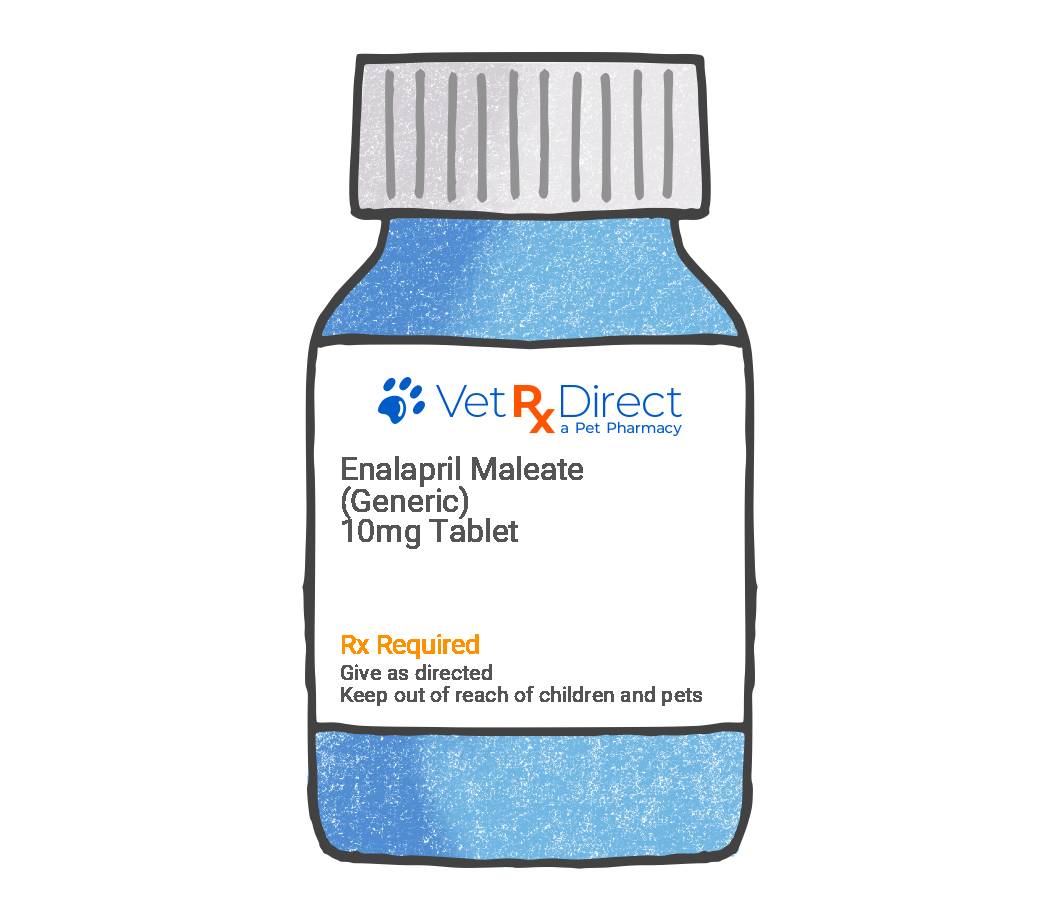
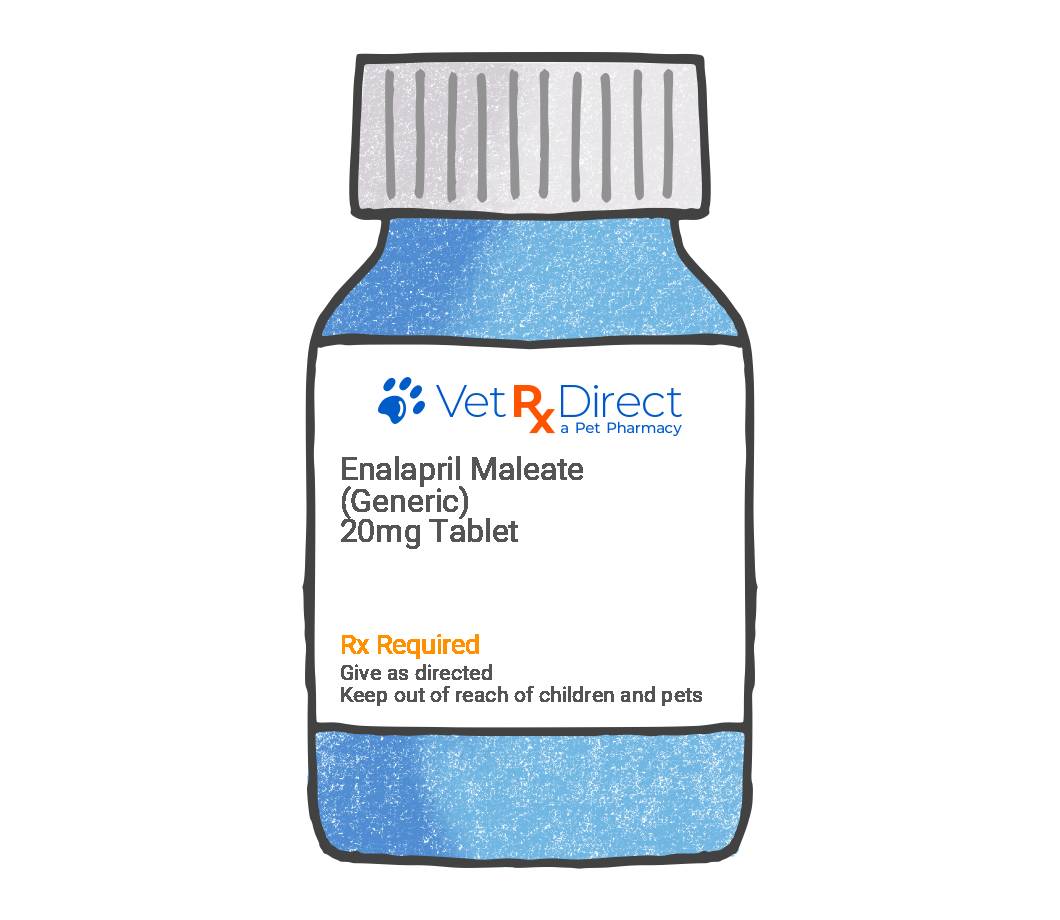

Enalapril Maleate (Generic) Rx
Starting At
$0.18
per tablet
Enalapril Maleate (Generic) Rx
$0.18
per tablet
Or save an extra 5% on your first order (up to $20) with Autoship*
$0.18
-
Usually ships the same weekday before 2pm CT with veterinary approval.
-
Requires veterinary authorization.
-
Your pet's veterinarian will provide directions for use.
What are Enalapril Tablets for Cats and Dogs?
- Enalapril is a prescription ACE inhibitor (angiotensin-converting-enzyme inhibitor).
- It is designed to relax the blood vessels in order to lower blood pressure and to reduce how hard the heart needs to work.
Why do cats and dogs use Enalapril?
- Enalapril is used primarily in the treatment of heart failure, high blood pressure, and some forms of kidney disease.
- In combination with Furosemide, a diuretic, Enalapril has been shown to improve the quality of life in dogs with heart failure.
What else should I know about Enalapril?
- Pregnant women should be careful when handling Enalapril as it does pose risk to a human fetus.
What problems could my dog or cat have with Enalapril?
- Enalapril may cause vomiting and diarrhea.
- If you see a rash or signs of infection, such as a fever, contact your veterinarian immediately.
- Do not give Enalapril to pregnant or lactating dogs or cats.
How do you use Enalapril?
- Emalapril may be given with or without food. Follow your veterinarian's directions.
- Do not stop giving Enalapril without talking to your veterinarian.
What is in Enalapril?
- Enalapril is a prescription ACE inhibitor (angiotensin-converting-enzyme inhibitor).
- ACE-inhibitors prevent the body from producing the enzyme angiotensin II, which narrows blood vessels.
Will I get what I see in the picture?
- Enalapril is sold as an FDA approved generic drug. Brand may vary from order to order and variation to variation. We are unable to guarantee which brand will be available at the time of order shipment.
Is it important for my dog or cat to finish all of the Enalapril?
- Dogs and cats may use Enalapril for different lengths of time. Please consult your veterinarian if you have any questions.
Review Summary
81 total reviews
Rated 4.96 out of 5 stars
100% of respondents would recommend this to a friend
Ratings Distribution
79 5 star reviews
1 4 star reviews
1 3 star reviews
0 2 star reviews
0 1 star reviews
Most Liked Positive Review
Another Great VetRxDirect deal!
My Doberman Valdo was recently diagnosed with dilated cardiomyopathy. After getting the news I was both shocked and devastated. As the doctor gave me all the prescriptions I would need, she said to me "the cost of these medications can be prohibitive". As I pay the bill I see I am paying over $300.00 for a months worth of medicine. There was no question that I would pay whatever was necessary to give my Valdo as much quality time with me and his buddy Sammie, as possible. I've ordered medication for my other dog Sammie from VRD, and have been very happy with price, communication, and customer service. I am now ordering all Valdo's medications frame here and I am saving over a third vs. the prices from the Vet. I would definitely recommend VetRxDirect to anyone.
Most Liked Negative Review
Great pharmacy
Order arrived quickly
Reviews
-
Boss
From UndisclosedComments about Enalapril Maleate (Generic) 5mg TabletGood stuff -
-
Frodo feeling better
From UndisclosedComments about Enalapril Maleate (Generic) 2.5mg TabletThis medicine has helped tremendously after being diagnosed with congestive heart failure along eith other meds. -
-
This medication has helped my dog.
From UndisclosedComments about Enalapril Maleate (Generic) 5mg TabletMy dog takes several medications that help. -
Very satisfied
From UndisclosedComments about Enalapril Maleate (Generic) 10mg TabletMy dog has protein in her urine and she needs to be on this drug for the rest of her life. This drug is very well priced at your site, much better than other places that I've looked into. Thank you-
![Very satisfied]()
Lilly
-
-
Enalapril
From UndisclosedComments about Enalapril Maleate (Generic) 2.5mg Tabletexcellent customer service, easy to order, quick delivery!-
![Enalapril]()
I love Vet Rx!
-
-
Seems to be helping my 16 year old Pomchi.
From UndisclosedComments about Enalapril Maleate (Generic) 10mg TabletMy vet prescribed this for our 16 year old Pomchi with heart failure. It is easily cut (she only takes half once a day) and is easily hidden in a soft moist treat. Mocha takes it without a problem this way. Mocha is doing well and it seems to be helping her.-
![Seems to be helping my 16 year old Pomchi.]()
Mocha in the middle with her partners in crime, Shadow and Bambi.
-
-
Great pharmacy
From UndisclosedComments about Enalapril Maleate (Generic) 5mg TabletOrder arrived quickly -
-
This helped my little girl.
From UndisclosedComments about Enalapril Maleate (Generic) 2.5mg TabletThis helps my little girl.-
![This helped my little girl.]()
Itsy
-
-
Healthy puppy, happy puppy!
From UndisclosedComments about Enalapril Maleate (Generic) 5mg TabletOnly use as necessary. Works quickly. :-) -
Good time on filling order
From UndisclosedComments about Enalapril Maleate (Generic) 2.5mg TabletReceived order in good time. All was correct. Was completely satisfied with service-
![Good time on filling order]()
Sweet susie
-


Displaying Reviews 1 - 10
Q & A
-
What is brand name of this 2.5mg med from Wockhardt? Is it Vasotec? Do you carry this wht round inscribed tablet with W923 on one side? I find it is not true in my case that Enalapril Maleate generic form is equivalent to the brand name. The small, yellow or beige color and round in shape generic tablet. Has inscription 1&2 on one side. This tablet does nothing for my furr baby but the brand does miracles for him. Where can I find it if y'all don't carry it??
-
VetRxDirect does not carry Vasotec tablets which is the brand name for enalapril maleate tablets. Manufacturers of generic enalapril maleate tablets will change based on availability from the wholesaler. A white, round tablet with a W923 inscription can be identified as enalapril maleate 2.5mg manufactured by Wockhardt pharmaceuticals. Please contact customer service for questions on current inventory of enalapril maleate.
Verified Answer
-
-
What is shape, color of pill (2.5 mg)? I have used round white and beige oval. Round are easier to cut.?
-
It depends on the manufacturer we have at the time. Right now it looks like we have a round yellowish pill. Thank you, VetRxDirect
Verified Answer
-
-
How much for a 30 day supply of 5mg 1 1/2 tablets twice a day. Does my vet call in the prescription and what is he number??
-
It looks like for a 30 day supply, the cost would be $8.10. You will need to create an account online and place an order for the medication and as soon as we receive that order, we will send a fax to the vet for the approval. Thank you, VetRxDirect
Community Answer
-
-
Does Enalapril 5 mg and Vetmedin come in liquid form??
-
Candy, Neither enalapril nor Vetmedin are commercially available in a liquid dosage form. VetRxDirect is able to compound a liquid dosage form for enalapril at 1mg/mL, 2.5mg/mL, and 5mg/mL but not Vetmedin at this time. Thank you, VetRxDirect
Community Answer
-
-
My pet takes this med for a heart condition. Do I require a prescription from my vet to acquire this at a lower price.?
-
Windjammer, As a prescription medication, pharmacies require authorization from your pet's veterinarian to purchase Enalapril. VetRxDirect is a trusted, licensed, and accredited pet pharmacy. We urge you to talk to your pet's veterinarian about your pet's options. Thank you, VetRxDirect
Community Answer
-
Displaying Questions 1 - 5
x
Sign Up and Save 10%!
Plus enjoy insider offers and be the first to learn about our new products and promotions.
*10% off valid on your next order. Must apply code at checkout.
Your 10% off gift is coming your way.
But first, tell us more about your pet and only get content that is special to them.

and welcome to our family and !