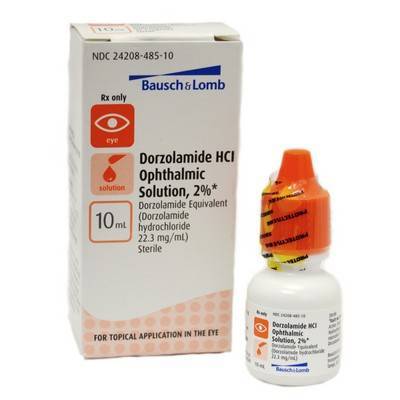

Dorzolamide 2% Eye Drops (Generic) Rx
-
Usually ships the same weekday before 2pm CT with veterinary approval.
-
Requires veterinary authorization.
-
Your pet's veterinarian will provide directions for use.
What are Dorzolamide Eye Drops for Dogs and Cats?
- Dorzolamide Eye Drops are a prescription ophthalmic solution used against glaucoma.
- Glaucoma causes pressure to build up in your pet’s eye -- Dorzolamide Eye Drops help reverse that process.
- Glaucoma is an eye disease that increases pressure in the eye, which can damage the structure of the eye and, over time, cause blindness.
- The disease is more common in dogs than cats and is usually genetic, but it can also be caused by trauma to the eye
Why do cats and dogs use Dorzolamide Eye Drops?
- Your veterinarian may prescribe Dorzolamide Eye Drops to treat glaucoma, an excess of pressure on the eye.
- Dorzolamide Eye Drops can be used to treat a diseased eye while protecting the healthy eye from the glaucoma.
What else should I know about Dorzolamide Eye Drops?
- Treats and prevents glaucoma in dogs and cats.
- Reduces risk of nerve damage and blindness.
- Dropper tip for easy dosing.
- Store the eye drops at room temperature, away from moisture and sunlight.
- There are approximately 20 drops per milliliter in an ophthalmic solution.
What problems could my dog or cat have with Dorzolamide Eye Drops?
- People with allergies to sulfa drugs or sulfonamides should handle Dorzolamide Eye Drops with care.
- Side effects may include burning, stinging, or irritation of the eyes, change in pupil size, dry eyes, runny nose, nausea, or vomiting.
- Humans report a bad taste in the mouth while using Dorzomalide.
- Do not use the eye drops if they change color, become cloudy, or if you see particles in the solution.
How do you use Dorzolamide Eye Drops?
- Use proper administation techniques to avoid contamination of the eye drops. Keep the cap on when not in use.
- Wait 5 minutes after applying the Dorzolamide/ Timolol Eye Drops before applying any other eye medications.
What is in Dorzolamide Eye Drops?
- Dorzolamide Hydrochloride (HCl) is a carbonic anhydrase inhibitor, which reduces the amount of liquid, also known as “aqueous humor,” produced in the eye. This lowers pressure in the eye.
Will I get what I see in the picture?
- Dorzolamide Eye Drops are sold as an FDA approved generic drug. Brand may vary from order to order and variation to variation. We are unable to guarantee which brand will be available at the time of order shipment.
Is it important for my dog or cat to finish all of the Dorzolamide Eye Drops?
- Dogs and cats may use Dorzolamide Eye Drops for different lengths of time. Please consult your veterinarian if you have any questions.
Review Summary
Ratings Distribution
Reviews
-
Great Service and Reliable Eye Medication
From FlComments about Dorzolamide 2% Eye Drops (Generic)The customer service was very kind and explained everything clearly. This eye medication will be very important for our dog, so we will continue to use this company from now on. -
He has had no problems with his left eye while using this pr
From UndisclosedComments about Dorzolamide 2% Eye Drops (Generic) 10mL Dropper BottleMy dog lost one eye as a pup to glaucoma. These drops help maintain normal pressure in his remaining eye-
![He has had no problems with his left eye while using this pr]()
Tesla
-
-
glaucoma
From UndisclosedComments about Dorzolamide 2% Eye Drops (Generic) 10mL Dropper BottleDr prescribed this med to help my pup with his glaucoma-
![glaucoma]()
Freshly groomed
-
-
These are drops that my Lola needs to use her entire life fo
From UndisclosedComments about Dorzolamide 2% Eye Drops (Generic) 10mL Dropper BottleWith RX I get them a third cheaper than at the vet and delivered to my house! Best place ever!-
![These are drops that my Lola needs to use her entire life fo]()
Lovely Lola
-
-
I will buy this again and again .Thank you so very much !
From UndisclosedComments about Dorzolamide 2% Eye Drops (Generic)So very pleased to find my pups prescriptions at such a discount .I was paying 3 times as much at my overpriced vets office . As she will need for her whole life , you have surely made mine better . Now we can afford to keep getting this .Thank you Vetrxdirect < 3-
![I will buy this again and again .Thank you so very much !]()
Sweet little Maddie < 3
-
-
So much cheaper to buy here!
From UndisclosedComments about Dorzolamide 2% Eye Drops (Generic)The same product I got from the Eye Specialist but 1/3 of the cost. So grateful for this website! -
Great value, same product!
From UndisclosedComments about Dorzolamide 2% Eye Drops (Generic)Same product as the local pharmacy at half the price. -
I would buy this product again.
From undisclosedComments about Dorzolamide 2% Eye Drops (Generic)Best price I could find. And fast shipping too! -
Great
From undisclosedComments about Dorzolamide 2% Eye Drops (Generic)We purchased this eye drop because our vet said they don't have them in stock. Thank you for the fast shipping! -
I will buy this product again
From undisclosedComments about Dorzolamide 2% Eye Drops (Generic)Recommended by my vet. Seems to work as required!


Q & A
-
Is there a difference between the HCL and HCI version of this med??
-
There is no difference between “HCL” and “HCl”. Both stand for hydrochloride.
Verified Answer
-
-
Difference from this Dorzolamide to the other Dorzolamide on the website??
-
The active ingredients in both of these products differ. The Dorzolamide Eye Drops contain dorzolamide hydrochloride only, whereas the Dorzolamide/Timolol Drops contain dorzolamide hydrochloride and timolol maleate.
Verified Answer
-
-
Someone recently told me that if used for a prolonged period of time (years), this product will cause the eyeball to shrink back into the eye socket, is this indeed true or not??
-
Shelby, Dorzolamide is a product used to treat glaucoma or ocular hypertension. These conditions occur when there is an increased amount of pressure built up behind the eye due to excess aqueous humor fluid. In severe cases, the buildup of pressure behind the eye can cause the eye to bulge outwards. What this person told you is somewhat true. The medication reduces the pressure in the eye by inhibiting the production of the excess fluid. As a result, the eye can go back to its normal size or can make it shrink back into the eye socket. Dorzolamide will not cause the eye to shrink to a smaller size than the eye was originally. Thank you, VetRxDirect
Community Answer
-
-
My dog has become blind within the last months and has a grey film over his eye. What solution or eye drops would you recommend?
-
breeze85, We're sorry, but pharmacies are unable to diagnose conditions or make prescription drug recommendations. We strongly urge you to seek the advice of your pet's veterinarian. Take Care, VetRxDirect
Community Answer
-
-
Dorzolamide Ophthalmic Soln 2% Can I substitute this for prednisolone acetate opthalmic for my shepard??
-
LisaH1, Prednisolone acetate is a anti-inflammatory steroid medication useful for eye irritation and inflammatory conditions diagnosed by your vet. Dorzolamide is a carbonic anhydrase inhibitor that will reduce intraocular pressure and is beneficial in conditions such as glaucoma. The two different classes of drugs as well as differing mechanisms of action do not make them routinely interchangeable. Speak to your veterinarian for a recommendation if you are trying to find an appropriate substitute for prednisolone acetate. Thank you, VetRxDirect
Community Answer
-
Sign Up and Save 10%!
Plus enjoy insider offers and be the first to learn about our new products and promotions.
*10% off valid on your next order. Must apply code at checkout.
Your 10% off gift is coming your way.
But first, tell us more about your pet and only get content that is special to them.

and welcome to our family and !