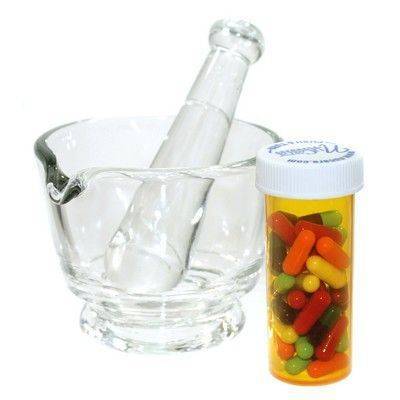

Diethylstilbestrol (DES) Capsules (Compounded) Rx
Due to drug supply issues, we are no longer able to compound diethylstilbestrol capsules. Please contact your veterinarian for information on other suppliers or alternative medications for your dog.
Diethylstilbesterol (DES) Capsules (Compounded) for Dogs
*20 WEEK SHELF LIFE ON DES FROM DATE PREPARED.*
What are compounded diethylstilbestrol capsules:
Diethylstilbestrol, commonly abbreviated DES, is a medication used to treat estrogen responsive urinary incontinence (wetting themselves or inability to hold urine) in spayed female dogs. It is also used to treat benign prostatic hypertrophy, BPH, which is an enlarged prostate in male dogs.
What else should you know about compounded diethylstilbestrol capsules:
Diethylstilbestrol capsules are compounded by VetRxDirect’s expert compounding staff. They are available in many dosage forms to tailor to your pet’s needs. The capsules need to be stored away from humidity, light, and heat. It is important to order your refills a few days ahead of time because the product needs to be made for your pet. DES capsules have an expiration date of 20 weeks after they are made, so pay close attention to expiration dates on your label. Quantities and charges ordered exceeding the beyond use date will be adjusted to hopefully prevent your pet’s medication from expiring before they are finished.
What strengths of compounded diethylstilbestrol are available:
This particular product has the following strengths of diethylstilbestrol per capsule: 0.25 mg, 0.4 mg, 0.5 mg, 0.7 mg, 0.75 mg, 1 mg, 1.5 mg, 2 mg, 3 mg, 4 mg, and 5 mg. You may also get other strengths if your veterinarian prescribes them and we will specially make them for your pet. There are also some inactive ingredients contained in the capsule to make the formula complete.Review Summary
Ratings Distribution
Most Liked Positive Review
Effective
Most Liked Negative Review
I won't order this product from PetRx again.
Reviews
-
I would buy this product again
From UndisclosedComments about Diethylstilbestrol (DES) Capsules (Compounded)Im very thankful that i can get the meds for my baby at a price i can afford. -
Definitely a customer
From UndisclosedComments about Diethylstilbestrol (DES) Capsules (Compounded)Very fast shipping. Easy to use web site. I will definitely purchase from VetRxDiect.-
![Definitely a customer]()
That's our girl
-
-
would rebuy
From undisclosedComments about Diethylstilbestrol (DES) Capsules (Compounded)Great -
I will continue to purchase this product.
From undisclosedComments about Diethylstilbestrol (DES) Capsules (Compounded)Thank goodness for this meds which has helped immensely with my aging dog's incontinence. She was so embarrassed with her accidents, now she's back to being the carefree pup she was before. I highly recommend the medicine. It is worth the,relatively low cost for her to take a pill every 3-4 days. -
Great product fast shipping
From undisclosedComments about Diethylstilbestrol (DES) Capsules (Compounded)Great, my dog prefers these capsules to the chewable. Vetrxdirected contacted my vet and shipped out the same day. A day later the prescription was delivered. -
I have been purchasing this solution for a few years.
From undisclosedComments about Diethylstilbestrol (DES) Capsules (Compounded)Lucy takes a pill twice a week and it solves her having accidentally peeing when she is asleep. No leaking any more. -
Yes
From undisclosedComments about Diethylstilbestrol (DES) Capsules (Compounded)Works perfectly for my dog -
-
I have to buy this repeatedly
From TexasComments about Diethylstilbestrol (DES) Capsules (Compounded)Very effective. I used it once every 8 days. -
Great savings on DES rx for my pet.
From undisclosedComments about Diethylstilbestrol (DES) Capsules (Compounded)I'm saving almost $12 using VetRxDirect compared to where I was getting my pet rx of DES before. That savings is even with shipping & handling charges. Glad I found VetRxDirect. -
I will be buying this product again.
From undisclosedComments about Diethylstilbestrol (DES) Capsules (Compounded)I use this to help my female boxer-mix with bladder control. It is one-quarter the cost of the medication through my vet.


Q & A
-
How long can a dog take this med? Can she take it indefinitely? She is 7 years old and has been wetting for two years and took Incurin for over six months without results.?
-
Diethylstilbestrol (DES) is a compounded form of estrogen. Estrogens can be used long-term for urinary incontinence in spayed female dogs, under the supervision of a veterinarian. Estrogens may lead to blood abnormalities and are more prevalent in older dogs. Please consult with your veterinarian with any questions or concerns regarding the appropriate use of estrogens with your dog.
Verified Answer
-
-
When will this product be available again? It has been "out of stock" for several months?
-
Unfortunately, Diethylstilbestrol is not available from our suppliers at this time (03/01/2019). At this time, VetRxDirect is uncertain when or if the product back will be back in stock. You may wish to speak with your veterinarian about possible alternatives that would be appropriate for your pet.
Verified Answer
-
-
Can DES be flavored with beef or chicken in chewable form.if so What would cost be for quality of 30 DES 0.5mg?
-
We are unable to compound DES in chewable form at this time. We apologize for any inconvenience this may cause you and your pet. Please contact your veterinarian to discuss additional dosage forms.
Verified Answer
-
-
Can this medicine cause loss of appetite in older dog, age 16?
-
Loss of appetite could be have various causes including upset stomach, nausea, age and infection. While your dog is taking diethylstilbestrol, it is recommended to contact your veterinarian if you notice signs of lethargy, vomiting, diarrhea, abnormal discharge from the vulva, excessive water consumption and urination or abnormal bleeding. Please contact your veterinarian so that the dog may be assessed and treated if necessary. Thank you, VetRxDirect
Verified Answer
-
-
I read that people are able to drop the frequency of how often they give their dogs the pill after a week or so of being on this medication. Is that common for this medication??
-
Yes this is common. Not all dogs will be able to reduce to the once weekly dosing however. Your veterinarian would be able to assess your dog and will be the best person to talk with regarding specific doses for your dog’s condition. Thank you, VetRxDirect
Community Answer
-
-
when should DES be given....how long before or after a meal, does it matter??
-
mcgee, Administration of diethylstiblestrol with or without food, does not appear to have a significant effect on the amount of drug that gets absorbed. It is best to be consistent as it relates to the presence of food when giving diethylstiblestrol. Thank you, VetRxDirect
Community Answer
-
-
What is the dosage for a 13 year old 5-6 pound toy poodle?
-
E., Your dog's veterinarian will prescribe the best dose of DES Compounded Capsules for your pet. Sometimes a higher initial dose is used for an amount of time before moving to the lowest effective dose. Your dog's veterinarian is the best source for this information. Thank you, VetRxDirect
Community Answer
-
Sign Up and Save 10%!
Plus enjoy insider offers and be the first to learn about our new products and promotions.
*10% off valid on your next order. Must apply code at checkout.
Your 10% off gift is coming your way.
But first, tell us more about your pet and only get content that is special to them.


and welcome to our family and !