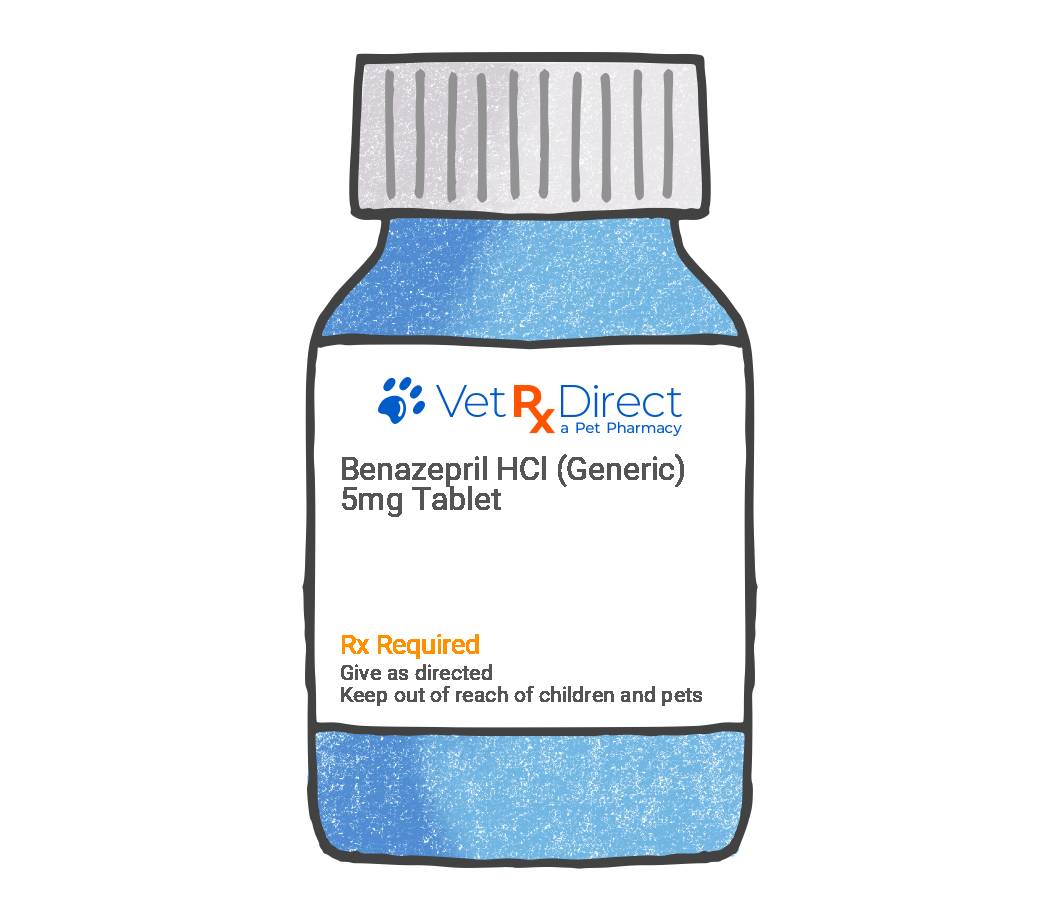
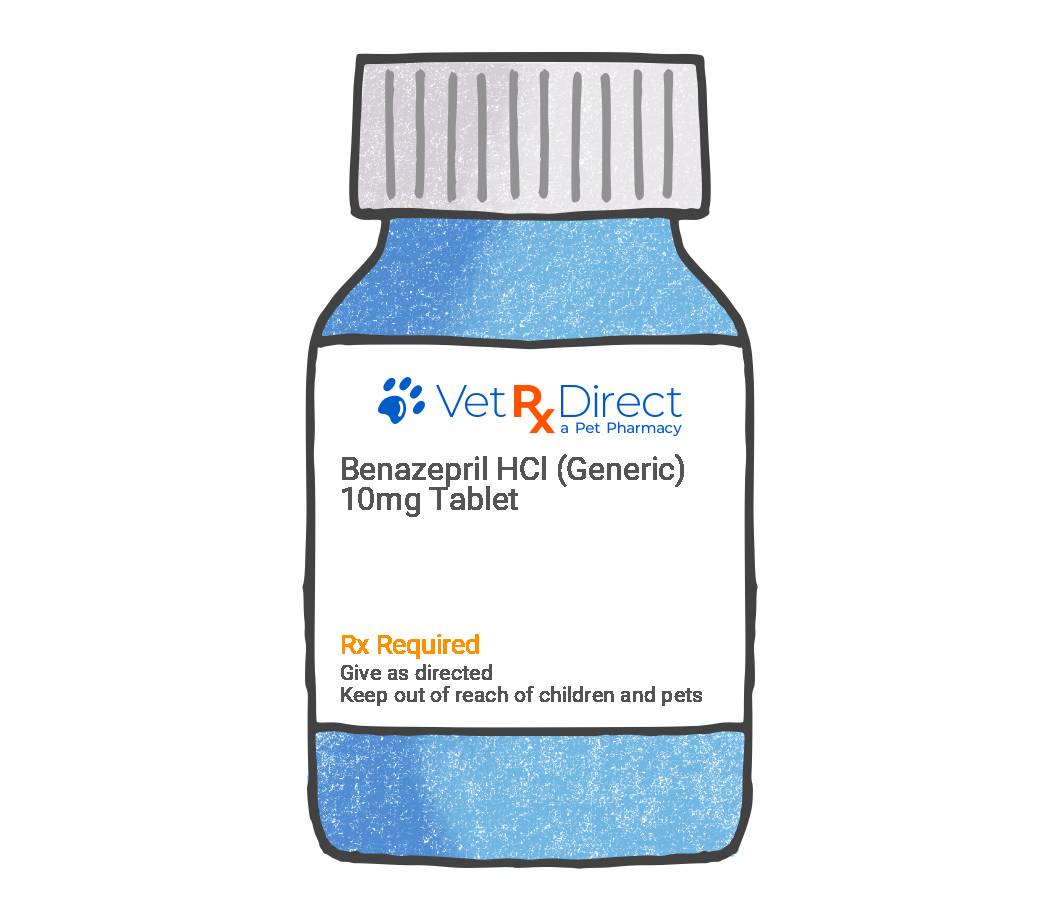
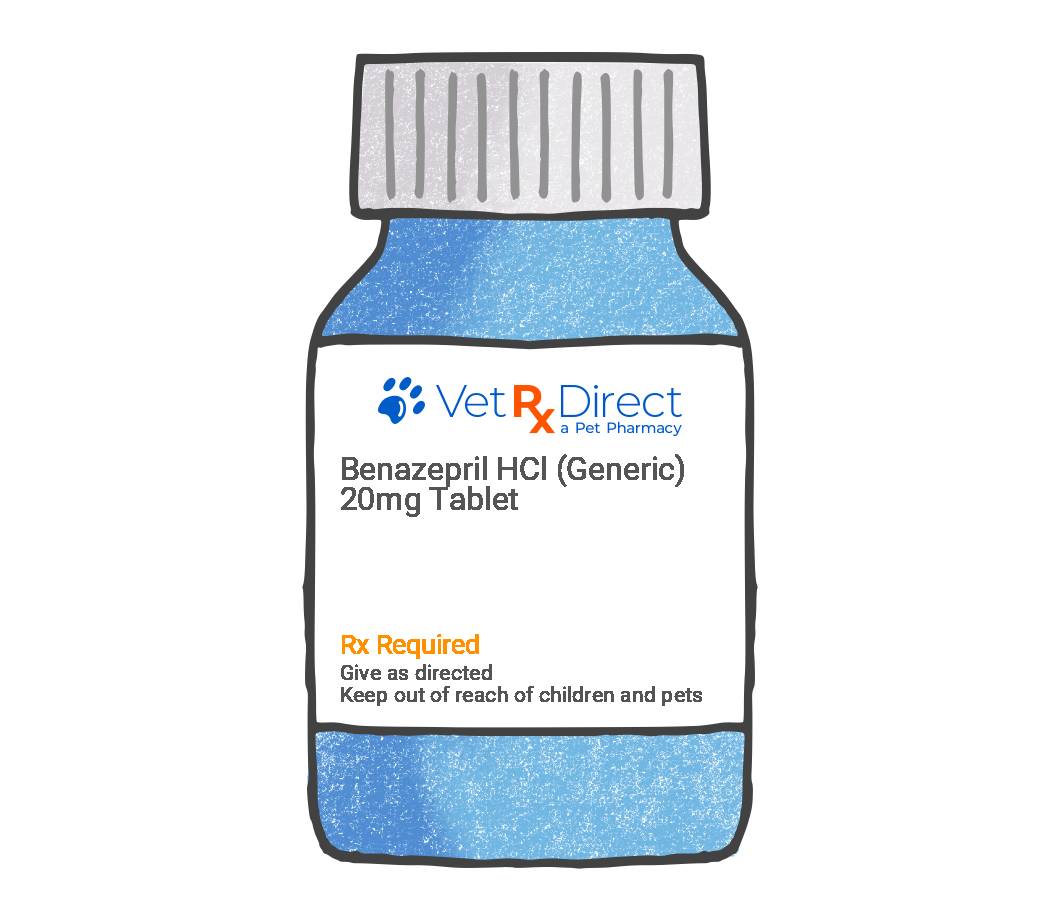

Benazepril HCl (Generic) Rx
Starting At
$0.13
per tablet
Benazepril HCl (Generic) Rx
$0.13
per tablet
Or save an extra 5% on your first order (up to $20) with Autoship*
$0.13
-
Usually ships the same weekday before 2pm CT with veterinary approval.
-
Requires veterinary authorization.
-
Your pet's veterinarian will provide directions for use.
What are Benazepril Hydrochloride Tablets for Dogs and Cats?
- Benazepril is a prescription medication that lowers blood pressure by helping relax veins and arteries.
- High blood pressure makes the heart work harder. This can cause damage to the heart and arteries. Over time, this can cause damage or malfunctioning of the brain, heart, and kidneys.
Why do cats and dogs use Benazepril?
- Benazepril Hydrochloride (Benazepril HCl) may be prescribed to treat high blood pressure, as a vasodilator for treating heart failure, or as additional treatment for chronic kidney failure.
What else should I know about Benazepril?
- Treats high blood pressure.
- Well-tolerated by most pets.
- Your dog or cat may need regular blood presssure checks and lab tests will taking Benazepril.
- Looking for a Benazepril Suspension?
What problems could my dog or cat have with Benazepril?
- Benazepril HCl has few side effects.
- The most common side effects include some stomach upset, lack of appetite, vomiting, and diarrhea.
- Notify your veterinarian if vomiting or diarrhea persists or is severe.
- Notify your veterinarian if your pet is extremely tired or appears dizzy (uncoordinated).
- Other side effects may occur. Contact your veterinarian if you notice anything unusual.
How do you use Benazepril?
- Give Benazepril by mouth as directed by your veterinarian.
- Do not stop giving Benazepril or reduce the dosage without talking to your veterinarian.
What is in Benazepril?
- Benazepril Hydrochloride (Benazepril HCl) is a second-generation angiotensin-converting-enzyme (ACE) inhibitor.
- ACE inhibitors prevent the body from making an enzyme that narrows blood vessels.
Will I get what I see in the picture?
- Benazepril is sold as an FDA approved generic drug. Brand may vary from order to order and variation to variation. We are unable to guarantee which brand will be available at the time of order shipment.
Is it important for my dog or cat to finish all of the Benazepril?
- Dogs and cats may use Benazepril for different lengths of time. Please consult your veterinarian if you have any questions.
Review Summary
24 total reviews
Rated 4.67 out of 5 stars
75% of respondents would recommend this to a friend
Ratings Distribution
21 5 star reviews
0 4 star reviews
2 3 star reviews
0 2 star reviews
1 1 star reviews
Most Liked Positive Review
Medications for Charlie
Charlie, my cat, has to take this medication once daily. He has too much protein in his urine. He has renal failure. So far it has worked so well. He is back in the range that it should be but still high. He has been on this for a year but doctor wants to continue to try and get it down lower. He is also on RenAvast twice a day.
Most Liked Negative Review
Pharmacist Failed to Use Common Sense!
I must cut each of these pills in half.
The pills are SO VERY TINY, IT MAKES MY TASK DIFFICULT TO IMPOSSIBLE.
The pharmacist should have dispensed the larger pill which is readily available.
I would even have paid more for this convenience.
Reviews
-
Pooch
From UndisclosedComments about Benazepril HCl (Generic) 5mg TabletHBP-
![Pooch]()
Issy
-
-
THE MEDICATION MOST DEFINATELY HELPED MY PET.
From UndisclosedComments about Benazepril HCl (Generic) 5mg TabletI USED VETRX DIRECT BECAUSE YOUR BENAZEPRIL HCI ARE LARGER PILLS. I HAVE TO GIVE MY DOG 1/4 OF A PILL AT NIGHT. ALL THE OTHER COMPANIES' PILLS ARE VERY TINY AND IT IS IMPOSSIBLE TO CUT THEM. THIS MEDICATION IS WORKING FOR MY COCOA!!-
![THE MEDICATION MOST DEFINATELY HELPED MY PET.]()
COCOA
-
-
Monthly deliveries
From UndisclosedComments about Benazepril HCl (Generic) 5mg TabletWas prescribed by my vet for CHF. It is always delivered in a timely manner-
![Monthly deliveries]()
Ollie
-
-
Essential Medicine for a high level of quality of life.
From UndisclosedComments about Benazepril HCl (Generic) 10mg TabletWe picked this medication because Scoop has health issues, including seizures and heart failure. These meds and critical for his survival and to keep his quality of life at a high level. He looks pretty good for almost 12 years old. We give him his pills with a small amount of peanut butter. He is the love of our lives......-
![Essential Medicine for a high level of quality of life.]()
Go Badgers!
-
-
Quick and easy
From UndisclosedComments about Benazepril HCl (Generic) 5mg TabletQuick and easy to order through the website. -
-
This medication is needed for my pet to remain healthy
From Clearwater, FlComments about Benazepril HCl (Generic)This site is easy to use and the med prices are really good. -
Drastic improvement.
From UndisclosedComments about Benazepril HCl (Generic) 5mg TabletVet recommended -
-
You'd never know she has a potentially fatal heart condition
From UndisclosedComments about Benazepril HCl (Generic) 20mg TabletWinnie's dilating cardiomyopathy has been stable since starting Benazapril. -
-
Benazapril Keeps Aubrey Heart in Shape
From UndisclosedComments about Benazepril HCl (Generic) 5mg TabletI ghh oh ve Aubrey Benazapril once a day to treat heart murmurs. I hide the pill in wet fog food pellets.-
![Benazapril Keeps Aubrey Heart in Shape]()
Aubrey's Sun Happy Place
-
-
Heart meds and VetRx gave our pup his mountain life back
From UndisclosedComments about Benazepril HCl (Generic)Our dr picked the product and helps with his heart condition since moving from Chicago to Colorado. We love working with Vetrxdirect reassonable priced and every issue we have ever had has been resolved immediately and waived any shipping fees and expedited meds so our pup didnt miss a dose. He loves enjoying the mountains again bc of his medicine.-
![Heart meds and VetRx gave our pup his mountain life back]()
Snow and mountains make me happy!
-


Displaying Reviews 1 - 10
Q & A
-
I need larger pills so I can cut them into 4ths, as directed by the vet. Is there a way I can specify this in my order??
-
Benazepril is sold as an FDA approved, human generic drug. Brand may vary from order to order and variation to variation. Pill size, shape, and color may vary between brands, and we are unable to guarantee which brand will be available at the time of order shipment. You may consider speaking with your veterinarian to determine if your pet’s dosage comes in a strength that does not require splitting. If you have any additional questions about this medication, please contact our pharmacy directly.
Verified Answer
-
-
My veterinary would like to know each of the excipients added. Thanks?
-
Is it OK to split the 5 mg in half? There is no 'cut mark' on the tablet.?
-
This medication can be split in half using a pill splitter, which can be ordered from VetRxDirect.
Verified Answer
-
-
I use to received tiny pills for Benazepril 5mg, I just received a new shipment and the pills are significantly bigger, is this an error or its the right pill??
-
It could be a different manufacturer, but please double check the package insert or drug label to ensure the dosage is 5mg Benazepril. If you have additional concerns, please feel free to call us at VetRxDirect and we can verify the tablet ID for you.
Verified Answer -
It could be a different manufacturer, but please double check the package insert or drug label to ensure the dosage is 5mg Benazepril. If you have additional concerns, please feel free to call us at VetRxDirect and we can verify the tablet ID for you.
Verified Answer
-
Displaying Questions 1 - 4
x
Sign Up and Save 10%!
Plus enjoy insider offers and be the first to learn about our new products and promotions.
*10% off valid on your next order. Must apply code at checkout.
Your 10% off gift is coming your way.
But first, tell us more about your pet and only get content that is special to them.

and welcome to our family and !