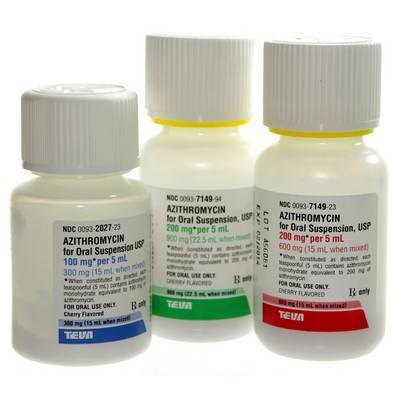

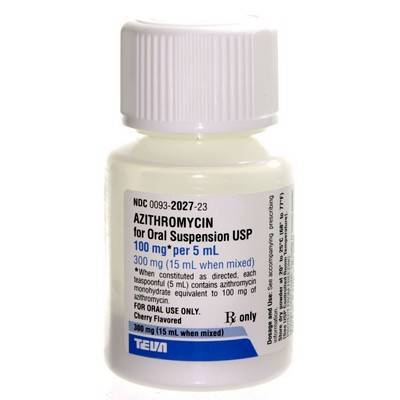
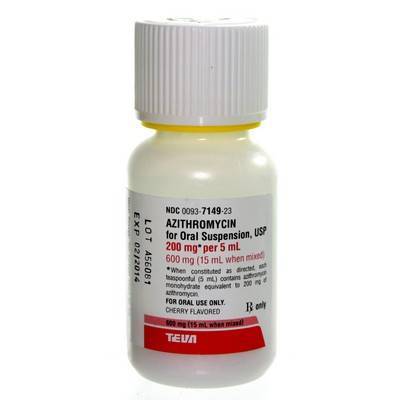
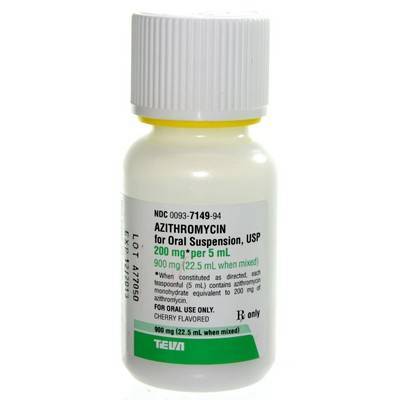

Azithromycin (Generic) Rx
Starting At
$1.01
per tablet
Azithromycin (Generic) Rx
$1.01
per tablet
Or save an extra 5% on your first order (up to $20) with Autoship*
$0.96
-
Usually ships the same weekday before 2pm CT with veterinary approval.
-
Requires veterinary authorization.
-
Your pet's veterinarian will provide directions for use.
What is Azithromycin for Dogs and Cats?
- Azithromycin is a prescription antibiotic used to treat a wide variety of bacterial infections in dogs and cats.
- Azithromycin is a broad-spectrum, macrolide type antibiotic that kills bacteria by preventing bacteria from producing the proteins needed for growth.
Why do cats and dogs use Azithromycin?
- Azithromycin may be prescribed to treat certain types of infections caused by bacteria or parasites.
What else should I know about Azithromycin?
- Broad-spectrum oral antibiotic.
- Treats certain bacterial and parasite infections.
What problems could my dog or cat have with Azithromycin?
- Azithromycin may cause vomiting, diarrhea, reduced appetite, or GI cramping. Contact your veterinarian if these side effects are serious or persistent.
How do you use Azithromycin?
- Your veterinarian may recommend giving the tablets with food. Oral suspensions should be given on an empty stomach.
- Give the tablets by mouth as directed by your veterinarian for exactly as long as directed by your veterinarian.
- How to prepare the oral suspension: You will receive a bottle of water and a bottle of powder. Add the total amount of one water bottle provided to you to one bottle of powder. Shake vigorously before each use. Discard any unused portion after 10 days.
What is in Azithromycin?
- Azithromycin is a broad-spectrum, macrolide type antibiotic that kills bacteria by preventing bacteria from producing the proteins needed for growth.
Will I get what I see in the picture?
- Azithromycin is sold as an FDA approved generic drug. Brand may vary from order to order and variation to variation. We are unable to guarantee which brand will be available at the time of order shipment.
Is it important for my dog or cat to finish all of the Azithromycin?
- Azithromycin is an antibiotic. Resistance is a major concern when using antibiotics. To help avoid resistance, it is important for you to use this for as long as your veterinarian has prescribed, even if you dog or cat is looking and feeling better.
Review Summary
20 total reviews
Rated 4.45 out of 5 stars
100% of respondents would recommend this to a friend
Ratings Distribution
15 5 star reviews
2 4 star reviews
1 3 star reviews
1 2 star reviews
1 1 star reviews
Most Liked Positive Review
Sammie is 15 yrs old and has come down with chronic sinus...
Sammie is 15 yrs old and has come down with chronic sinus infection so he has to now be on azithromycin for the rest of his life practically every day . He gets stuffed up and sneezes and can not breathe and could not live very much longer unless I keep him on this ....I am grateful to you for having the Rx med and for your great pricing. I could not have done it if this were not so . Thanks!
Most Liked Negative Review
Epic Brand is Bitter, But Cat Responds Well
Squatch is older with a chronic sinus infection on his right side, most likely due to a bad tooth (he's too old to go under anesthesia for dental, plus dental specialists are at least 5 hours away). He responds wonderfully to azithromycin liquid. It does not give him the runs. Vet rx Direct has sent us at least 3 brands over the past couple of years. I have tasted a drop myself each time, knowing cats can taste bitter flavors too (I'm an old-time ex vet tech). Squatch has taken all but the Epic Pharma brand well. He absolutely hates it. I tasted it; it's horribly bitter! I told Vet rx Direct about Epic, but that's what was sent again last time. I would have given 5 stars but for the Epic.
Reviews
-
Yes.
From UndisclosedComments about Azithromycin (Generic) 500mg TabletVet Rx was fast to inform me about issues filling the prescription and gave me options. They honored it as fast as possible and the meds were at my doorstep soon after that. Grade A communication and product. Thank you!-
![Yes.]()
backyard inspection time.
-
-
The "Awakenings" Antibiotic for Squatch - Works Great!
From UndisclosedComments about Azithromycin (Generic) Oral Suspension, 600mg, 200mg/5mL, 15mL when mixedSquatch responds to his Azithromycin like the movie "Awakenings". His chronic sinus infection due to a bad tooth (he's too old for surgery/anesthesia) responds starting around Day 4-5 on his Azi, and soon he's back to exploring and singing, as if he was only 10! It's easy to mix and administer; he gets a course roughly every 3 months. He doesn't get diarrhea from it, and it doesn't seem to bother his appetite. We keep an eye out for signs of liver or kidney difficulites due to his age. My one criticism is that the bitterness is masked better in some generic brands better than others, and I wish the manufacturers would work on that. It's not bad enough to drop a star in the rating though, since he's a good sport about it and responds to it so dramatically.-
![The "Awakenings" Antibiotic for Squatch - Works Great!]()
"I'm not as astute as I look" -
![The "Awakenings" Antibiotic for Squatch - Works Great!]()
Garage cat goes glam! -
![The "Awakenings" Antibiotic for Squatch - Works Great!]()
"I'm funnier than I look"
-
-
Epic Brand is Bitter, But Cat Responds Well
From Rural PAComments about Azithromycin (Generic)Squatch is older with a chronic sinus infection on his right side, most likely due to a bad tooth (he's too old to go under anesthesia for dental, plus dental specialists are at least 5 hours away). He responds wonderfully to azithromycin liquid. It does not give him the runs. Vet rx Direct has sent us at least 3 brands over the past couple of years. I have tasted a drop myself each time, knowing cats can taste bitter flavors too (I'm an old-time ex vet tech). Squatch has taken all but the Epic Pharma brand well. He absolutely hates it. I tasted it; it's horribly bitter! I told Vet rx Direct about Epic, but that's what was sent again last time. I would have given 5 stars but for the Epic. -
I use this frequently
From UndisclosedComments about Azithromycin (Generic)Used in rescue cats for upper respiratory distress -
Great Price
From UndisclosedComments about Azithromycin (Generic)This can be very expensive if needed often and bought at the vets. Here I get a great price and fast service. -
Works great for my chihuahua w/autoimmune issue
From UndisclosedComments about Azithromycin (Generic)I use this for my tiny 3lb chihuahua to control her snot bubbles (combined w/daily Benadryl). I divide each bottle into 4 equal parts and make 4 bottles out of it since she only gets .2 ounces/day and once it is hydrated it is only good for 10 days. -
Effective; Will buy again
From UndisclosedComments about Azithromycin (Generic)Performed as expected on my senior cat's sinus infection. Good packaging and clear instructions. -
Good but a flavor for cats would be better
From UndisclosedComments about Azithromycin (Generic)I wish it was a flavor my cat enjoyed more but a nice alternative to the pricey stuff from the vet. -
Fine
From undisclosedComments about Azithromycin (Generic)Didn't do much for my dogs Oral Papillomas and cause him to throw up. However, these were both known results before I tried this for a particularly bad case. -
Great Prices, Fast & Easy!
From undisclosedComments about Azithromycin (Generic)My cat has to take this medication for the rest of his life. It is affordable from Vet RX. Shipping is always fast, and they even fax my cats vet when it's time for a refill!!


Displaying Reviews 1 - 10
Q & A
-
Can I give my 30 pound dog 250 mg of Azithomycin for cough?
-
Azithromycin is an antibiotic that is used to treat certain types of bacterial infections. If the cough is related to a bacterial infection such as bronchitis, this medication may be a potential treatment option. However, it is recommended to discuss with your veterinarian as cough may have causes unrelated to bacterial infection. Additionally, your veterinarian will have the appropriate dose and duration of therapy if this medication is appropriate.
Verified Answer
-
-
Is it okay to separate a bottle of dry powder into 2 equal pill bottles and reconstitute one but leave the other one dry for future use? The vet office says to do it, but are the active ingredients distributed equally??
-
how many ML are in each bottle i cant see the pic very well.?
-
VetRxDirect sells three different Azithromycin Oral Suspensions, which vary in volume and concentration when mixed with water and prepared for dosing. The choice between the three depends on the dose that your veterinarian has prescribed for your cat or dog. To see the options, click the drop-down box next to where it says “Select Product” on this page, https://www.vetrxdirect.com/product/view/azithromycin-for-dogs-and-cats-rx, Please note that any remaining medication must be discarded within 10 days after mixing.
Verified Answer
-
-
What is the Cherry Flavor composed of in this antibiotic? Is the CHERRY FLAVOR in this medication TOXIC to Cats? I understand this is a Human medicine that can be used for Vet Rx use. Every photo image on the internet appears to have CHERRY FLAVOR on the box. Is this product manufactured as an oral suspension "without" the Cherry Flavor? I have read that components of REAL Cherries are toxic to cats and I am wondering why it would be safe to dose a cat with a medicine full of cherry flavor if cherries are toxic to cats. Thank you.?
-
The cherry flavoring in this medication is 100% artificial and does not contain cherries. The information regarding the composition of the flavoring was received from the manufacturer. Unfortunately we do not carry any other flavors than the cherry at this time. If you have further questions regarding this item, it is recommended that you speak to your veterinarian as they may have some insight.
Verified Answer
-
-
do i need a prescription for azithromax?
-
Yes, azithromycin does require a prescription from the veterinarian.
Verified Answer
-
-
My dig has a recurring bronchitus probkem he has gad ut once 4months ago and had gotten meds niw its the same thing again i cant afford a vet this time what can i do please help?
-
Unfortunately, we are not able to provide specific medical advice. Please speak with your veterinarian about your dog's condition.
Verified Answer
-
-
Is your product : Azithromycin for pets the same grade as Azithromycin for Humans?
-
Azithromycin is a human labeled prescription medication prescribed extra-label by veterinarians. There are currently no veterinarian labeled azithromycin products.
Verified Answer
-
-
Since this oral suspension is only good for 10 days after it's reconstituted when mixed with water, and since it then must not be exposed to over 77 degrees F., and since some of those 10 days will be wasted during delivery time, can it be shipped in dry state to me so that I can reconstitute it??
-
Azithromycin suspension is shipped dry, in it's original sealed bottle. Instructions for reconstitution are included.
Verified Answer
-
-
what would be the dose for my chihuahua? He is 4 years old and weights 11 pounds.?
-
The dose of this medication should be determined by your veterinarian.
Verified Answer
-
-
does this this cherry flavored azithromycin have xylitol in it?
-
Azithromycin does not contain xylitol.
Verified Answer
-
Displaying Questions 1 - 10
x
Sign Up and Save 10%!
Plus enjoy insider offers and be the first to learn about our new products and promotions.
*10% off valid on your next order. Must apply code at checkout.
Your 10% off gift is coming your way.
But first, tell us more about your pet and only get content that is special to them.


and welcome to our family and !