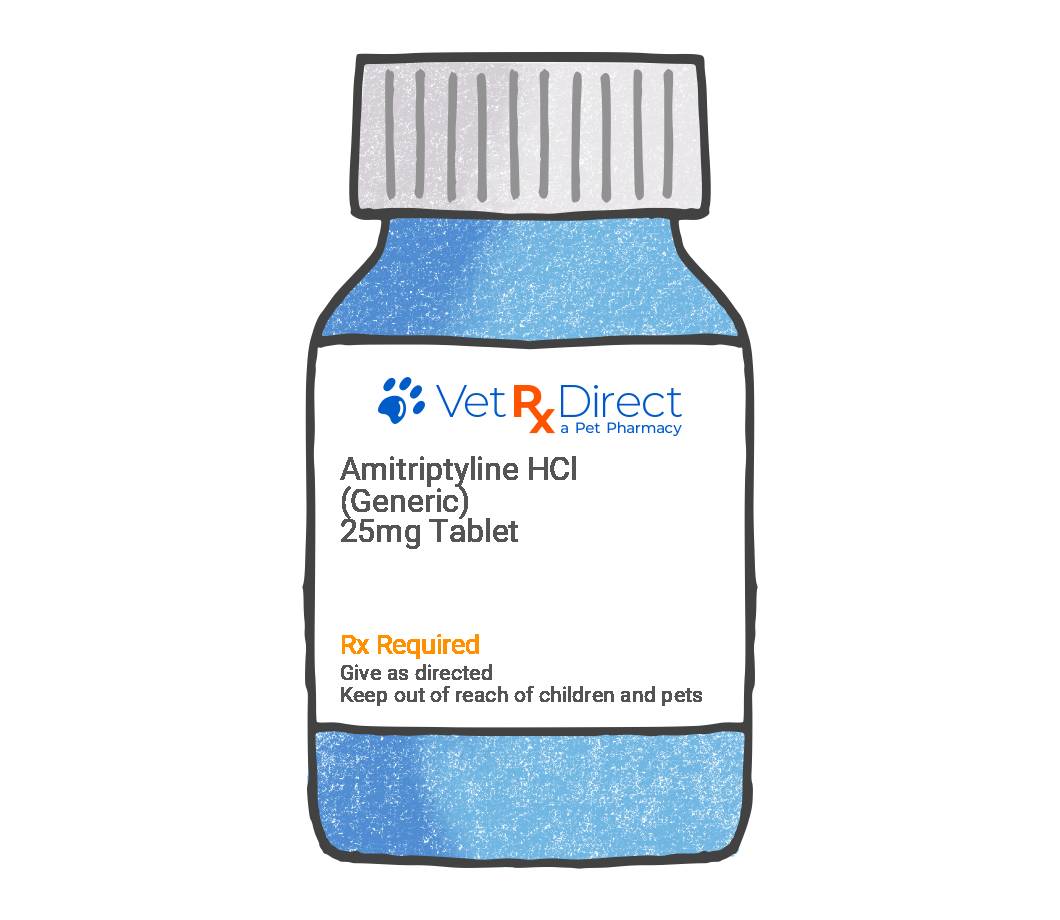
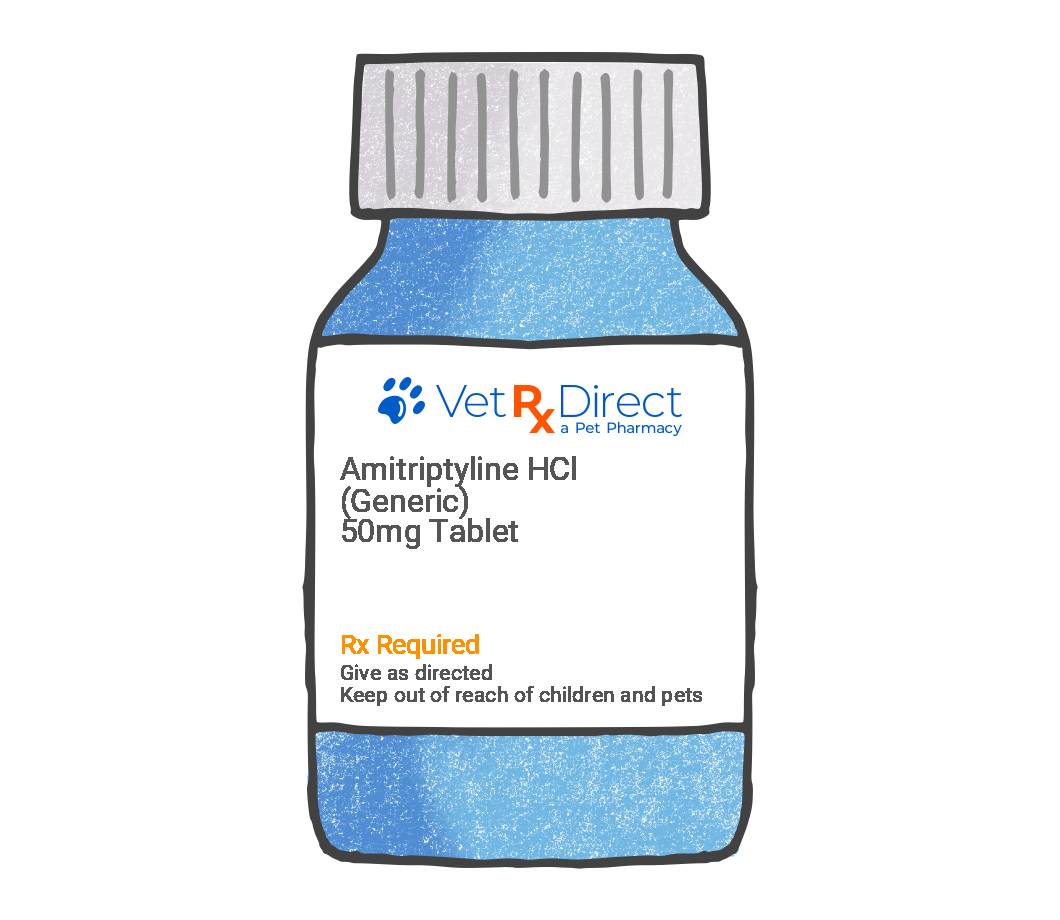
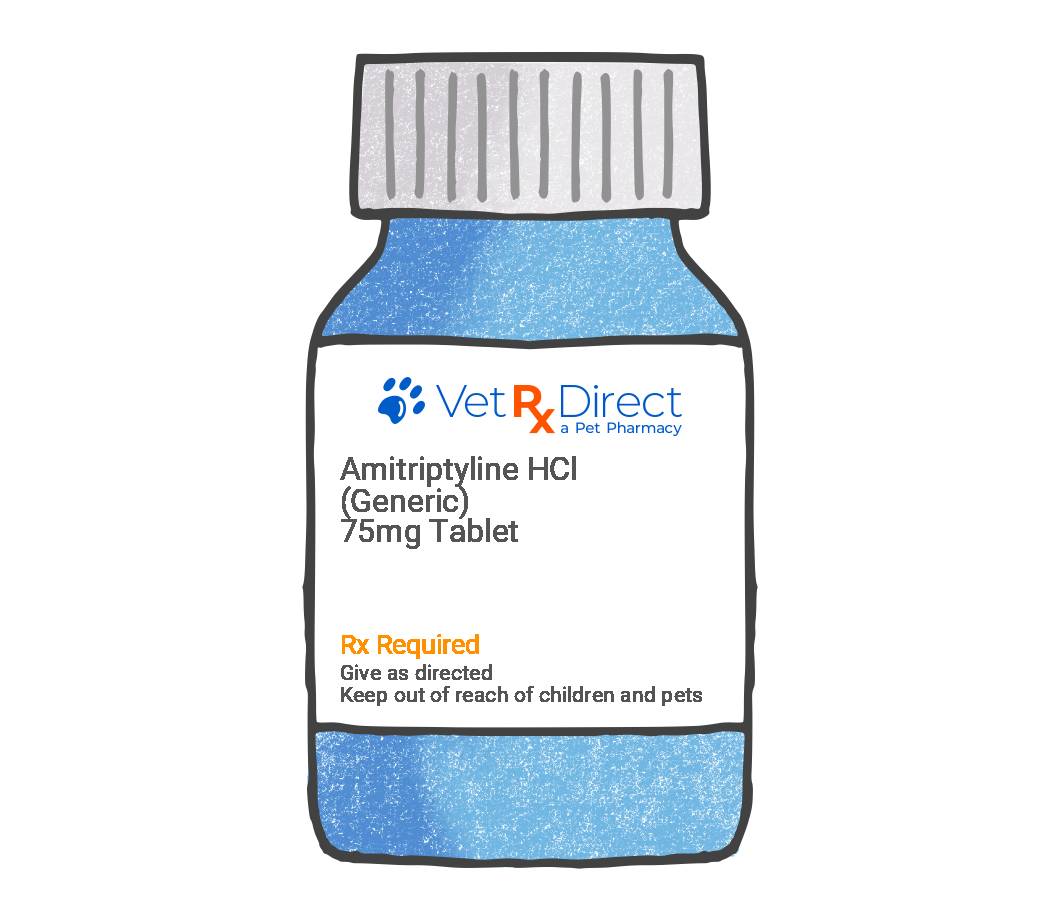
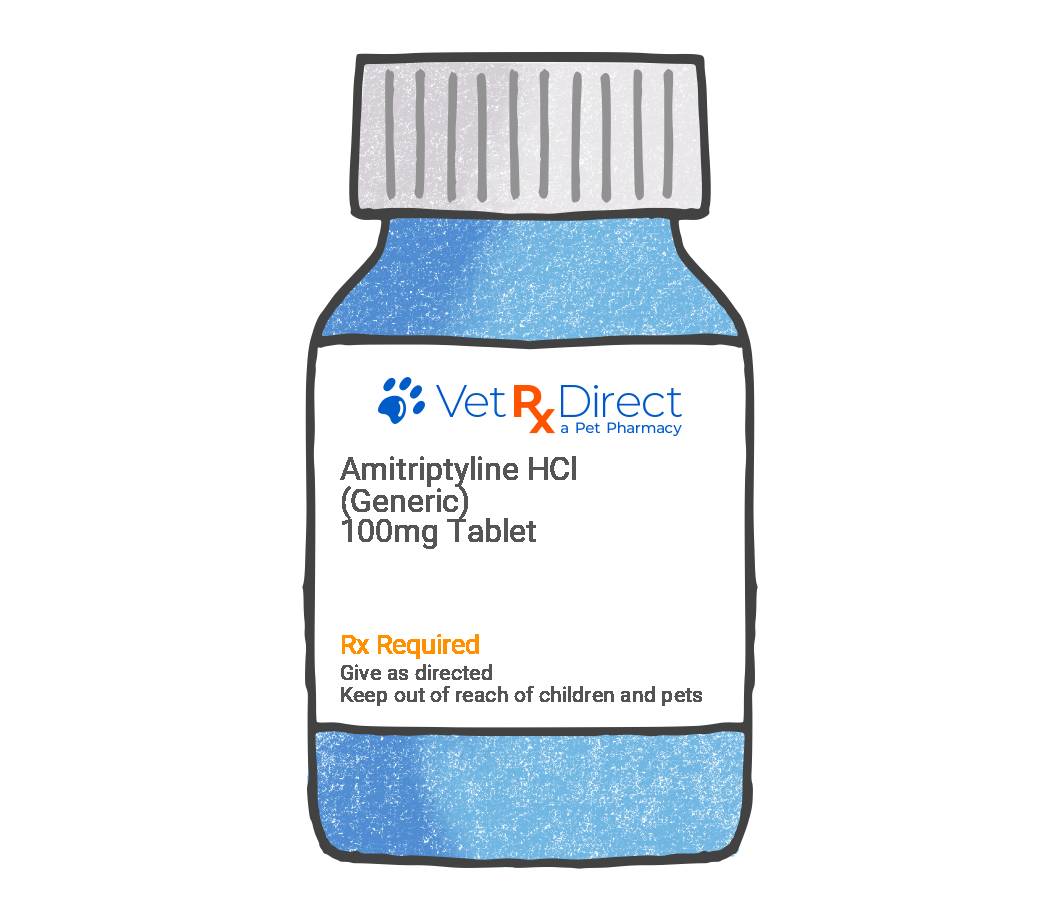

Amitriptyline HCl (Generic) Rx
Starting At
$0.14
per tablet
Amitriptyline HCl (Generic) Rx
$0.14
per tablet
Or save an extra 5% on your first order (up to $20) with Autoship*
$0.14
-
Usually ships the same weekday before 2pm CT with veterinary approval.
-
Requires veterinary authorization.
-
Your pet's veterinarian will provide directions for use.
What are Amitriptyline Tablets for Dogs and Cats?
- Amitriptyline is a prescription anti-depressant drug called a tricyclic, that affects certain chemicals in the brain that are unbalanced.
- It it used to control behavior problems in dogs and cats such as anxiety, separation anxiety, excessive grooming, and urine spraying in cats.
- It is also used in the treatment of chronic nerve pain and severe itching.
Why do cats and dogs use Amitriptyline?
- Amitriptyline is a medication used treat behavioral problems or nerve pain in dogs and cats.
- If your pet has been diagnosed with a behavior disorder your veterinarian may prescribe an antidepressant medication like Amitriptyline.
What else should I know about Amitriptyline?
- Amitriptyline may be given with or without food.
- It may take several days or weeks to determine if Amitriptyline is effective.
- Make sure your dog or cat has plenty of fresh water to drink.
What problems could my dog or cat have with Amitriptyline?
- Common side effects are sleepiness, dry mouth, and constipation.
- It is important to NOT use a flea collar while giving Amitriptyline without talking to your veterinarian first.
- Rare but serious side effects include bleeding, fever, seizures, or rapid/ irregular heartrate. Contact your veterinarian immediately if you notice any concerns.
- Overdoses of Amitriptyline can be very serious. Keep Amitriptyline out of the reach of children and other animals.
How do you use Amitriptyline?
- Give Amitriptyline tablets by mouth as directed by your veterinarian.
What is in Amitriptyline?
- Amitriptyline is a prescription anti-depressant drug called a tricyclic antidepressent.
- Amitriptyline affects certain chemicals in the brain that are unbalanced.
Will I get what I see in the picture?
- Amitriptyline is sold as an FDA approved generic drug. Brand may vary from order to order and variation to variation. We are unable to guarantee which brand will be available at the time of order shipment.
Is it important for my dog or cat to finish all of the Amitriptyline?
- Dogs and cats may use this product for different lengths of time. Please consult your veterinarian if you have any questions.
Review Summary
4 total reviews
Rated 5.00 out of 5 stars
0% of respondents would recommend this to a friend
Ratings Distribution
4 5 star reviews
0 4 star reviews
0 3 star reviews
0 2 star reviews
0 1 star reviews
Reviews
-
Great meds and price
From UndisclosedComments about Amitriptyline HCl (Generic) 10mg TabletVet prescribed. Great company, we always come back here when we need to order any of our meds.-
![Great meds and price]()
Sweet Sequoia
-
-
Will continue purchasing from Vet RX Direct
From UndisclosedComments about Amitriptyline HCl (Generic)Our 11 year old cat Chloe has anxiety and over grooms when something happens to make her anxious. She takes amitriptyline every day to control her anxiety. When she first started taking it, we got it from the vet but it was much more expensive than Vet RX Direct and we usually receive it in 2 to 3 days. -
Will continue purchasing from Vet RX Direct
From UndisclosedComments about Amitriptyline HCl (Generic)Our 11 year old cat Chloe has anxiety and over grooms when something happens to make her anxious. She takes amitriptyline every day to control her anxiety. When she first started taking it, we got it from the vet but it was much more expensive than Vet RX Direct and we usually receive it in 2 to 3 days. -
Recommend
From undisclosedComments about Amitriptyline HCl (Generic)So far this product has worked really well on my cat. The shipment was fast and communication with VetRx was great.

Displaying Reviews 1 - 4
Q & A
-
CAN THIS BE FOR HUMANS??
-
This is a human-labeled prescription medication that may be used in an extra-label manner for pets, under the direction and guidance of a veterinarian. As a pet pharmacy, we only dispense this medication with a veterinarian’s prescription for use in animals.
Verified Answer
-
-
What is the nongenaric look like. And what shape and color.?
-
VetRxDirect does not stock the non-generic, brand name amitriptyline tablet.
Verified Answer
-
-
what does the pills for amitriptyline10 and 25 look like?
-
It looks like the Amitriptyline 10mg tablets are round and blue and the Amitriptyline 25mg tablets are round and yellow. Thank you, VetRxDirect
Community Answer
-
-
From .09 to $1.50/ tab increase in a 2 month span for a generic amitriptyline, just curios.............., why??
-
Unfortunately, even with generic medications, drug prices are never set in stone. Price increases can be caused by a number of things, though the most common reason in generic medications is a shortage of the raw ingredient which raises acquisition costs. Often, however, the cause of a medication price change is not shared with the pharmacies who dispense the medication, unless there are widespread shortages causing unavailability of a product. Luckily, this does not appear to be the case with amitriptyline. We will be able to adjust the price of the medication again when the acquisition cost of the medication adjusts. That will be reflected on our website. Thank you, VetRxDirect
Community Answer
-
Displaying Questions 1 - 4
x
Sign Up and Save 10%!
Plus enjoy insider offers and be the first to learn about our new products and promotions.
*10% off valid on your next order. Must apply code at checkout.
Your 10% off gift is coming your way.
But first, tell us more about your pet and only get content that is special to them.

and welcome to our family and !