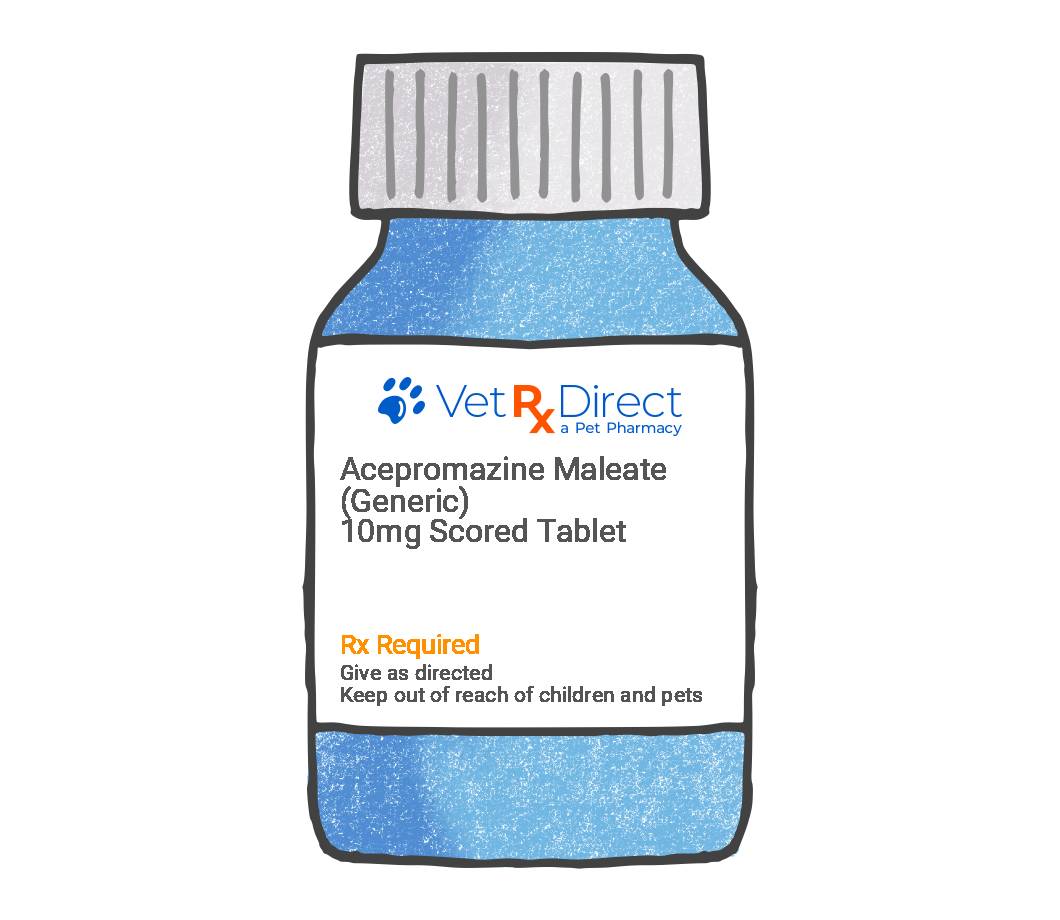
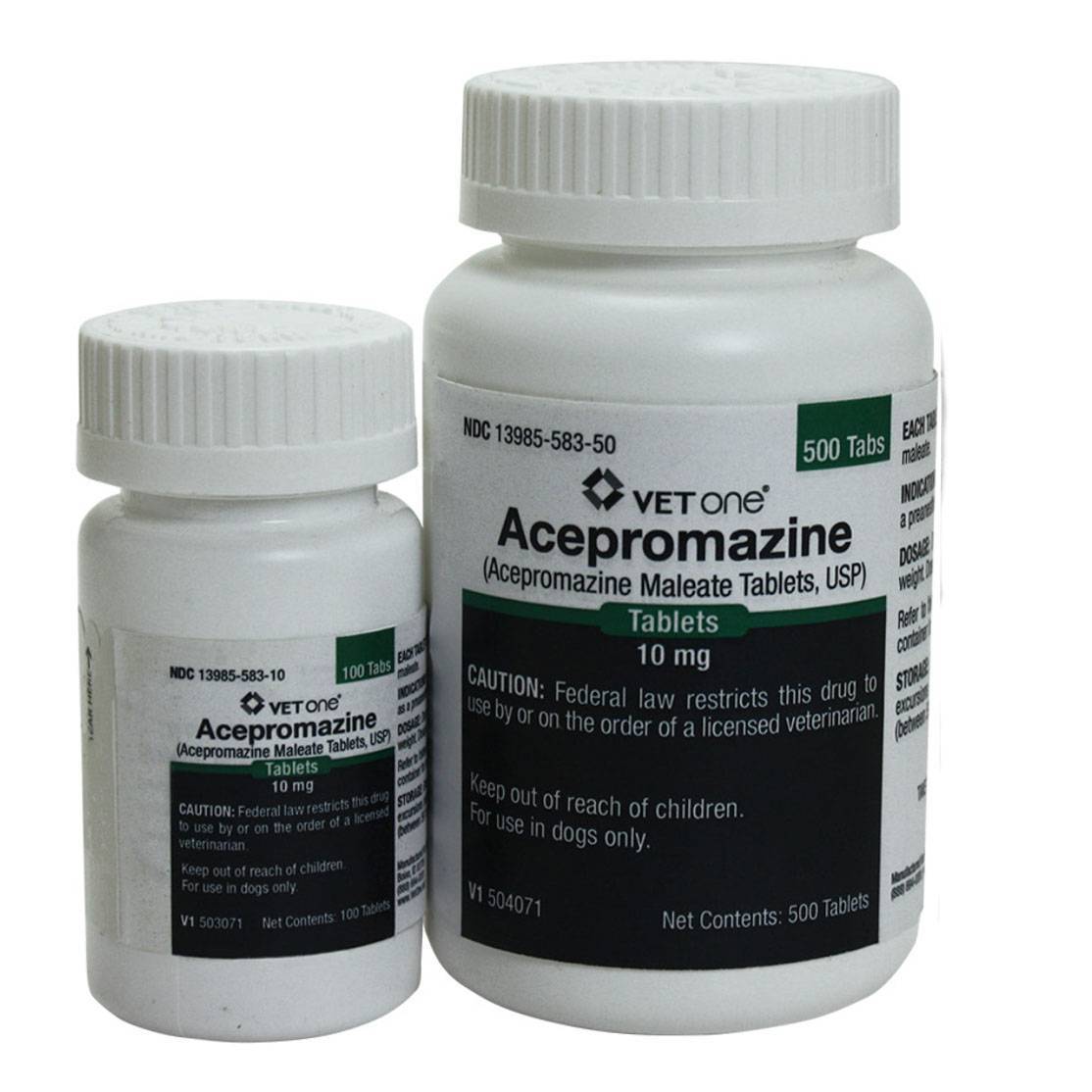
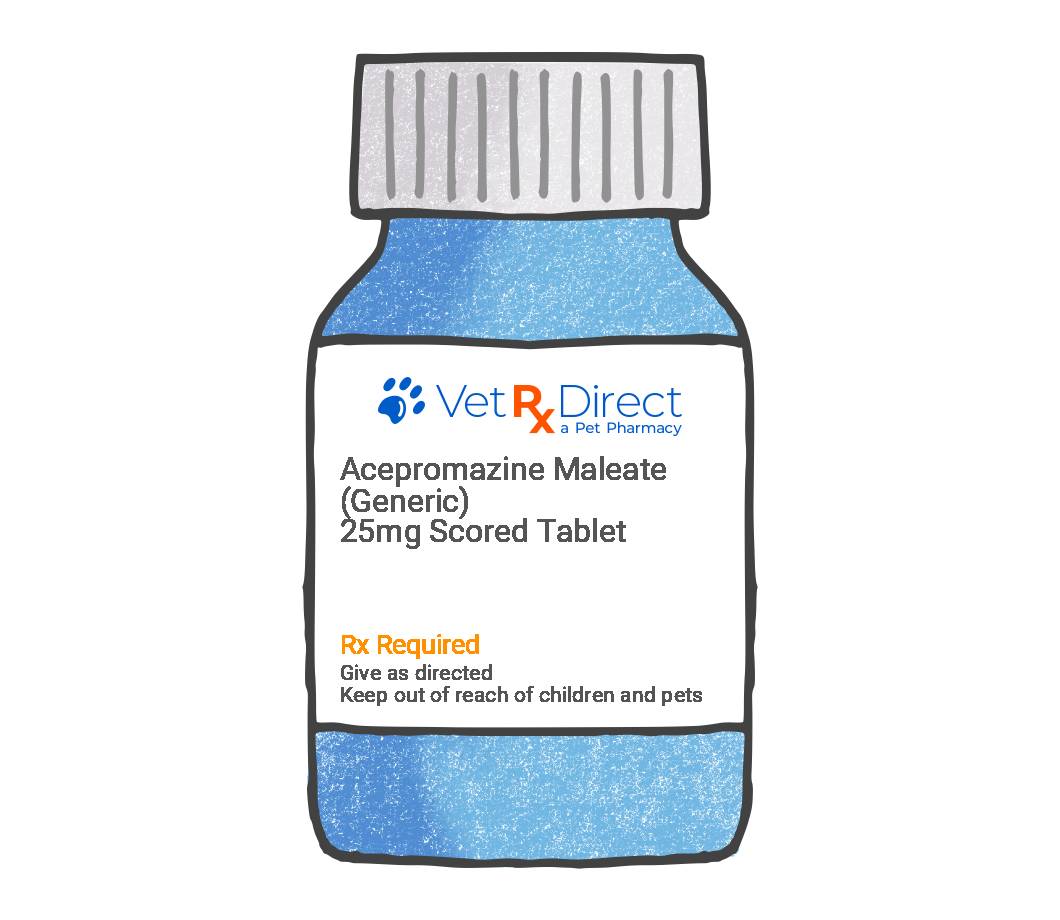

Acepromazine Maleate (Generic) Rx
Starting At
$0.42
per tablet
Acepromazine Maleate (Generic) Rx
$0.42
per tablet
Or save an extra 5% on your first order (up to $20) with Autoship*
$0.40
-
Usually ships the same weekday before 2pm CT with veterinary approval.
-
Requires veterinary authorization.
-
Your pet's veterinarian will provide directions for use.
What are Acepromazine (Generic) Tablets?
- Acepromazine is a prescription tranquilizer-type medication that causes sleepiness or sedation in dogs and cats.
Why is Acepromazine used for dogs or cats?
- Veterinarians may prescribe Acepromazine to sedate dogs or cats before surgery or stressful procedures.
- This medication may also be used to reduce vomiting for cats and dogs who suffer from motion sickness.
What else should I know about Acepromazine?
- Acepromazine causes sleepiness but does not reduce anxiety or fear.
- Dogs or cats taking Acepromazine should be kept in a quiet, comfortable environment.
What problems could my dog or cat have with Acepromazine?
- Acepromazine may turn urine a pinkish to reddish brown color.
- Acepromazine should not be given with other sedatives or tranquilizers unless directed by your veterinarian.
- Acepromazine should not be given to animals with severe heart disease or with very low blood pressure.
- This medication should be used with caution with aggressive or unpredictable animals, as well as certain breeds of dogs.
How do you use Acepromazine?
- Acepromazine is usually given 45 to 60 minutes before a stressful event or traveling.
- This medication can be given for various lengths of time. Be sure you understand how long your veterinarian wants you to continue giving this medication.
- Give the exact amount prescribed and only as often as directed.
- Do not skip doses or stop giving the medication without consulting your veterinarian.
What is in Acepromazine?
- Acepromazine is the active ingredient in the drug.
- Acepromazine is a sedative medication.
Will I get what I see in the picture?
- Acepromazine is sold as an FDA-approved generic drug. The brand may vary from order to order and variation to variation. We are unable to guarantee which brand will be available at the time of shipment of the order.
Is it important for my dog or cat to finish all of the Acepromazine?
- Dogs and cats may use this product for different lengths of time. Please consult your veterinarian if you have any questions.
Review Summary
4 total reviews
Rated 5.00 out of 5 stars
0% of respondents would recommend this to a friend
Ratings Distribution
4 5 star reviews
0 4 star reviews
0 3 star reviews
0 2 star reviews
0 1 star reviews
Reviews
-
Yes
From UndisclosedComments about Acepromazine Maleate (Generic) 10mg Scored TabletRefill great help in calming my guy before grooming-
![Yes]()
My Jaxxson
-
-
Helps
From UndisclosedComments about Acepromazine Maleate (Generic) 10mg Scored TabletI have high anxiety shitzu who bites when grooming. This relaxes him enough to do his face legs and paws. We still add treats and a surf collar lol-
![Helps]()
Jaxx after groom -
![Helps]()
Jaxx after last groom
-
-
Will continue to provide this RX for him
From UndisclosedComments about Acepromazine Maleate (Generic)The safe and perfect med to calm our hyper corgi who worked himself into colitis. -
Now my dog sleeps
From Fair Oaks, CA, USAComments about Acepromazine Maleate (Generic)My dog Buster is a sweet 60 lb. mixed breed dog. He's now 13 years old. He has, what I call, "Sundowners Syndrome". He wakes in the middle of the night and roams around...for hours....lost, confused and panicked. We tried other options, but sedation is the only thing that helps. We started out with 1/2 of a 25mg pill of Acepromazine every night. After 1 year, he now takes 10mg of Ace between 7 and 8 o'clock every night. He sleeps peacefully all night, but he can still wake up if he needs to go out. Acepromazine has been a godsend for us both. I don't worry that he's panicked and we both get to sleep.-
![Now my dog sleeps]()
Photo 1
-


Displaying Reviews 1 - 4
Q & A
-
Would this be a good fit for "chilling" my dog out before taking her into the office at my apartment complex to get a mouth swab? She does not like "strange" "New" people and is very protective.?
-
Acepromazine is a prescription tranquilizer-type medication that causes sleepiness or sedation in dogs and cats. Acepromazine causes sleepiness but does not reduce anxiety or fear. Please consult with your veterinarian to determine if this medication is appropriate for your dog's needs.
Verified Answer -
Acepromazine is a prescription tranquilizer-type medication that causes sleepiness or sedation in dogs and cats. Acepromazine causes sleepiness but does not reduce anxiety or fear. Please consult with your veterinarian to determine if this medication is appropriate for your dog's needs.
Community Answer
-
-
What kind of tablets are you delivering??
-
VetRxDirect offers/carries Acepromazine 10mg and Acepromazine 25mg tablets. We are unable to guarantee specific generic manufacturers for this product. Orders are filled with the manufacturer in stock at that time. We apologize for any inconvenience. If you have specific questions about a particular product before you order, you can contact our pharmacy technicians via email at [email protected]. Other contact information is available on our site at: https://www.vetrxdirect.com/contact
Verified Answer
-
-
what is the side effect of acepromazine in small dogs. I think I gave him an over dose and he shows synptoms like elolipsy?
-
I was wondering if I need a prescription for this medicine. Acepromazine..My dog has a lot of fears of thunder and fireworks. Nothing works. But my neighbor gets this product and it works for his dog. My vet doesn't believe in using this medicine and keeps giving me natural herb stuff which does not works. So I'm trying to find out if it can just be ordered without a vet.?
-
Acepromazine does require a prescription from a veterinarian.
Verified Answer
-
-
Will this medication help with pain?
-
Brendalee, The labeled indications for acepromazine in cats and dogs are to alleviate itching, control vomiting associated with motion sickness, and as a premedication prior to surgery. In combination with other pain medications, acepromazine may potentiate the analgesics’ pain-relieving effects. Thank you, VetRxDirect
Community Answer
-
-
can I give this medication to a dog Miniature Pinscher four years old ,female that I am taking in aero plane on a 3hrs flight??
-
Cimarron, Acepromazine is a prescription-only medication that would need to be prescribed by a veterinarian. Acepromazine has been used as a sedative, to control nausea and vomiting, and to alleviate general itching in dogs and cats. The decision to use acepromazine for your miniature pinscher for sedation or to reduce motion sickness during travel would be made after an examination by your dog's veterinarian. Thank you, VetRxDirect
Community Answer
-
Displaying Questions 1 - 6
x
Sign Up and Save 10%!
Plus enjoy insider offers and be the first to learn about our new products and promotions.
*10% off valid on your next order. Must apply code at checkout.
Your 10% off gift is coming your way.
But first, tell us more about your pet and only get content that is special to them.


and welcome to our family and !