
Humulin N Insulin Rx
-
Usually ships the same weekday before 2pm CT with veterinary approval.
-
Requires veterinary authorization.
-
Your pet's veterinarian will provide directions for use.
-
Additional cold packed next-day service shipped Mon-Thurs required.
-
Limit 3 pens per invoice.
-
We are unable to ship this product to Alaska or Hawaii.
-
Additional cold packed next-day service shipped Mon-Thurs required.
-
Limit 3 vials per invoice.
-
We are unable to ship this product to Alaska or Hawaii.
-
Additional cold packed next-day service shipped Mon-Thurs required.
-
Limit 3 vials per invoice.
-
We are unable to ship this product to Alaska or Hawaii.
What is Humulin N Insulin for Dogs and Cats?
- Insulin is a hormone that is naturally produced by the pancreas to convert sugar (glucose) in the blood to energy for the body.
- Insulin therapy is prescribed to dogs and cats with diabetes. Diabetic animals are either unable to produce their own insulin or cannot use it properly.
- Insulin helps treat diabetes in cats and dogs by normalizing the glucose level in the blood.
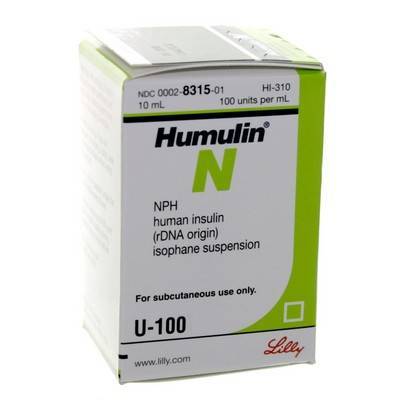
- The insulin in Humulin N is NPH insulin.
- Humulin N is a U-100 intermediate-acting insulin. U-100 means that each milliliter of insulin is divided into 100 dosing units.
Why do cats and dogs use Humulin N?
- Insulin is prescribed to dogs and cats with diabetes mellitus to help lower their blood sugar.
- Insulin is an ongoing, supportive treatment for diabetes.
What else should I know about Humulin N?
- Humulin N vials and KwikPens stored in the refrigerator should be discarded within 31 days after first puncture. KwikPens stored at room temperature should be discarded within 14 days after first puncture.
- Syringes and pen needles are sold separately.
- KwikPens can be used with U-100 insulin syringes or pen needles.
- KwikPens used with pen needles can only dose whole units. You cannot dial the pen to dispense a half unit.
- Vials should be used with U-100 insulin syringes.
- Store Humulin N in the refrigerator.
- Humulin N is not eligible for free shipping.
- Humulin N must be shipped next day in cold packs.
- Humulin N 3 mL vials have been discontinued by the manufacturer Eli Lilly.
What problems could my dog or cat have with Humulin N?
- Insulin overdoses may be fatal. Contact your veterinarian immediately if your dog or cat is not acting normally.
- Signs of low blood sugar include weakness, depression, lack of energy, sluggishness, stumbling when walking, behavior changes, muscle twitching, seizures, or coma. It is a medical emergency if your cat or dog is unconscious or having a seizure.
How do you use Humulin N?
- Insulin works best when given regularly - at the same times each day and in the same way regarding feeding, such as always after a meal. Follow your veterinarian's directions.
- Double check the dose every time before you give the insulin to prevent overdoses.
- Keep a source of easily given sugar, such as corn syrup or honey, on hand at all times in case of low blood sugar. Follow your veterinarian's suggestions.
What is in Humulin N?
- The drug in Humulin N is NPH Insulin.
- There are different kinds of insulin classified by how quickly they work, how long they last, or when they have peak effectiveness.
- NPH Insulin is a type of intermediate-acting insulin. Intermediate-acting insulin reaches the bloodstream about 2 to 4 hours after injection, peaks 4 to 12 hours later, and tends to last for about 12 to 18 hours.
Will I get what I see in the picture?
- Humulin N is a brand name. You will receive the exact brand that you request.
Is it important for my dog or cat to finish all of the Humulin N?
- Dogs and cats may use Humulin N for different lengths of time. Please consult your veterinarian if you have any questions.
Review Summary
Ratings Distribution
Most Liked Positive Review
I would definitely buy from Vet Rx Diirect again,
Most Liked Negative Review
Not for our dog.
Reviews
-
❤️
From UndisclosedComments about Humulin N Insulin 100 units/mL, 3mL VialWorks great! -
-
Too expensive
From UndisclosedComments about Humulin N Insulin 100 units/mL, 3mL VialOrder this from VetRX because the price looked good but when it arrived the amount was a third of what I normally get which made it much more expensive. My mistake but the larger bottle cost from VetRX is way more expensive than the cost at my local drug store. -
Prompt, efficient service!
From UndisclosedComments about Humulin N Insulin 100 units/mL, 3mL VialMy dog has diabetes, so this medication is a must! VetRXDirect is great, I get the medication the next day.-
![Prompt, efficient service!]()
Chloe
-
-
The folks at VetRxDirect were wonderful!
From UndisclosedComments about Humulin N Insulin 100 units/mL, 3mL VialDoctors orders! :-)-
![The folks at VetRxDirect were wonderful!]()
Tipper
-
-
THE BEST!
From UndisclosedComments about Humulin N Insulin 100 units/mL, 10mL VialVetRxDirect was the best. My vet would not send the prescription so after waiting for 3 days they finally told me so. In the meantime the Insulin (which Tipper received twice a day) was almost running out. I reached out to them overnighted the prescription to them. They had the Insulin ready to go as soon as they received my letter! THANK YOU Katie and Sarah!-
![THE BEST!]()
Tipper
-
-
This medication did wonders for our Bella-!
From UndisclosedComments about Humulin N Insulin 100 units/mL, 3mL VialThis medication was prescribed by our veterinarian. We inject twice a day morning and evening after meals. We have seen a great difference since we have been using. -
-
Great Delivery!!!!
From UndisclosedComments about Humulin N Insulin 100 units/mL, 3mL VialVery well packaged!!!-
![Great Delivery!!!!]()
Layla
-
-
A u100 alternative that works!
From UndisclosedComments about Humulin N Insulin 100 units/mL, 3mL VialWe miss Humulin L, but this is waaaay better than Vetsulin. We have a small dog on a lower dose; so, the 3mL vial is perfect!!! Nothing is more frustrating than over-paying for insulin only to throw most of it away at the end of the month... Great pricing and awesome shipping too!-
![A u100 alternative that works!]()
Penny loves VetRx Direct because they send her a cookie with each order. LOL
-
-
SMALLER IS BETTER!
From UndisclosedComments about Humulin N InsulinWe spent years paying for the privilege of THROWING AWAY unused insulin --- UNTIL I FOUND THIS LITTLE GEM!!!! :) Now, we just replace the small vial on the first of every month. Our pet is REGULATED, and our bank account is happy. Yippee! -
Helping with our dog's diabetes
From UndisclosedComments about Humulin N InsulinTwo shots a day, help keep our dog's blood glucose levels within a healthier range.


Q & A
-
My schipperke has been prescribed 3units, twice a day of Humulin N. Which syringe should I use??
-
Humulin N vials should be used with U-100 insulin syringes. Humulin N Pens can be used with pen needles. Your veterinarian can recommend the best type of needle and syringe that will best suit your pet’s needs
Verified Answer
-
-
My australian shepherd was just diagnosed with type 2 Diabetes. The vet recommends 7unit twice a day. how many doses will this product provide following the vets recommendation??
-
According to the package, Humulin N KwikPen and 3 mL vial contain 300 units of Humulin N. This will allow for 42 doses (or 21 days) to be administered if the veterinarian recommends 7 units twice a day. The 10 mL vial will provide 142 doses (or 71 days) of 7 units per dose. Please keep in mind that the vial should be discarded 31 days after opening, and the pen should only be used for 14 days after opening. Please contact your veterinarian to determine if this product is appropriate for your dog.
Verified Answer
-
-
Does the Humulin KwikPen come with 5 x 3ml cartridge? Or do I have to purchase the pen and the cartridge separately??
-
The cartridge is contained within the pen. You do not have to purchase them separately. Each pen contains 3 mL of 100 units/mL strength humulin. The price is for each individual pen (total of 3 mL).
Verified Answer
-
-
I know that Humulin has a limited shelf life. If I order two vials and leave one unopened in the refrigerator, will the shelf life still apply to the unopened vial??
-
Yes. The manufacturer expiration date is valid as long as the vial remains unopened and stored in a refrigerator (35.6-46.4 °F).
Verified Answer
-
-
What is the difference between Humulin N and Humulin R??
-
Humulin N, insulin isophane, is intermediate-acting form. Humulin R, insulin regular, is a short-acting (or fast-acting) form.
Verified Answer
-
-
vet says: #10ml vial, 100u/ml What is the difference with the 3ml vial? Is it the size??
-
The Humulin N comes in 10ml and 3 ml bottles, with the only difference being the size of the bottle. The strength of insulin is the same.
Verified Answer
-
-
Isn't this for humans? Is it safe for my cat??
-
Humulin N is a human marketed insulin that is commonly used to treat diabetes in cats. Following the guidance of your veterinarian, Humulin N, can be used safely in cats. Please consult your veterinarian, as they will be able to give you more information about diabetes, the need for insulin and proper injection techniques. Thank you, VetRxDirect
Verified Answer
-
-
My cat is on Lantus. Can I switch him to Humulin? Is it stronger then Lantus i.e. only give once a day instead of 2??
-
Lantus is a long-acting insulin commonly given every 12 hours in cats. Humulin-N is an intermediate-acting insulin and Humulin-R is a short-acting insulin. Dosing will be specific to your pet. Cats need to be monitored closely as their response to insulin can be unpredictable and can require adjustments in dose or type of insulin during treatment. Please consult your veterinarian for which insulin is best for your cat. Thank you, VetRxDirect
Verified Answer
-
-
is this a auto inject?
-
Humulin N insulin is packaged in three ways: 3mL insulin pen, 3mL insulin vial, and 10mL insulin vial. It's important to note that all three products should be discarded after 31 days after the first use. The insulin pen is a convenient way to dose and administer the insulin but will require pen needles instead of insulin syringes. Feel free to call and ask for one of the pharmacists if you have any further questions.
Verified Answer
-
-
Is this a 24 hour insulin? I'm currently using Solostar, but my insurance won't cover it next year.?
-
Humulin N (generic NPH) is a human-labeled insulin defined as an intermediate-acting insulin whereas Lantus (generic glargine) Solostar is a long-acting human insulin. Both Humulin N and Lantus are often used twice daily in dogs. NPH insulin wouldn't be a good candidate for once daily dosing though. Please consult with your veterinarian to determine if an alternative insulin therapy to Solostar is appropriate for your pet. Thank you, VetRxDirect
Verified Answer
-
Sign Up and Save 10%!
Plus enjoy insider offers and be the first to learn about our new products and promotions.
*10% off valid on your next order. Must apply code at checkout.
Your 10% off gift is coming your way.
But first, tell us more about your pet and only get content that is special to them.


and welcome to our family and !