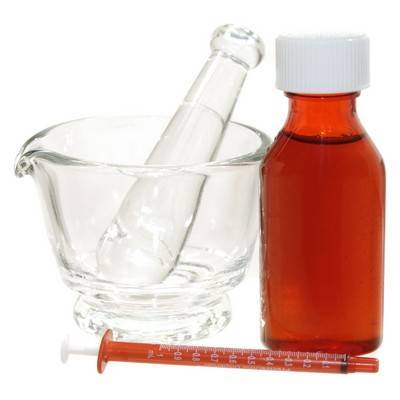

Fluoxetine (Compounded) Rx
I'm sorry but our pharmacy is no longer making specially compounded medications. We do sell comercially prepared Fluoxetine Capsules and Fluoxetine Tablets. If you are looking for a new compounding pharmacy, you may be able to find one by consulting with your veterinarian or searching for an accredited PCAB Compouning Pharmacy on the Accreditation Commission for Health Care's website.
What is Fluoxetine for Dogs and Cats?
- Fluoxetine is a prescription behavior modifying medication used in dogs and cats to treat several behavioral disorders including aggression in dogs and anxiety.
- Fluoxetine is the generic drug name for Prozac.
- The suspension is a flavored liquid to be given by mouth.
- The transdermal gel is a gel that can be applied to the hairless portion of the inner ear. The Fluoxetine is absorbed through the skin of the ear.
Why do cats and dogs use Fluoxetine?
- Fluoxetine may be prescribed to treat a variety of behavior disorders, such as agression, obsessive-compulsive behavior, or anxiety.
- Fluoxetine may also help against inappropriate elimination in cats.
What else should I know about Fluoxetine?
- Fluoxetine is most effective when used in conjunction with behavior programs.
- It may be several weeks before it can be determined if Fluoxetine is effective.
- The flavored liquid suspension may be easier to dose to animals that will not take tablets or capsules.
- The suspension is oil-based and does not need to be stored in the refrigerator.
- The transdermal gel may be easier to use with animals that will not take oral medications. The gel is applied to the hairless portion of the inner ear.
- Looking for Fluoxetine Capsules?
- Looking for Fluoxetine Tablets?
- Looking for Reconcile (fluoxetine) Chewable Tablets?
What problems could my dog or cat have with Fluoxetine?
- Common side effects include sleepiness and reduced appetite.
- Rare, but serious, side effects include seizures and aggression. Contact your veterinarian immediately if you notice these signs.
- Overdoses can be serious. Keep Fluoxetine out of the reach of children and other animals.
- Do not use flea collars while you are giving Fluoxetinewithout consulting with your veterinarian.
- This medication should not be used in dogs with a history of epilepsy or seizures.
- Fluoxetine should be used with caution in pets that have diabetes as it may alter the blood sugar levels.
How do you use Fluoxetine?
- When giving by mouth, Fluoxetine may be given with or without food. Follow your veterinarian's directions.
- Shake the oral suspension well before every use.
- Wear gloves or finger cots when applying the transdermal gel to protect yourself from absorbing the medication. Alternate between ears for each dose.
- Do not stop giving Fluoxetine without consulting with your pet's veterinarian as serious side effects may result.
What is in Fluoxetine?
- Fluoxetine is a behavior modifying drug.
- It is a selective seratonin reuptake inhibitor (SSRI) that works to increase the levels of seratonin in the brain.
Will I get what I see in the picture?
- The Fluoxetine Suspension and Fluoxetine Transdermal Gel are compounded medications. The ingredients will be mixed specially for your dog or cat in our pharmacy.
Is it important for my dog or cat to finish all of the Fluoxetine?
- Dogs and cats may use Fluoxetine for different lengths of time. Please consult your veterinarian if you have any questions.
- Do not stop giving Fluoxetine without consulting with your pet's veterinarian as serious side effects may result.
Who makes the Fluoxetine Suspension and Fluoxetine Transdermal Gel?
- The Fluoxetine Suspension and Fluoxetine Transdermal Gel are hand-made in our pharmacy.
- There is a minimum charge of $59.99.
- Shelf-life limits orders of the suspension to an 80-day supply.
- Shelf-life limits orders of the transdermal gel to a 50-day supply.
Review Summary
Ratings Distribution
Reviews
-
Watson's calm down cream.
From UndisclosedComments about Fluoxetine (Compounded) Transdermal Gel, 5mg/0.1mL, 1mL SyringeMy vet prescribed Fluoxitine for my boy Watson to help with his anxiety. He use to be an indoor outdoor cat but it is not safe for him in the neighborhood we live in. There is an established feral colony on our property that was here when we bought our home and he likes to yell at and pick fights with other cats. We built him a safe outdoor catio so he still gets safe outside time. That combined with the medication helps keep him from being so anxious and spraying my doors, furniture and windows 1000 times a day. He still does it but not as often. It is easy to apply since it is a cream that goes in his ear.-
![Watson's calm down cream.]()
Mr. Watson John Edwin Huebschle, all settled in for his long winters nap.
-
-
Transdermal fluxetine so much easier
From UndisclosedComments about Fluoxetine (Compounded) Transdermal Gel, 1mg/0.1mL, 1mL SyringeAfter struggling with liquid and capsules, we started using the transdermal gel which is so much easier to use. VetRx makes it easy to order with the vet's prescription. Customer service is very helpful and patient with all the initial questions.-
![Transdermal fluxetine so much easier]()
Kulani relaxing -
![Transdermal fluxetine so much easier]()
Cat rainbow
-
-
Good product and good price
From UndisclosedComments about Fluoxetine (Compounded) Transdermal Gel, 2.5mg/0.1mL, 1mL SyringeI use Fuoxitine to help treat my cats anxiety and curb his bad behavior. I like the consistency compared to other that I have used from another compounding pharmacy, however I am less fond of the syringe vs. the click depenser that I had from the other pharmacy. It is still relatively easy to administer. I also like the price compared to other compounding pharmacies.-
![Good product and good price]()
Mr. Watson J. Cat
-
-
Prozac/ Fuoxetine
From UndisclosedComments about Fluoxetine (Compounded)I don't know what happened to Fidel before he came into my Life. I saw him limping on my street and once I got him safely inside I noticed he was also blind in one eye and had a crooked smile. Everything indicated he had a close encounter with a vehicle which he survived. He also showed behavior issues attacking his own tail. It was bad and I was on my wits end. My vet recommended to start him on Prozac administered as a cream in his ear. Within a week he stopped the aggressive behavior towards himself. He actually enjoys our daily ritual on getting his meds massaged into his ear. Fidel has been with us for 5 years and the street life is long in the past. He has found his spot in the sun with us.-
![Prozac/ Fuoxetine]()
Fidel - our Pirate kitty
-
-
This product has made a HUGE difference for us
From North Huntingdon, PAComments about Fluoxetine (Compounded)We use this product as behavior modification one of our kitties who occasionally urinated outside of the litter box. Worked like a charm once it starts working (about 1-2 weeks)-
![This product has made a HUGE difference for us]()
Thank you.....Chloe
-
-
Good product, need improvement in dispenser
From UndisclosedComments about Fluoxetine (Compounded)It's easy to apply and your price is good. I wish it comes in easy dispenser pen. Its hard to get right amount every time. -
Great Product
From UndisclosedComments about Fluoxetine (Compounded)Works great for my cats anxiety.-
![Great Product]()
Buck
-
-
I will definitely be buying this product again
From UndisclosedComments about Fluoxetine (Compounded)I use the product for my cat. I love that I don't have to force feed him a pill. This is much easier to use!-
![I will definitely be buying this product again]()
Crazy cute little Rin!
-
-
I buy this medication regularly
From UndisclosedComments about Fluoxetine (Compounded)I have an elderly cat, 18-1/2 years old who is deaf and has dementia. My vet ordered Fluoxetine and VetRxDirect has been the pharmacy who has helped us. The medication is compounded, and sent quickly and efficiently when needed. They are wonderful by contacting my Vet for me and working out the correct dosage. I rely on VetRxDirect to help protect and treat my cat. -
I would definitely buy this again
From UndisclosedComments about Fluoxetine (Compounded)Use for behavioral modification on my 2 cats. Works wonderfully. Very easy to use transdermal behind ear. VetDirect has BEST customer service. Very friendly very helpful.


Q & A
-
My local vet compounds with tuna flavoring for my cat. Do you offer tuna flavor (all I see referenced is Beef) and if so, does it need to be refrigerated? Thank you?
-
Please contact our pharmacy staff via email at [email protected] with your specific question, including drug strength and quantity. Other contact information is available on our site at: https://www.vetrxdirect.com/contact
Verified Answer
-
-
Do you have the twist-click dispenser for this product??
-
VetRxDirect does not use twist-click dispensers. Fluoxetine gel is dispensed in a 1mL amber syringe. The strength is represented as a milligram amount of drug per 0.1ml of gel. Please contact customer service with further questions regarding fluoxetine gel.
Verified Answer
-
-
Can you tell me about how long one syringe of Prozac Transdermal Gel will last? I have tried the pill form a s liquid for my cat and she hates both. It is tough giving it to her by mouth and upsetting her so badly each night. Thinking of asking our vet to contact you about the gel.?
-
In regard to expiration, one syringe of Prozac Transdermal Gel will expire in 2 months. Please limit orders to 50 day supply. In regard to how long the medication will last, it depends on how large the dose is and which concentration you use. Each concentration is available in a 1 mL syringe, with concentrations ranging from 1mg/0.1mL, 2.5mg/0.1mL, 4mg/0.1mL, 5mg/0.1mL, and 10mg/0.1mL. Please contact your veterinarian to determine the appropriate dosing for your cat before ordering.
Verified Answer
-
-
Can I use a bottle of Fluoxetine for my cat that has expired 2 months ago??
-
It is recommended that expired medication not be used for your cat due to the uncertainty of effectiveness and safety after the expiration date. Please contact your cat's veterinarian about obtaining a new prescription.
Verified Answer
-
-
Is the Fluoxetine Transdermal Gel just as effective/or more effective than the capsule or suspension? We have been breaking open the capsule (10mg) in our cat's food per Vet Direction, and our cat is not eating the food. We are about to try the suspension, mixed at our local pharmacy. My vet had not heard of Transdermal Gel, so I am inquiring so I can have this as an option in case the suspension doesn't work, and I can provide my vet with information. Thank you!?
-
In research that has been done comparing oral fluoxetine to transdermal fluoxetine in cats, transdermal fluoxetine can be used effectively. However, it may be less potent than oral fluoxetine depending on the concentration and will likely produce more variable results than oral fluoxetine. You should work closely with your cat's veterinarian if you decide to use transdermal fluoxetine to ensure proper dosing and adequate efficacy.
Verified Answer
-
-
What is correct dose for 12-year-old cat who weighs 15 pounds? He was found on street as a 4-week-old kitten with his litter mate but no mother. I adopted him from shelter when approx 3 months old but could not take his sister, so he suffered another traumatic experience. He is extremely good natured and loving but phobic of noises, any people other than my husband and me. We had to move recently and that put him over the edge: now hardly ever comes out of bedroom and spends about all day laying on bed or dashing under it if becomes alarmed. How much topical gel dose would you recommend? Once daily or twice? Thank you!?
-
Because Fluoxetine is a prescription medication, the proper dosage should be determined by your cat's veterinarian.
Verified Answer
-
-
Does this product have an expiration date or a 'best if used by' date??
-
Flouxetine Compounded Suspension has a shelf life of 3 months once it has been made in the pharmacy. Orders for this medication are limited to a 80 day supply to ensure that all of the product can be used before the expiration date. VetRxDirect uses a non-aqueous oil base when compounding fluoxetine suspension. The suspension does not require refrigeration.
Verified Answer
-
-
My 20 pound lhasa apsi is currently on a 10 mg pill of prozac 1 x a day. It upsets her stomach. What is the comparible dosage in transdermal gel. I want to have my vet call in a script?
-
Speak with your veterinarian. Administration of fluoxetine with food may decrease the stomach upset. Your veterinarian may be able to suggest a different drug option to that won't upset your dog's stomach. The use of a transdermal gel should be reserved for clients who cannot administer an oral dosage form. There is inconsistent information on the absorption of fluoxetine from the transdermal gel dosage form to make a comparable dosage recommendation. Thank you, VetRxDirect
Verified Answer
-
-
We're giving our cat 1ml suspension twice a day. What would be the dosage equivalent in transdermal gel??
-
It depends what strength you are giving. If the suspension is 5mg/ml then you would give 0.1ml of a 5mg transdermal gel syringe. Thank you, VetRxDirect
Verified Answer
-
-
I am inquiring about the suspension 5mg/ml my vet prescribed to give .06ml a day but gave me a 10mg/ml bottle how may doses would the bottle provide, also do you need a prescription to buy?
-
Yes, you do need a prescription to purchase fluoxetine. The number of doses will depend on the volume of medication your bottle contains. Changing from a 10 mg per mL to a 5 mg per mL concentration will require a double in volume of the dose to give you the same amount of medicine. Your veterinarian will calculate out the appropriate dose when he or she writes the prescription. Thank you, VetRxDirect
Community Answer
-
Sign Up and Save 10%!
Plus enjoy insider offers and be the first to learn about our new products and promotions.
*10% off valid on your next order. Must apply code at checkout.
Your 10% off gift is coming your way.
But first, tell us more about your pet and only get content that is special to them.


and welcome to our family and !