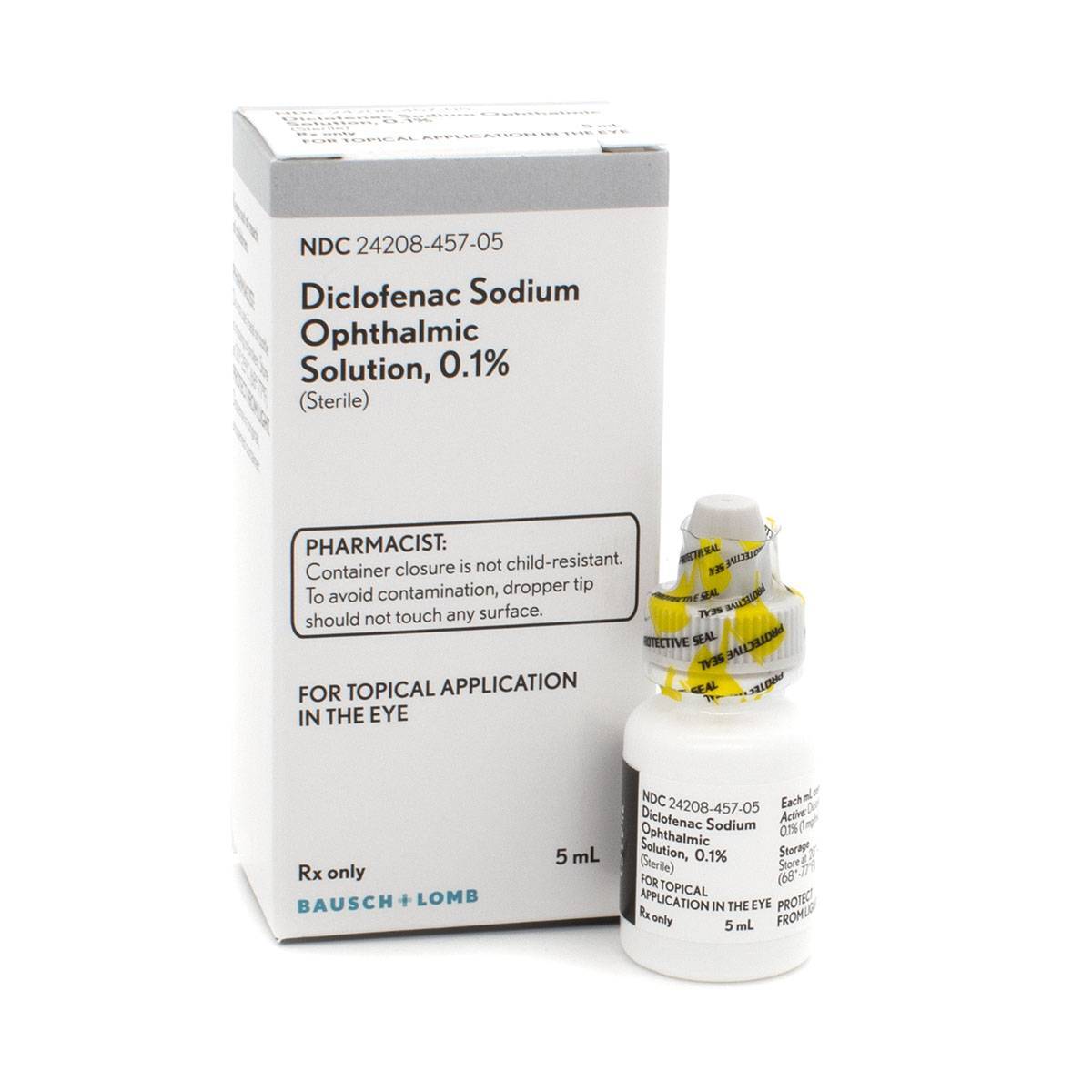

Diclofenac Sodium Ophthalmic Solution (Generic) Rx
0.1%, 5mL Dropper Bottle
Starting At
$14.99
Diclofenac Sodium Ophthalmic Solution (Generic) Rx
$14.99
In Stock
Free shipping when you buy 5 or with a $65 order
Or save an extra 5% on your first order (up to $20) with Autoship*
$14.25
-
Usually ships the same weekday before 2pm CT with veterinary approval.
-
Requires veterinary authorization.
-
Your pet's veterinarian will provide directions for use.
What is Diclofenac Sodium Ophthalmic Solution for Dogs and Cats?
- Diclofenac Sodium Ophthalmic Solution is a prescription eye drop with a nonsteroidal anti-inflammatory drug (NSAID) that reduces swelling in the eye.
- Dogs and cats that have just undergone eye surgery, including cataract surgery, can have post-surgery pain, swelling, and sensitivity as they recover. Your vet may prescribe Diclofenac eye drops.
- This effective NSAID reduces inflammation in the eye and helps ease pain and discomfort so your pet heals faster.
Why do cats and dogs use Diclofenac?
- Your vet may prescribe this powerful non-steroidal anti-inflammatory (NSAID) if your dog or cat has just undergone eye surgery.
- Diclofenac can smell like castor oil, but this is no cause for concern.
What else should I know about Diclofenac?
- Reduces swelling and pain in the eye.
- Eases sensitivity to light.
- Store Diclofenac Eye Drops at room temperature away from moisture and sunlight.
What problems could my dog or cat have with Diclofenac?
- Diclofenac may burn or sting.
- Diclofenac may increase the risk for bleeding.
- Do not use the eye drops if they change color, become cloudy, or if you see particles in the solution.
How do you use Diclofenac?
- Use proper administration techniques to avoid contamination of the eye drops. Keep the cap on when not in use.
- Wait 5 minutes after applying the Diclofenac before applying any other medication to the eye.
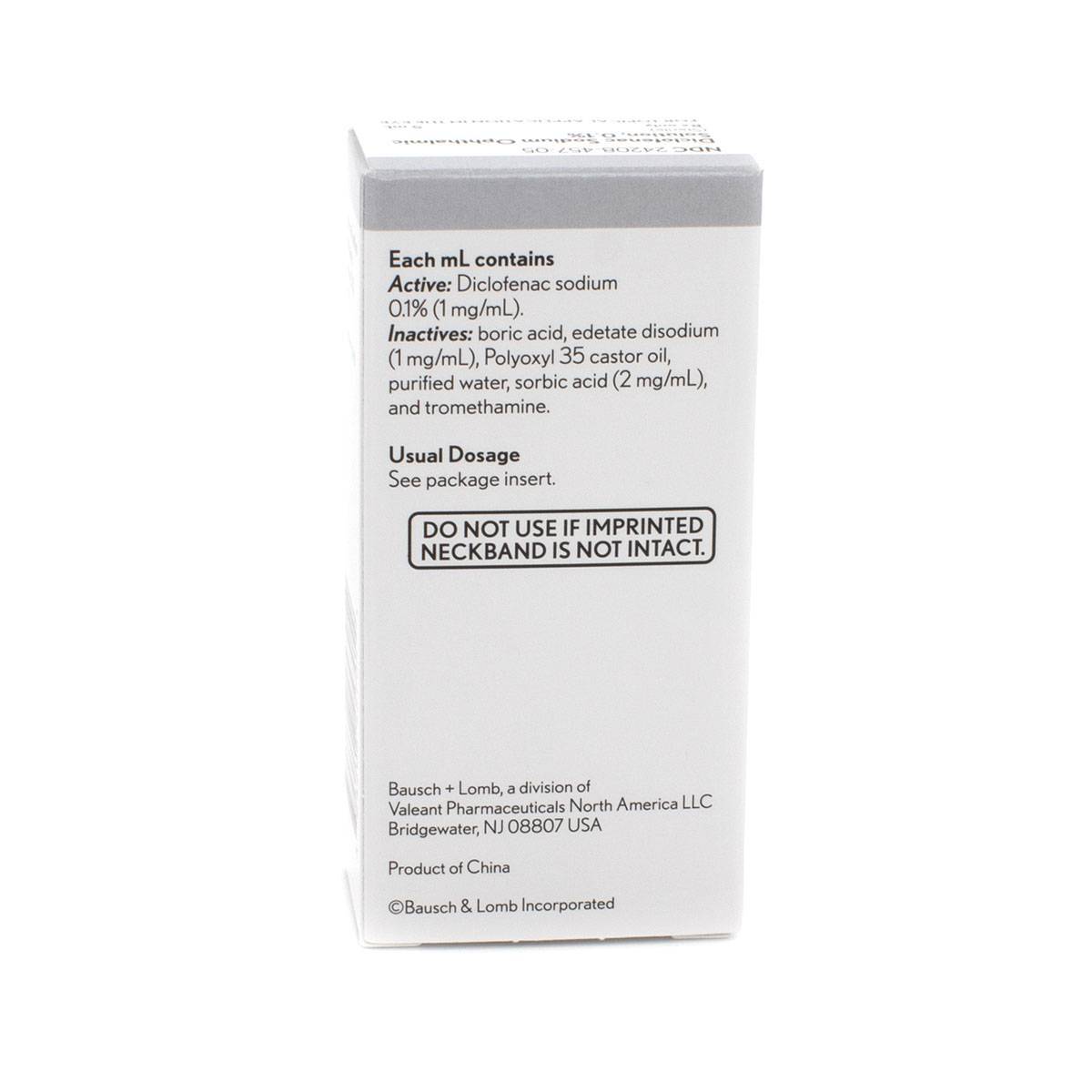
What is in Diclofenac Eye Drops?
- Diclofenac is a prescription nonsteroidal anti-inflammatory drug (NSAID). It reduces pain and inflammation.
Will I get what I see in the picture?
- Diclofenac is sold as an FDA approved generic drug. Brand may vary from order to order and variation to variation. We are unable to guarantee which brand will be available at the time of order shipment.
Is it important for my dog or cat to finish all of the Diclofenac?
- Dogs and cats may use Diclofenac for different lengths of time. Please consult your veterinarian if you have any questions.
Review Summary
168 total reviews
Rated 4.95 out of 5 stars
100% of respondents would recommend this to a friend
Ratings Distribution
161 5 star reviews
6 4 star reviews
1 3 star reviews
0 2 star reviews
0 1 star reviews
Most Liked Positive Review
pharmacy with a Heart
We use Vetrxdirect for all our pets needs. We recently ordered Diclofnac Sodium because our dog Libby is a diabetic and also is blind. We order from Vetrxdirect
because we know that our order will get to us in a timely manner and the price is always right. I would recommend Vetrxdirect to everyone who has a pet. The Diclofnac sodium keeps Libbys eyes from getting any other disease in her eyes and it is very gently on her eyes.
Most Liked Negative Review
Not sure if it's helping
I had a cataract removed from my pup's eye less than a year ago. It's already coming back. This med is for inflammation though and he doesn't seem to be uncomfortable.
Reviews
-
Great servcice
From UndisclosedComments about Diclofenac Sodium Ophthalmic Solution (Generic) 0.1%, 5mL Dropper BottleMy cat has a cataract in her left eye. VetRx Direct makes it very easy to buy the diclofenac eye drops that she needs to prevent inflammation, a common result of her condition. They contacted my specialist vet directly to confirm my prescription and everything went very smoothly.-
![Great servcice]()
Will you come brush me?
-
-
These drops help my diabetic dog
From UndisclosedComments about Diclofenac Sodium Ophthalmic Solution (Generic) 0.1%, 5mL Dropper BottleMy diabetic boy was prescribed these eye drops when he was first diagnosed. I hope he keeps his eyesight a bit longer!-
![These drops help my diabetic dog]()
Kyle
-
-
This medication helped with my dog's cataracts.
From UndisclosedComments about Diclofenac Sodium Ophthalmic Solution (Generic) 0.1%, 5mL Dropper BottleThis medication was prescribed for my senior dog's cataracts and seems to help with slowing progression of them.-
![This medication helped with my dog's cataracts.]()
Nino 🤍
-
-
I am grateful to be able to get this online
From UndisclosedComments about Diclofenac Sodium Ophthalmic Solution (Generic) 0.1%, 5mL Dropper BottleHer eye doctor prescribed it. One drop in eye each day. MaciLyn is about 11 years old, I rescured heer about a year ago. Sheis blind in one eye and these drops help keep her bad eye lubricated. -
-
Good product, good online vet pharmacy
From UndisclosedComments about Diclofenac Sodium Ophthalmic Solution (Generic) 0.1%, 5mL Dropper BottleVet Rx been using 2+yrs.-
![Good product, good online vet pharmacy]()
Buddy
-
-
Great product!
From UndisclosedComments about Diclofenac Sodium Ophthalmic Solution (Generic) 0.1%, 5mL Dropper BottleThis product works great for my dog! I have given it 3 times a week for years for his cataracts. I call him and he sits and just looks up at me. He doesn't mind a bit. I put one drop in.-
![Great product!]()
Rocky
-
-
Cataract medication
From UndisclosedComments about Diclofenac Sodium Ophthalmic Solution (Generic) 0.1%, 5mL Dropper BottlePrescribed by our vet ophthalmologist for cataracts.-
![Cataract medication]()
Dior
-
-
For my blind Poodle, Pearl
From UndisclosedComments about Diclofenac Sodium Ophthalmic Solution (Generic) 0.1%, 5mL Dropper BottlePrescription from the eye vet -
Helping to keep Pebbles eyesight!
From UndisclosedComments about Diclofenac Sodium Ophthalmic Solution (Generic) 0.1%, 5mL Dropper BottlePebbles has diabetes - the Diclofenac solution was prescribed by her Vet to help keep her eyes from further deterioration due to the disease. Great price and fast shipping!-
![Helping to keep Pebbles eyesight!]()
Pebbles
-
-
Yeah for VetRxDirect
From Cape Coral FlComments about Diclofenac Sodium Ophthalmic Solution (Generic)Thank you for your helpfulness and sincerity with Morgan's prescription and refills. I definitely have learned what stress about your animal after your Vet Dr Smith sales her practice and moves away when you need a renewal of a prescription. Thank you so much!


Displaying Reviews 1 - 10
Q & A
-
My dog was recently diagnosed with pancreatitis. Can he start these drops or should they be avoided? I am reading that it may not be a good idea.?
-
According to Plumb's Veterinary Drug Handbook, there is no specific information regarding the use of Diclofenac in patients with pancreatitis. Diclofenac is a human-labeled medication that is approved for extra-label use in animals. Please consult with the prescribing veterinarian regarding your questions or concerns with the use of this medication for your dog.
Verified Answer -
According to Plumb's Veterinary Drug Handbook, there is no specific information regarding the use of Diclofenac in patients with pancreatitis. Diclofenac is a human-labeled medication that is approved for extra-label use in animals. Please consult with the prescribing veterinarian regarding your questions or concerns with the use of this medication for your dog.
Community Answer
-
-
My 12yrs old Yorkie has been diabetic with insulin and Freestyle glucose reader sensor for the past 3 years, he is controlled well but he had a Catarat surgery 6 months ago and was given these eye drops daily since then (several times a day on the first few months). Recently the eye vet saw a red spot on his left eye, she said that the eye was fine, but told me to consult the vet to measure his high blood pressure, the dog pressure measured 200 and the vet is now talking to the eye Dr to treat him with a high blood pressure medication. However, I just found out that the drops have a side effect that produces high blood pressure, your documentation does not show that. Is there an alternative eye drop that may not produce high blood pressure??
-
Systemic hypertension (high blood pressure) is not a commonly noted adverse effect caused by diclofenac ophthalmic solution. Please continue to consult your veterinarian and ophthalmologist regarding your dog’s blood pressure and medication.
Verified Answer
-
-
Could you give an approximate number of days (at 4 drops a day) a bottle of 5 ml will last? Thanks.?
-
A 5mL bottle of diclofenac ophthalmic solution will last approximately 25 days when using 4 drops per day.
Verified Answer
-
-
IS diclofenac the same as lantanoprost?
-
Diclofenac is not the same as latanoprost. They are two different medications.
Verified Answer
-
-
How do I switch a prescription from a pharmacy to you??
-
Please contact us via email at [email protected] or call customer service at 866.761.6578 to initiate the prescription transfer. Please provide the name of the medication along with the name and phone number of the transferring pharmacy.
Verified Answer
-
-
My dog has diabetes and cataracts, is blind, in face. My vet sells me Voltaren Optha 0.1% 5ml drops at a cost of $54.58 to be administered once a day. Is this product the same as the one your sell.?
-
Diclofenac sodium is the generic version of brand name Voltaren. The strength of this product is 0.1%. A 2.5 mL and 5 mL dropper bottle are available. Please consult your veterinarian to ensure that this product is appropriate for your dog.
Verified Answer
-
-
My dog gets one drop of diclofenac sodium in each eye twice a day. My vet ran out and has to order it so my dog will miss a couple of days. will that be harmful to him?
-
Diclofenac is used to reduce swelling in the eye and is commonly prescribed after surgery or for the treatment of certain eye conditions. It is recommended that you consult with your veterinarian, since they will have the expertise to discuss how any missed doses of this medication may affect your dog.
Verified Answer
-
-
My dog was put on Diclofenac drops 5 months ago when his liver values were normal and now they are all elevated. Could these drops be the cause? Are they hepatotoxic??
-
According to Plumb’s Veterinary Drug Handbook, the amount of systemic absorption is minimal with this medication. Although unlikely, systemic side effects have occurred with the use of topical NSAIDs. Please consult with your veterinarian with any further questions or concerns regarding the use of this medication for your dog.
Verified Answer -
My cat has elevated liver enzymes as well but only ALP. His blood was regularly checked and liver values were normal prior to starting the diclofenac eye drops.
Community Answer
-
-
Are these drops safe to give to my dog while she is taking Prednisone or other steroids??
-
Although rare and unlikely, systemic side effects have occurred with the use of topical NSAID medications including gastric ulceration and increased bleeding time. Concurrent use with oral prednisone may increase the chances of side effects while using ophthalmic diclofenac. Under the direction and guidance of a veterinarian, this combination can be used safely and effectively. Please monitor and report to your veterinarian any loss of appetite, diarrhea, or vomiting noted in your pet while on this combination.
Verified Answer
-
-
Does diclofenac have any side effects? What are they??
-
According to PLumb’s Veterinary Drug Handbook, the side effects for Diclofenac include mild burning, stinging, irritation, or redness of the eyes. Serious side effects may include: increased bleeding risk,decreased corneal wound healing, gastric ulceration, and renal damage. Please be advised this may not be a complete list of side effects and consult your veterinarian for more information. If you see any of these signs, or suspect your pet is having a complication due to this medication, please contact your veterinarian immediately.
Verified Answer
-
Displaying Questions 1 - 10
x
Sign Up and Save 10%!
Plus enjoy insider offers and be the first to learn about our new products and promotions.
*10% off valid on your next order. Must apply code at checkout.
Your 10% off gift is coming your way.
But first, tell us more about your pet and only get content that is special to them.


and welcome to our family and !