
Cephalexin (Generic) Rx
Starting At
$0.15
per capsule
Cephalexin (Generic) Rx
$0.15
per capsule
Or save an extra 5% on your first order (up to $20) with Autoship*
$0.15
-
Usually ships the same weekday before 2pm CT with veterinary approval.
-
Requires veterinary authorization.
-
Your pet's veterinarian will provide directions for use.
What are Cephalexin Capsules for Cats and Dogs?
- Prescription Cephalexin is antibiotic that provides safe and effective treatment of a range of infections common in cats and dogs.
- Dogs and cats are susceptible to bacterial infections of the skin, skeleton, and respiratory system.
- If your pet has an infection, the veterinarian may prescribe Cephalexin, a broad-spectrum antibiotic that works quickly and effectively to treat bacterial infections and reduce the presence of other harmful micro-organisms.
Why do cats and dogs use Cephalexin?
- Cephalexin provides broad-spectrum treatment for a range of bacteria and limits the growth of bacteria and fungus.
- Cephalexin may be prescribed to treat bacterial infections of the skin, respiratory system, urinary tract, bones, and joints.
What else should I know about Cephalexin?
- Broad-spectrum treatment of a range of infections.
- Treats skin, urinary, respiratory, skeletal, and soft tissue infections.
- Cephalosporin antibiotics like Cephalexin have an odor that resembles cat urine. This is normal.
What problems could my dog or cat have with Cephalexin?
- Diarrhea, vomiting, and loss of appetite are the most common side effects of Cephalexin.
How do you use Cephalexin?
- Cephalexin may be given with or without food. Follow your veterinarian's directions.
What is in Cephalexin?
- Cephalexin is a cephalosporin antibiotic that kills certain types of bacteria.
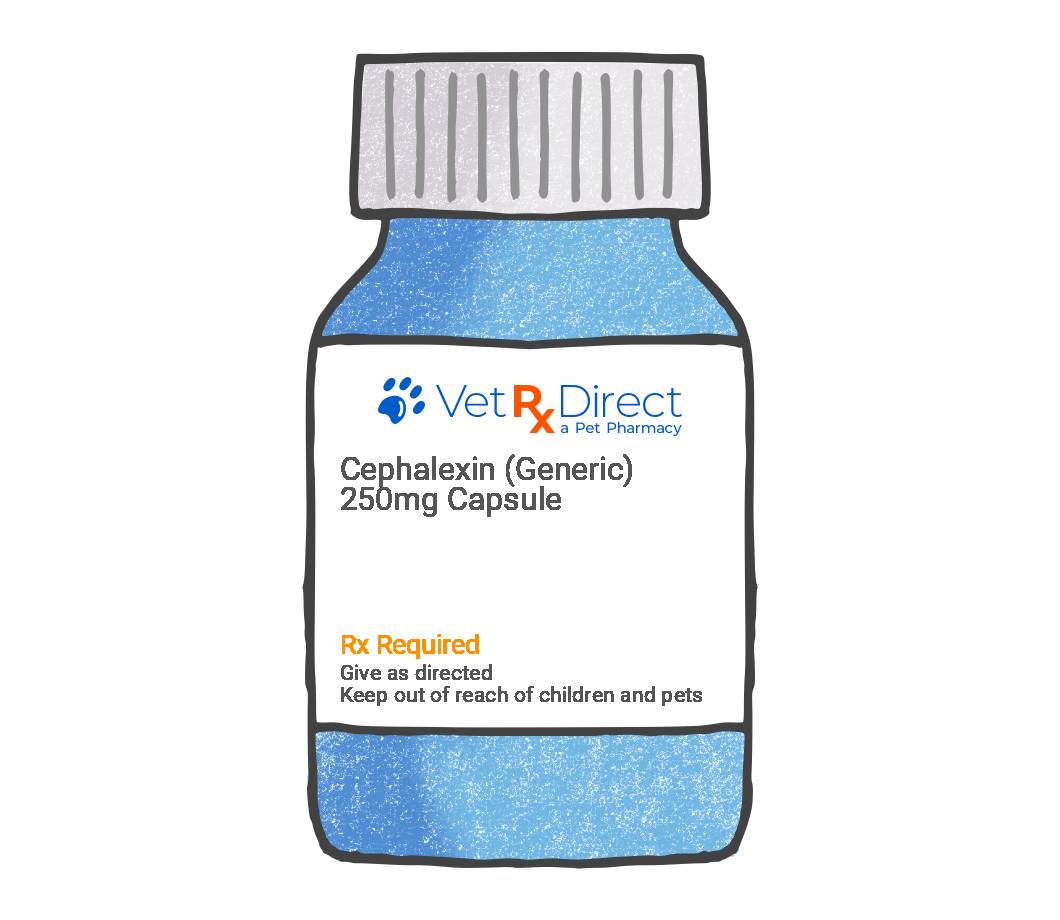
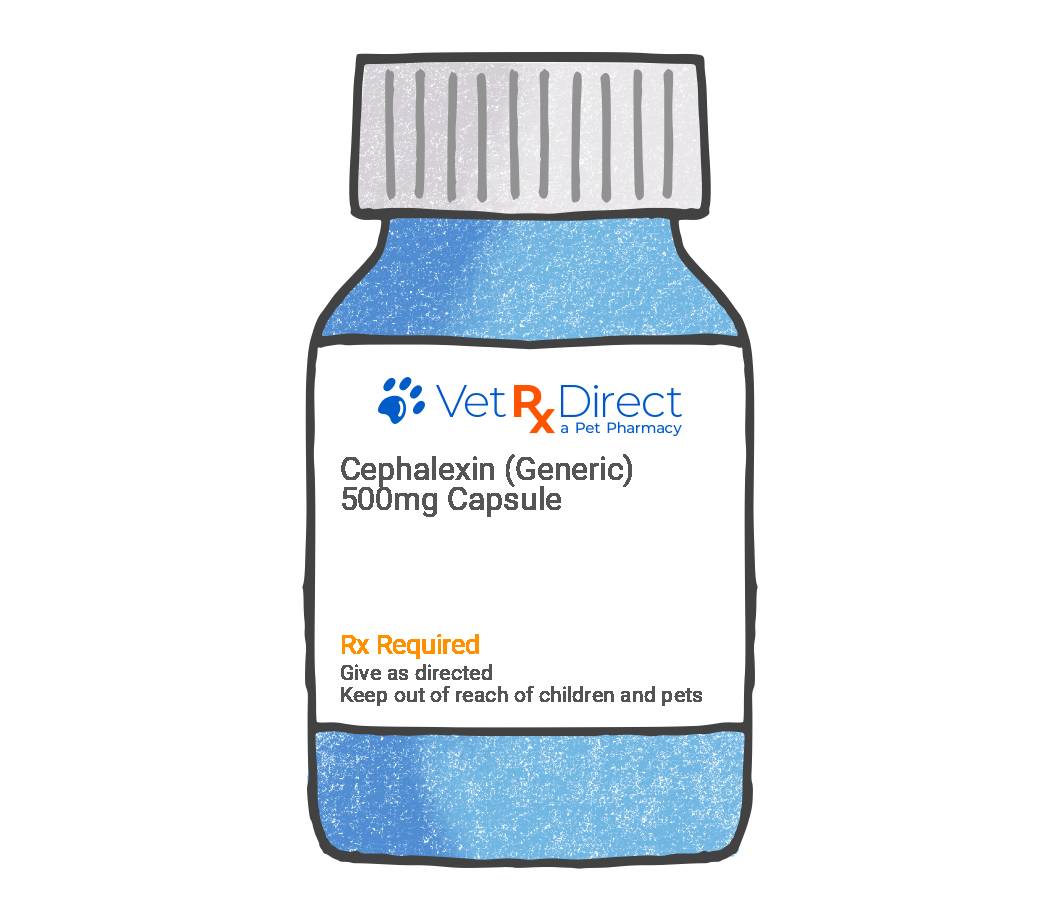
Will I get what I see in the picture?
- Cephalexin is sold as an FDA approved generic drug. Brand may vary from order to order and variation to variation. We are unable to guarantee which brand will be available at the time of order shipment.
Is it important for my dog or cat to finish all of the Cephalexin?
- Cephalexin is an antibiotic. Resistance is a major concern when using antibiotics. To help avoid resistance, it is important for you to use this for as long as your veterinarian has prescribed, even if you dog or cat is looking and feeling better.
Review Summary
6 total reviews
Rated 4.83 out of 5 stars
0% of respondents would recommend this to a friend
Ratings Distribution
5 5 star reviews
1 4 star reviews
0 3 star reviews
0 2 star reviews
0 1 star reviews
Reviews
-
Medication is a game changer
From UndisclosedComments about Cephalexin (Generic) 500mg CapsuleMedication has helped my Coco her skin has improved-
![Medication is a game changer]()
Coco
-
-
I would buy this product again.
From UndisclosedComments about Cephalexin (Generic)Good price.I would buy this product again. -
would buy again
From undisclosedComments about Cephalexin (Generic)Stopped my dogs itching and runny eyes. -
Working as expected
From West Springfield, MA, USAComments about Cephalexin (Generic)Cephalexin being used to help nip the onset of a urinary tract infection in my female German Shepherd. Have been using it for at least a week and all seems well. -
great product
From VA, USAComments about Cephalexin (Generic)good service, great prices, and fast delivery. Thank you -
great company
From California, USAComments about Cephalexin (Generic)I have bought several pet meds from this company. The price is great and service is great also

Displaying Reviews 1 - 6
Q & A
-
Can Cephalexin be crushed and added to a cat's food??
-
Cephalexin comes as a capsule and may be opened. The contents of the capsule may be added to cat food. It’s important to make sure your cat eats their entire meal so that your cat receives their entire dose.
Verified Answer
-
-
My 10 lb. cat at one of my 500 mg cephalexin yesterday and has vomited a few times since. Will he be okay??
-
According to Plumb's Veterinary Drug Handbook, Cephalexin may cause gastrointestinal upset, including vomiting and diarrhea. If you suspect an accidental overdose, please contact your veterinarian immediately.
Verified Answer
-
-
Wondering how much cephalexin to give a 12 to 20 pound cat with respiratory symptoms. I have 500 mg capsules. Opening up, dividing it up how much to give?
-
Cephalexin is a prescription antibiotic used to treat a range of bacterial infections in cats and dogs. The dose, frequency of administration and duration of treatment of this medication will vary based on the type and severity of the condition. A diagnosis by a veterinarian is recommended to ensure the correct antibiotic is prescribed, if necessary, to avoid incorrect or a delay in treatment. Please consult with your veterinarian with any further questions regarding this medication and your cat.
Verified Answer
-
-
my female daushound had 2 puppies 10 days lod and she has a red swollen hard lump above nipple can i give her cephalexin?
-
Appropriate treatment options for your dog should be discussed with your veterinarian.
Verified Answer
-
-
How much to give a 7 pound Japanese Chin? I have the medication just not how much. It is for a mouth infection?
-
Please refer to the dog's veterinarian for appropriate dosing instructions.
Verified Answer
-
-
Does Cephalixin Susp.250mg/ml have a drag reaction when it is given with Baytril tablets 22.7 mg??
-
Cephalexin and Baytril (enrofloxacin) are both antibiotics used to treat infections. There are no drug interactions reported in animals with the use of cephalexin and Baytril as long as the tablet is not crushed and mixed in with the cephalexin suspension before administration to your pet.
Verified Answer
-
-
I have a 9 lb Chihuahua with a gum infection. I have 500mg. Cephalexin. Can I use this and how much do I give him.?
-
Cephalexin is a 1st generation cephalosporin (an antibiotic) and is indicated for the treatment of secondary superficial skin infections in dogs caused by susceptible strains of Staphylococcus pseudintermedius. The infection in your dog's mouth may or may not be from a susceptible strain of Staphylococcus and because of this unknown you should not give your chihuahua your cephalexin. Only your dog's veterinarian can determine the strain of bacteria causing the infection and what antibiotic would be best to treat that infection.
Verified Answer
-
-
Will it help with rash that my dog has?
-
Cephalexin is an antibiotic that can treat some bacterial skin infections. It is possible for a bacterial skin infection to look like a rash, but there are lots of other possible causes of rash. Rashes in pets can be due to licking themselves, allergies, fleas, bacteria, fungi, or many other things. Please contact your veterinarian so they can examine your dog's rash, diagnose the cause, and select appropriate treatment.
Verified Answer
-
-
how much doseage of cephalexin for a small dog with a tooth infecction. She weighs about 13-15 lbs?
-
Cephalexin is an antibiotic that can be used to be treat certain bacterial infections in a variety of animals. The dose and duration of cephalexin is weight based, taking into consideration type and severity of infection. Not all bacterial infections can be treated by cephalexin so it is important for your dog to be assessed by a veterinarian to determine the most appropriate treatment for the infection. Additionally, cephalexin is a medication that requires a prescription from a veterinarian. Thank you, VetRxDirect
Verified Answer
-
-
What would be the dosage for a 3 lb Chihuahua?
-
The dosing of cephalexin depends on what type and severity of infection you are treating. It can be used for a variety of infections including skin and urinary tract infections. Generally the dosing can be anywhere between 10 to 30 mg per kilograms by mouth twice daily for 7 to 28 days. Due to the variability in dosing and dosing frequency we recommend consulting with your veterinarian to determine the appropriate therapy for your pet. Thank you, VetRxDirect
Verified Answer
-
Displaying Questions 1 - 10
x
Sign Up and Save 10%!
Plus enjoy insider offers and be the first to learn about our new products and promotions.
*10% off valid on your next order. Must apply code at checkout.
Your 10% off gift is coming your way.
But first, tell us more about your pet and only get content that is special to them.


and welcome to our family and !