Call us today! 1-866-761-6578 Sign In To Your Account    0 Items
Items Unit Price Qty Total
Order Sub-total $0.00
Checkout
Atenolol Tablets are used to treat heart disease and to lower blood pressure in cats and dogs.

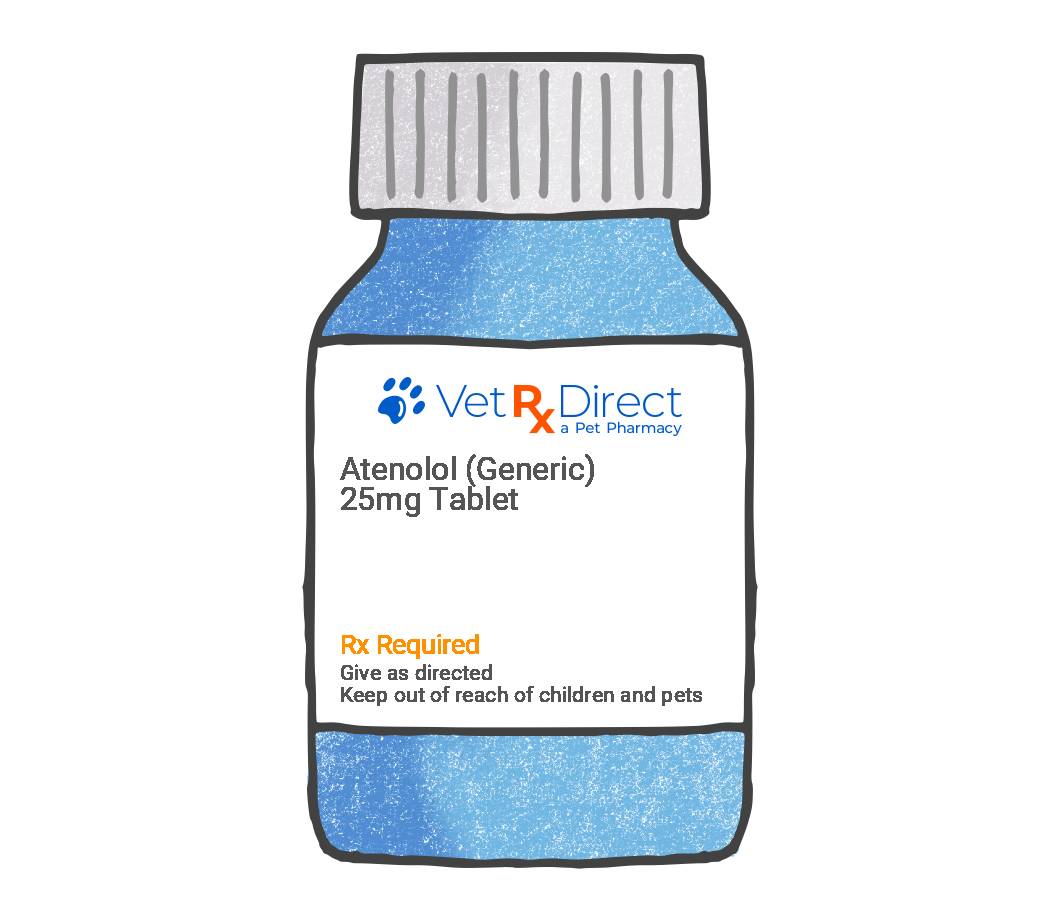
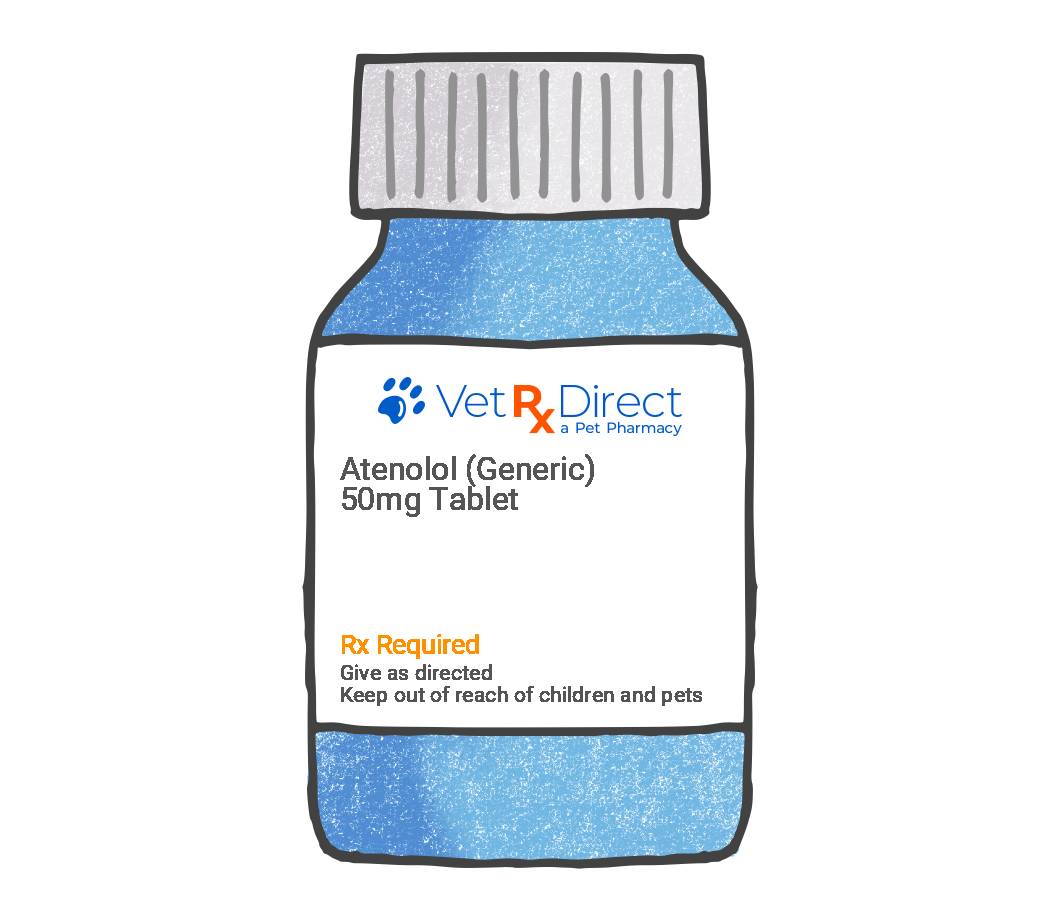
Atenolol Tablets Rx

Save $0.07!
$0.25 $0.18

In Stock FREE Shipping Eligible Price Match Guarantee

Atenolol Tablets are used to treat heart disease and to lower blood pressure in cats and dogs.


Client Information Sheet For Atenolol Tablets for Dogs and Cats(Rx)


General Description: Atenolol is a beta-blocker used in dogs and cats to slow and regulate the heart to make it work more efficiently. It is also used to lower blood pressure and treat various heart diseases. Atenolol is available in bottles of 25 mg tablets or capsules.

What are Atenolol Tablets for Pets?

  • Atenolol is a beta-blocker

  • Atenolol is given by mouth or topically

Reasons for prescribing:

  • Used to treat some heart diseases (ex. irregular heart beat)

  • Slows and regulates the heart rate and causes the heart to work more efficiently

  • Used to lower blood pressure

  • Used to treat an enlarged heart (cats)

What dogs/cats should not take Atenolol Tablets for Pets?

  • Pets with heart block, bradycardia (slow heart rate) and some types of heart failure

  • Use with caution in diabetics or those with kidney disease

  • Use with caution in animals with some types of lung disease (ex. asthma)

  • Pets known to have had an allergic reaction to atenolol or any other beta-blocker

Directions:

Atenolol may be given with or without food.

If using the transdermal gel, apply to the skin as directed by your veterinarian.

Give medication as directed by your veterinarian. This medication is usually given once or twice daily to dogs and once daily to cats.

Give the exact amount prescribed and only as often as directed.

Ideally, give the medication at the same time daily.

If this medication was specially compounded by a pharmacist for your pet, please be observant of the container’s expiry date.

Do not discontinue the drug abruptly or without directions from your veterinarian, as your pet’s condition may worsen.

This drug will likely need to be taken for the rest of your pet’s life. It will be very important to follow your veterinarian’s instructions regarding recheck appointments.

Call ahead for refills.

What if dose is missed?

If a dose is missed, give it as soon as you can. If it is time already for the next dose, skip the missed dose and go back to the normal schedule. Do not give two doses at the same time.

What to tell/ask veterinarian before giving Atenolol Tablets for Pets?

Talk to your veterinarian about:

  • When will your pet need to be rechecked

  • What tests may need to be performed prior to and during treatment with this drug

  • Risks and benefits of using this drug

Tell your veterinarian about:

  • If your pet has experienced side-effects on other drugs/products

  • If your pet has experienced digestive upset now or ever

  • If your pet has experienced liver or kidney disease now or ever

  • If your pet has experienced any other medical problems or allergies now or ever

  • All medicines and supplements that you are giving your pet or plan to give your pet, including those you can get without a prescription. Your veterinarian may want to check that all of your pet’s medicines can be given together.

  • If your pet is pregnant or nursing or if you plan to breed your pet


Storage and Warnings:

Store medication in a tight, light resistant, childproof container in a cool, dry place at room temperature away from heat and direct sunlight.

Keep this and all medication out of reach of children and pets. Call your physician immediately if you accidentally take this product.

Potential side effects:

  • Tiredness, difficulty exercising

  • Low blood pressure which would cause fainting, weakness or dizziness

  • Loss of appetite, nausea, diarrhea

  • May constrict the bronchi, causing coughing, wheezing or difficulty breathing

  • An improper dose can cause the heart rate to be too slow

  • Behavior change

  • Low blood sugar

  • If you notice anything unusual, contact your veterinarian

Can Atenolol Tablets for Pets be given with other drugs?

  • Yes, but possible interactions may occur with albuterol (Ventolin), anesthetic agents, cimetidine, epinephrine, furosemide, hydralazine, insulin, metaproterenol, nonsteroidal anti-inflammatories (ex. aspirin, carprofen), other heart medications (digoxin, diltiazem, verapamil), phenothiazines (tranquilizers), phenylpropanolamine, prazosin and terbutaline

  • If your pet experiences any unusual reactions when taking multiple medications, contact your veterinarian

Overdosing?

Contact your veterinarian immediately if pet eats more than the prescribed amount.

What else should I know?

Notify your veterinarian if your animal’s condition does not improve or worsens despite this treatment.

As with all prescribed medicines, atenolol should only be given to the dog/cat for which it was prescribed. It should be given only for the condition for which it was prescribed.

It is likely that your veterinarian will want to monitor your pet’s condition periodically.

This is just a summary of information about atenolol. If you have any questions or concerns about atenolol or for the condition it was prescribed, contact your veterinarian.

©North American Compendiums Inc. 2009. All rights reserved

Atenolol Tablets are used to treat heart disease and to lower blood pressure in cats and dogs.

Why has my veterinarian prescribed Atenolol Tablets for Pets?

Atenolol is primarily used to treat heart disease in cats and dogs and to lower blood pressure. It is a beta1-blocking agent. Atenolol decreases the heart's need for blood and oxygen and therefore reduces the amount of work the heart must do. It also helps the heart beat more regularly.


How do I give Atenolol Tablets for Pets?

  • Give this medication to your pet as directed by your veterinarian. READ THE LABEL CAREFULLY.
  • If the medicine is a liquid, measure the dose with reasonable care.
  • Try to give this medication at about the same time(s) each day.
  • DO NOT give the pet more medicine than directed.
  • DO NOT give the medicine more often than directed.
  • Try not to miss giving any doses.
  • DO NOT stop giving this medication to your pet without first consulting the veterinarian. Call your veterinarian ahead of time if your pet requires refills of the medication.


What do I do if I miss giving a dose?

Give the dose as soon as possible. If it is almost time for the next dose, skip the missed dose, and continue with the regular schedule. Do not give the pet two doses at once.


How do I store Atenolol Tablets for Pets?

  • Keep this medicine out of reach of children.
  • Store this medicine in a cool, dry place at room temperature. Store away from heat and direct sunlight.
  • Do not store this medicine in the bathroom, near the kitchen sink or in damp places. The medicine may break down if exposed to heat or moisture.


What are the potential side effects?

"Notify your veterinarian if your pet becomes very tired, has trouble exercising, develops shortness of breath or cough or if its attitude or behavior changes."
  • Notify your veterinarian if your pet becomes very tired, has trouble exercising, develops shortness of breath or cough or if its attitude or behavior changes.
  • Other side effects may occur. If you notice anything unusual, contact your veterinarian.


Are there any possible drug interactions?

  • Make sure to tell your veterinarian what other medication you are giving to your pet.
  • Quite often, your veterinarian may prescribe two different medications, and sometimes a drug interaction may be anticipated. In this case, your veterinarian may vary the dose and/or monitor your pet more closely.
  • The following drugs can potentially interact with atenolol: metaproterenol, terbutaline, epinephrine, phenylpropanolamine, anesthetic agents, phenothiazines, furosemide, hydralazine, insulin, calcium channel blockers (verapamil, diltiazem), and prazosin.
  • Contact your veterinarian if your pet experiences any unusual reactions when different medications are given together.


Atenolol (Generic) Tablets for Pets(Rx)

Trade Names:

Tenormin®
 
General Description:

Atenolol is a beta-blocker used in dogs and cats to slow and regulate the heart to make it work more efficiently. It is also used to lower blood pressure and treat various heart diseases. Atenolol is available in bottles of 25 mg tablets or capsules.

What is this drug?
  • Atenolol is a beta-blocker
  • Atenolol is given by mouth or topically
Reasons for prescribing:
  • Used to treat some heart diseases (ex. irregular heart beat)
  • Slows and regulates the heart rate and causes the heart to work more efficiently
  • Used to lower blood pressure
  • Used to treat an enlarged heart (cats)
What dogs/cats should not take this medication?
  • Pets with heart block, bradycardia (slow heart rate) and some types of heart failure
  • Use with caution in diabetics or those with kidney disease
  • Use with caution in animals with some types of lung disease (ex. asthma)
  • Pets known to have had an allergic reaction to atenolol or any other beta-blocker
Directions:

Atenolol may be given with or without food.

If using the transdermal gel, apply to the skin as directed by your veterinarian.

Give medication as directed by your veterinarian. This medication is usually given once or twice daily to dogs and once daily to cats.

Give the exact amount prescribed and only as often as directed.

Ideally, give the medication at the same time daily.

If this medication was specially compounded by a pharmacist for your pet, please be observant of the container's expiration date.

Do not discontinue the drug abruptly or without directions from your veterinarian, as your pet's condition may worsen.

This drug will likely need to be taken for the rest of your pet's life. It will be very important to follow your veterinarian's instructions regarding recheck appointments.

Call ahead for refills.

What if dose is missed?

If a dose is missed, give it as soon as you can. If it is time already for the next dose, skip the missed dose and go back to the normal schedule. Do not give two doses at the same time.

What to tell/ask veterinarian before giving medication?

Talk to your veterinarian about:

  • When will your pet need to be rechecked
  • What tests may need to be performed prior to and during treatment with this drug
  • Risks and benefits of using this drug

Tell your veterinarian about:

  • If your pet has experienced side-effects on other drugs/products
  • If your pet has experienced digestive upset now or ever
  • If your pet has experienced liver or kidney disease now or ever
  • If your pet has experienced any other medical problems or allergies now or ever
  • All medicines and supplements that you are giving your pet or plan to give your pet, including those you can get without a prescription. Your veterinarian may want to check that all of your pet's medicines can be given together.
  • If your pet is pregnant or nursing or if you plan to breed your pet
Storage and Warnings:

Store medication in a tight, light resistant, childproof container in a cool, dry place at room temperature away from heat and direct sunlight.

Keep this and all medication out of reach of children and pets. Call your physician immediately if you accidentally take this product.

Potential side effects:
  • Tiredness, difficulty exercising
  • Low blood pressure which would cause fainting, weakness or dizziness
  • Loss of appetite, nausea, diarrhea
  • May constrict the bronchi, causing coughing, wheezing or difficulty breathing
  • An improper dose can cause the heart rate to be too slow
  • Behavior change
  • Low blood sugar
  • If you notice anything unusual, contact your veterinarian
Can this drug be given with other drugs?
  • Yes, but possible interactions may occur with albuterol (Ventolin), anesthetic agents, cimetidine, epinephrine, furosemide, hydralazine, insulin, metaproterenol, nonsteroidal anti-inflammatories (ex. aspirin, carprofen), other heart medications (digoxin, diltiazem, verapamil), phenothiazines (tranquilizers), phenylpropanolamine, prazosin and terbutaline
  • If your pet experiences any unusual reactions when taking multiple medications, contact your veterinarian
Overdosing?

Contact your veterinarian immediately if pet eats more than the prescribed amount.

What else should I know?

Notify your veterinarian if your animal's condition does not improve or worsens despite this treatment.

As with all prescribed medicines, atenolol should only be given to the dog/cat for which it was prescribed. It should be given only for the condition for which it was prescribed.

It is likely that your veterinarian will want to monitor your pet's condition periodically.

This is just a summary of information about atenolol. If you have any questions or concerns about atenolol or for the condition it was prescribed, contact your veterinarian.