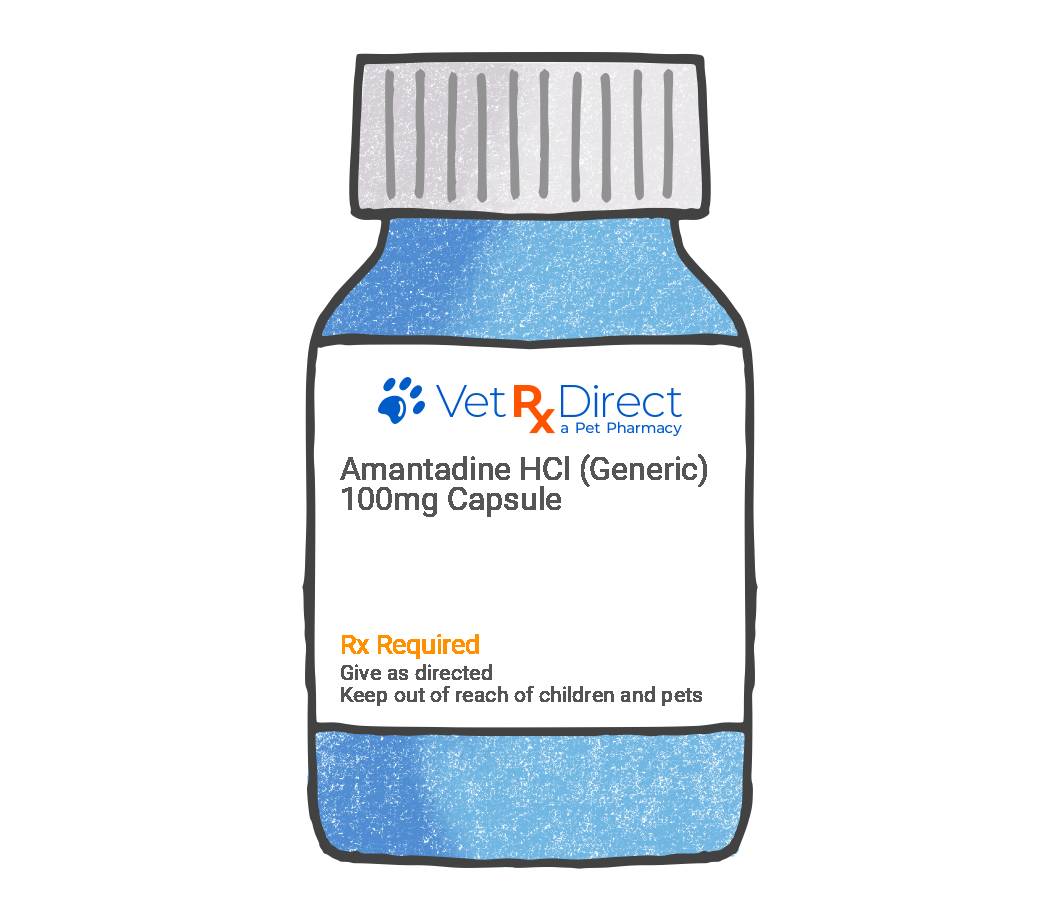

Amantadine HCl (Generic) Rx
Starting At
$0.30
per capsule
Amantadine HCl (Generic) Rx
$0.30
per capsule
Or save an extra 5% on your first order (up to $20) with Autoship*
$0.29
-
Usually ships the same weekday before 2pm CT with veterinary approval.
-
Requires veterinary authorization.
-
Your pet's veterinarian will provide directions for use.
What are Amantadine Capsules for Dogs and Cats?
- Amantadine is an antiviral medication used for pain relief in dogs and cats.
Why is Amantadine used for dogs and cats?
- Amantadine is prescribed in the treatment of chronic pain, neurologic pain, and pain associated with osteosarcoma.
- Amantadine is typically prescribed with other pain relievers.
- This medication may be prescribed for other reasons by a veterinarian.
What else should I know about Amantadine?
- This medication requires a prescription.
- It may take 7-10 days to reach a desired pain-relieving effect.
- Your veterinarian may tell you to give Amantadine with or without food.
- Your veterinarian may prescribe Amantadine with other pain relievers. Amantadine is not usually effective against pain when used alone.
What problems could my dog or cat have with Amantadine?
- Diarrhea and gas are common side effects.
- Some agitation (anxious, nervous, upset, unable to relax) may occur particularly early in treatment; contact your veterinarian if serious or persists.
- Overdoses can be very serious. Keep Amantadine out of the reach of children and other animals.
- Consult your veterinarian with any questions or concerns regarding the use of this medication for your pet.
How do you use Amantadine?
- Give Amantadine capsules by mouth as directed by your veterinarian.
What is in Amantadine?
- Amantadine is the active ingredient in this medication. Adamantine is an antiviral drug that also relieves pain.
Will I get what I see in the picture?
- Amantadine is sold as an FDA-approved, human-labeled generic drug. The brand may vary from order to order and variation to variation. We are unable to guarantee which brand will be available at the time of order shipment.
Is it important for my dog or cat to finish all of the Amantadine?
- Dogs and cats may use Amantadine for different lengths of time. Please consult your veterinarian if you have any questions.
Review Summary
6 total reviews
Rated 5.00 out of 5 stars
0% of respondents would recommend this to a friend
Ratings Distribution
6 5 star reviews
0 4 star reviews
0 3 star reviews
0 2 star reviews
0 1 star reviews
Reviews
-
.
From UndisclosedComments about Amantadine HCl (Generic) 100mg Capsule. -
Thank you!!!
From UndisclosedComments about Amantadine HCl (Generic) 100mg CapsuleFast shipping and great price!-
![Thank you!!!]()
Crazy Maizie
-
-
Great way to augment pain medication
From UndisclosedComments about Amantadine HCl (Generic) 100mg CapsuleBest price found one I moved! Comparable to what my previous vet charged and couldn't be happier since my big guy gets this daily. (Getting old is rough!)-
![Great way to augment pain medication]()
Finn
-
-
Best chronic therapy for severe arthritis
From undisclosedComments about Amantadine HCl (Generic)I give this medication to my dog daily. The vet prescribed it to help block the pain Recpetors in conjunction with anti-inflammatory meds. This medication make literally the world of difference. My dog could walk up the slighted incline. Now walks around the block with his supportive harness. -
Best chronic therapy for severe arthritis
From undisclosedComments about Amantadine HCl (Generic)I give this medication to my dog daily. The vet prescribed it to help block the pain Recpetors in conjunction with anti-inflammatory meds. This medication make literally the world of difference. My dog could walk up the slighted incline. Now walks around the block with his supportive harness. -
Goodbye pain
From UndisclosedComments about Amantadine HCl (Generic)Pulse dosing works great for my 16 year old chow girl & her severe arthralgias. 21 days on & 14days off with Tramadol for Her breakthrough pain


Displaying Reviews 1 - 6
Q & A
-
What if I need a tablet not a capsule??
-
Amantadine is sold as an FDA approved human-labeled generic drug. At this time we only carry the capsules, not the tablets. For more information, please contact our pharmacy.
Verified Answer
-
-
When it's time to take a dog off of Amantadine is there a proper way to do that? Vets seem to disagree about whether it can be done abruptly or gradually.?
-
According to the literature, the decision to stop amantadine abruptly or gradually will likely depend on your dog’s particular condition. In some cases, stopping amantadine abruptly may be okay. Due to the unique characteristics of your dog, please speak with your veterinarian to determine which option would be best.
Verified Answer
-
-
Is your Amantadine product similar to Tramadol for arthritis pain in dogs??
-
Amantadine is an antiviral medication labeled to treat influenza in humans, but is also a type of medication called a NMDA receptor antagonist, a class of anesthetics. Amantadine is sometimes used for this reason in animals for the treatment of chronic pain, including nerve pain. Tramadol is a pain reliever that works similar to an opioid/narcotic, and is used in animals to treat chronic and postoperative pain, as well as cough.
Verified Answer
-
Displaying Questions 1 - 3
x
Sign Up and Save 10%!
Plus enjoy insider offers and be the first to learn about our new products and promotions.
*10% off valid on your next order. Must apply code at checkout.
Your 10% off gift is coming your way.
But first, tell us more about your pet and only get content that is special to them.


and welcome to our family and !