
Allopurinol (Generic) Rx
Starting At
$0.17
per tablet
Allopurinol (Generic) Rx
$0.17
per tablet
Or save an extra 5% on your first order (up to $20) with Autoship*
$0.17
-
Usually ships the same weekday before 2pm CT with veterinary approval.
-
Requires veterinary authorization.
-
Your pet's veterinarian will provide directions for use.
What are Allopurinol Tablets for Dogs and Cats?
- Allopurinol is a xanthine oxidase inhibitor that works to reduce the production of uric acid in the body.
Why is Allopurinol used for dogs and cats?
- Allopurinol is a prescription medication that helps reduce uric acid levels in dogs, cats, and other animals.
- Allopurinol may be prescribed to treat and prevent certain types of kidney and urinary bladder stones.
- It may also be used to treat gout and certain types of parasite infections.
- Allopurinol may also be prescribed for other reasons by a veterinarian.
What else should I know about Allopurinol?
- This medication requires a prescription.
- It may be given with or without food. Your veterinarian may recommend giving allopurinol with food to reduce stomach upset.
What problems could my dog or cat have with Allopurinol?
- When used for a long time in dogs, a special diet may be recommended by your veterinarian.
- Serious side effects include a rash, unusually low energy, and yellowing of the eyes, skin, or gums.
- Some animals may vomit after receiving the drug.
- Consult with your veterinarian if you have any questions or concerns regarding the use of this medication for your pet.
How do you use Allopurinol Tablets?
- Give Allopurinol Tablets by mouth as directed by your veterinarian.
What is in Allopurinol Tablets?
- Allopurinol is the active ingredient in this medication. Allopurinol is a xanthine oxidase inhibitor that works to reduce the production of uric acid in the body.
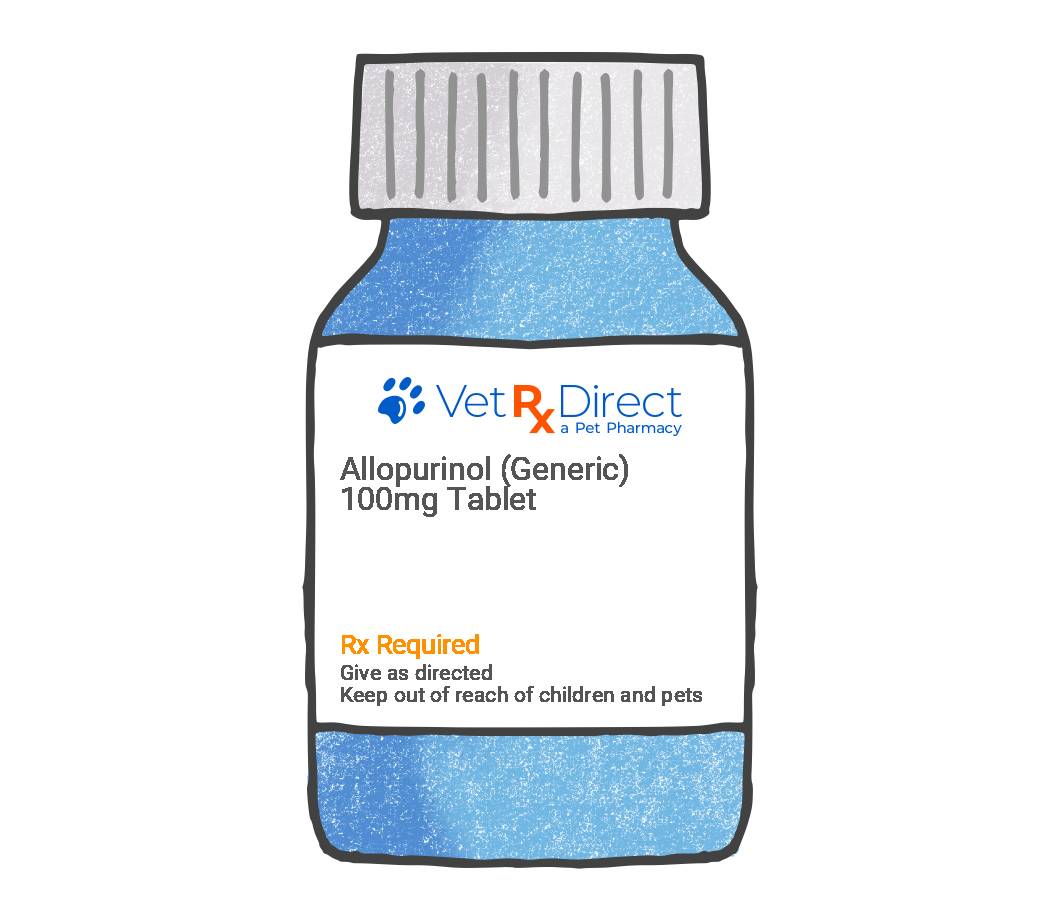
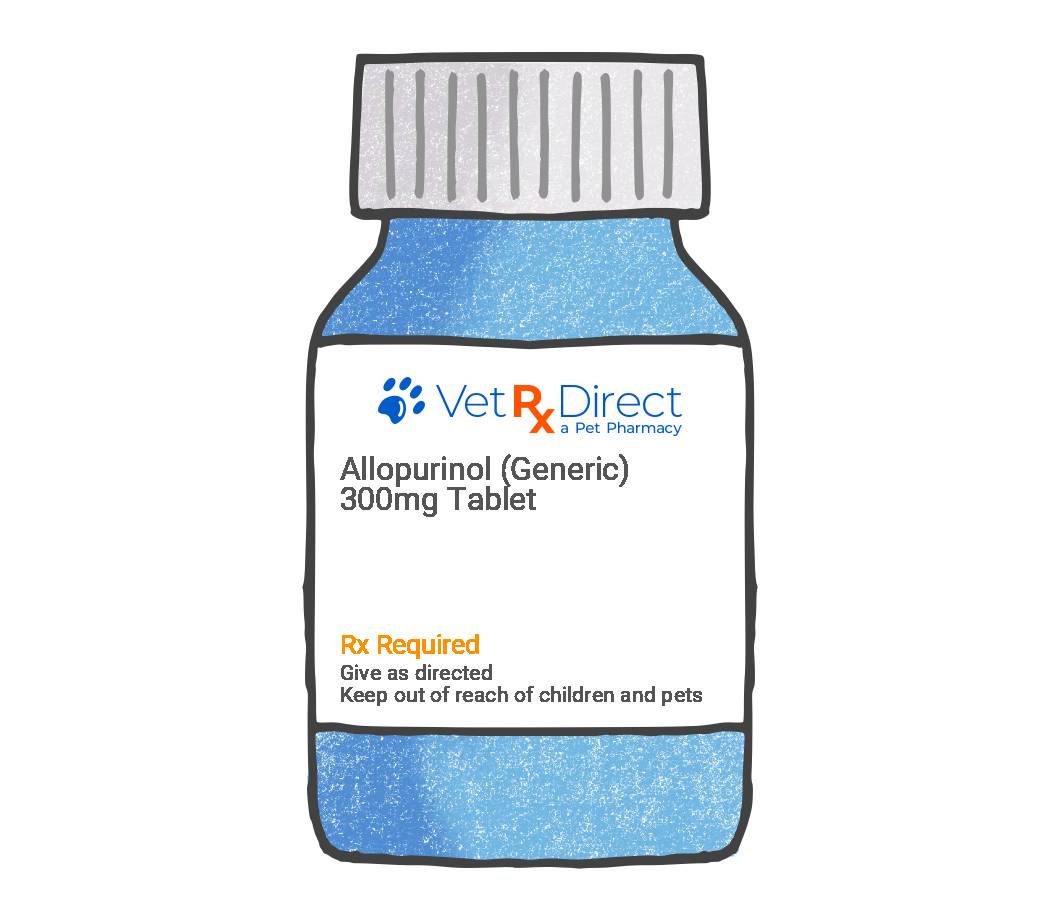
Will I get what I see in the picture?
- Allopurinol is sold as an FDA-approved, human-labeled generic drug. The brand may vary from order to order and variation to variation. We are unable to guarantee which brand will be available at the time of order shipment.
Is it important for my dog or cat to finish all of the Allopurinol?
- Dogs and cats may use Allopurinol for different lengths of time. Please consult your veterinarian if you have any questions.
No Reviews Yet
Q & A
-
What is it used for?
-
Allopurinol is a prescription medication that helps reduce uric acid levels in dogs, cats, and other animals. This medication may be prescribed to treat and prevent certain types of kidney and urinary bladder stones. Allopurinol may also be used to treat gout and certain types of parasite infections. This medication may also be prescribed by a veterinarian for other reasons.
Verified Answer
-
-
How big are the theophylline 100mg tablets??
-
Since this is a generic medication, we are unable to guarantee this medication will be the same size each fill as the manufacturer may change.
Verified Answer
-
Displaying Questions 1 - 2